CM Shivakumar meets NRK delegation from 30 countries at Vidhana Soudha
Synopsis
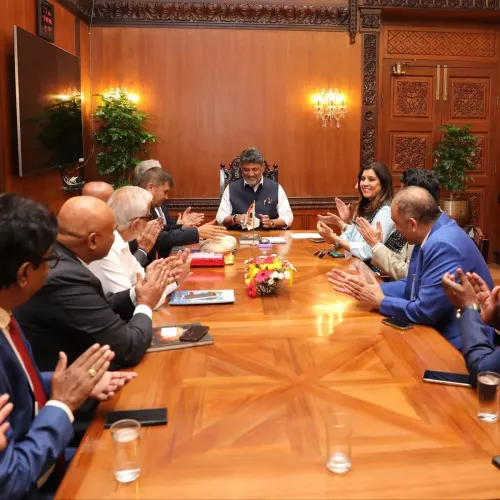
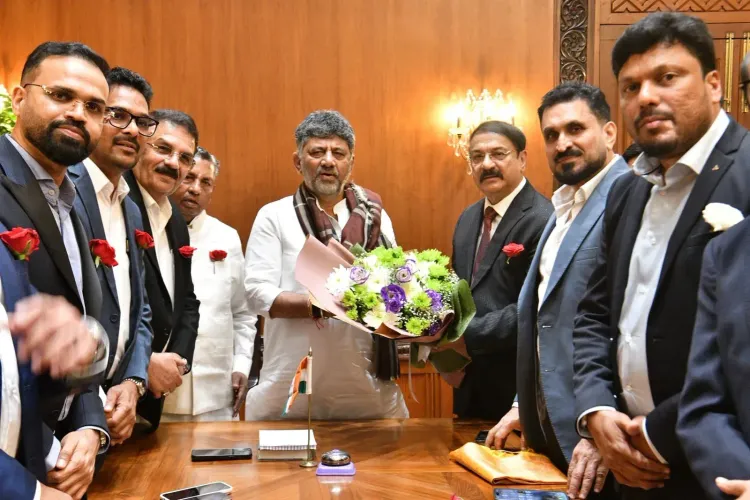
Chief Minister D.K. Shivakumar met a Non-Resident Kannadiga delegation representing 30 countries at Vidhana Soudha on 20 June 2026, led by Minister K.H. Muniyappa, and pledged firm government commitment to harnessing the global Kannada community's expertise for Karnataka's development.
Key Takeaways
Shivakumar met an NRK delegation at Vidhana Soudha, Bengaluru on 20 June 2026 .
The delegation represented Non-Resident Kannadigas from 30 countries .
The delegation was led by Food, Civil Supplies and Consumer Affairs Minister K.H.
CM Shivakumar committed to strengthening the government's engagement with the global Kannada community.
The government aims to harness NRK knowledge, expertise and goodwill for Karnataka's economic and social development.
The meeting continues Karnataka's long tradition of organised outreach through platforms such as the Vishwa Kannada Sammelana .
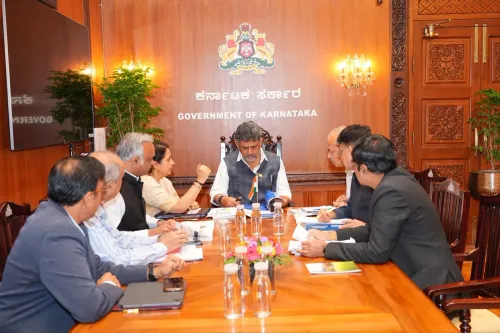
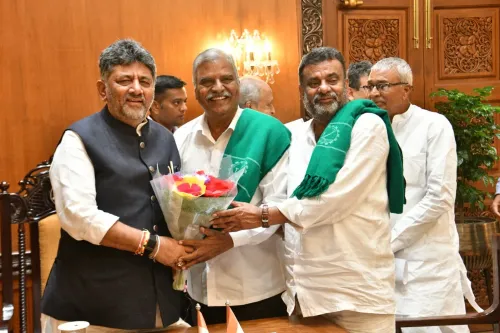
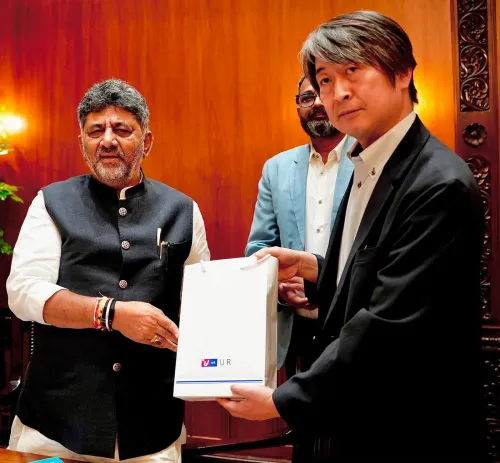
The Chief Minister's Office of Karnataka announced on Saturday, 20 June 2026 that Chief Minister D.K. Shivakumar received a delegation of Non-Resident Kannadigas (NRKs) representing 30 countries at Vidhana Soudha, Bengaluru. The delegation was led by Food, Civil Supplies and Consumer Affairs Minister K.H. Muniyappa.
Context
The meeting brought together members of the global Kannada diaspora under one roof at the state's seat of legislature. CM Shivakumar assured the delegation of the government's 'firm commitment to strengthening its engagement with the global Kannada community and harnessing their knowledge, expertise and goodwill to build a stronger, more prosperous and globally connected Karnataka.'
The breadth of representation — spanning 30 countries — signals the geographic reach of Karnataka's overseas community and the state government's intent to treat diaspora engagement as a structured policy priority rather than a ceremonial exercise.
Policy Backdrop
Karnataka has a documented history of organised outreach to its overseas population, including the Vishwa Kannada Sammelana — periodic global conventions held in earlier decades to foster cultural and economic ties with Kannadigas abroad. The current administration's engagement fits within that longer tradition.
Across India, states including Kerala and Gujarat have built formal diaspora-engagement frameworks since economic liberalisation, competing to channel overseas networks into investment, technology transfer, and skilled-talent pipelines. Karnataka, home to Bengaluru's globally connected IT sector, is well-positioned to leverage such ties for high-value economic collaboration.
Stakeholders and Impact
The primary stakeholders are Non-Resident Kannadigas whose professional and entrepreneurial networks span multiple continents. For the state government, this community represents a potential source of foreign investment, technical expertise, and cultural diplomacy that complements Karnataka's existing strengths in technology and manufacturing.
Minister K.H. Muniyappa's role in leading the delegation is notable: his portfolio covers food and civil supplies, suggesting the government views diaspora engagement as a whole-of-cabinet priority rather than the exclusive domain of an industry or external-affairs ministry. The goodwill expressed at the meeting could translate into participation in future investor summits or skill-transfer programmes.
What's Next
The Karnataka government has not yet announced a specific follow-up mechanism or summit, but the Chief Minister's assurance of 'firm commitment' points toward a more institutionalised engagement framework in the near term. Upcoming national events such as Pravasi Bharatiya Divas could provide a platform for Karnataka to present concrete collaboration proposals to the NRK community.
Observers will watch for whether the state formalises a dedicated NRK policy cell, announces investment or knowledge-partnership schemes, or schedules a state-level diaspora summit as the next concrete step in translating Saturday's meeting into actionable outcomes.
Point of View
The government signals political seriousness about NRK engagement. The 30-country span of the delegation also gives Karnataka leverage to position itself as a globally networked state ahead of any future investors' summit. Whether this translates into policy architecture — a dedicated NRK cell, a formal investment window, or a diaspora summit — will determine if the goodwill generated on 20 June yields tangible dividends.
NationPress
19 Sept 2026
Frequently Asked Questions
Who are Non-Resident Kannadigas and why does Karnataka engage with them?
Non-Resident Kannadigas (NRKs) are people of Kannada origin living outside India. Karnataka engages with them to attract investment, technical expertise and cultural goodwill that can support the state's economic and social development.
What did CM Shivakumar promise the NRK delegation on 20 June 2026?
CM D.K. Shivakumar assured the delegation of the government's firm commitment to strengthening engagement with the global Kannada community and harnessing their knowledge, expertise and goodwill for a stronger and more prosperous Karnataka.
Who led the NRK delegation that met CM Shivakumar?
The delegation was led by Minister K.H. Muniyappa, who holds the Food, Civil Supplies and Consumer Affairs portfolio in the Karnataka Cabinet.
How many countries were represented in the NRK delegation at Vidhana Soudha?
The delegation represented Non-Resident Kannadigas from 30 countries, reflecting the wide geographic spread of the Kannada diaspora.
What is the Vishwa Kannada Sammelana?
The Vishwa Kannada Sammelana is a periodic global convention organised by Karnataka to foster cultural and economic ties with Kannadigas living abroad, held in various editions since the 2000s.