Rajnath Singh Visits Bagdogra Air Force Station on Diwali Eve

Synopsis
Union Defence Minister Rajnath Singh visited Bagdogra Air Force Station in West Bengal on Diwali eve, interacting with IAF personnel and stressing the force's readiness against drone swarms, cyber attacks, and asymmetric threats in the eastern sector.
Key Takeaways
Rajnath Singh visited Bagdogra Air Force Station, West Bengal on 7 November 2026 , the eve of Diwali.
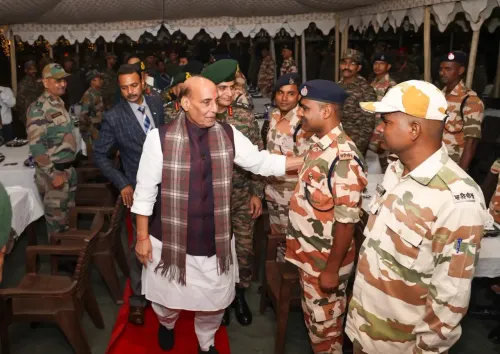
He interacted with Indian Air Force personnel and praised their morale, devotion to duty, and energy.
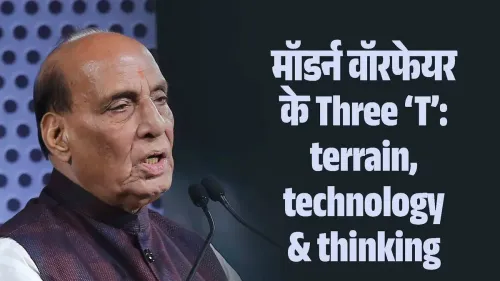
Singh highlighted three evolving threats the IAF must counter: asymmetric warfare, drone swarms, and cyber attacks .
He stressed the importance of IAF domain awareness and cyber resilience in the current security landscape.
Bagdogra is a strategically significant IAF base in the eastern sector , close to India's borders with China and Bangladesh.
The visit continues a tradition of senior defence leadership engaging with troops at forward stations during major national festivals.
On the eve of Diwali, Union Defence Minister Rajnath Singh flew to Bagdogra Air Force Station in West Bengal to meet the men and women of the Indian Air Force — a gesture that carried a pointed message: India's skies are watched, and their guardians are not forgotten.
Drone swarms, cyber attacks, and the new face of air defence
Singh's visit was more than a morale call. Speaking to Air Warriors, he zeroed in on the evolving threat matrix — asymmetric warfare, drone swarms, and cyber attacks — framing the IAF's domain awareness and cyber resilience as non-negotiable pillars of national security. It is a sharp acknowledgement of how air defence has changed: the skies are contested not just by fighter jets but by swarms of cheap, hard-to-track unmanned platforms and digital intrusions that can blind radar systems before a single aircraft lifts off.
The Ministry of Defence has been pushing counter-drone and cyber defence measures across the services since a spate of reported drone incidents drew urgent attention to gaps in low-altitude surveillance. Bagdogra, sitting close to India's sensitive eastern borders with China and Bangladesh, is not an abstract posting — it is precisely the kind of forward station where those upgrades matter most.
Why Bagdogra, and why now
Bagdogra Air Force Station anchors India's air defence architecture in the east, a region that has drawn sustained strategic attention following the border tensions of recent years. For the Defence Minister to choose this station for a Diwali-eve interaction underscores the government's emphasis on operational readiness in the eastern sector. Singh described witnessing the troops' 'boundless energy, devotion to duty, and high morale' — but his presence there also signals to the chain of command that the eastern theatre remains a priority.
Senior defence officials visiting forward bases during major festivals has become a deliberate tradition, one designed to reinforce that soldiers on duty during celebrations are seen and valued by the civilian leadership. The symbolism is direct: every Diwali lamp lit at home burns because someone else is on watch.
A closing note on pride and vigil
Singh signed off with a line that distils the visit's intent: 'Every festival in our country is celebrated with joy and peace because our Armed Forces stand guard round-the-clock.' It is the kind of statement that travels — simple, true, and impossible to argue with. Jai Hind, he concluded, to the Air Warriors of Bagdogra.
As the IAF looks ahead to acquiring advanced surveillance platforms and deepening participation in multilateral air-defence exercises, the Defence Minister's Diwali-eve presence at one of its most strategically placed stations is a reminder that readiness is not seasonal — it is permanent.
Point of View
Lending political weight to pending acquisition and infrastructure decisions. The visit also reinforces the government's consistent messaging that civilian leadership stands shoulder-to-shoulder with the armed forces, a posture that carries particular resonance in an election-sensitive environment. Watch whether this translates into accelerated counter-drone procurement announcements or new multilateral air-defence tie-ups in the months ahead.
NationPress
7 Nov 2026
Frequently Asked Questions
Why did Rajnath Singh visit Bagdogra Air Force Station?
Union Defence Minister Rajnath Singh visited Bagdogra Air Force Station on the eve of Diwali to interact with Indian Air Force personnel, boost their morale, and highlight the IAF's critical role in countering modern threats including drone swarms and cyber attacks.
Where is Bagdogra Air Force Station located?
Bagdogra Air Force Station is located in West Bengal, in India's eastern sector, close to international borders with China and Bangladesh, making it a strategically significant base for the Indian Air Force.
What threats did Rajnath Singh highlight at Bagdogra?
Singh specifically mentioned asymmetric warfare, drone swarms, and cyber attacks as the complex, evolving threats the IAF must address, calling domain awareness and cyber resilience vital for protecting the nation.
Is it common for the Defence Minister to visit air bases during festivals?
Yes, visiting forward bases during major festivals such as Diwali has become a deliberate tradition for senior defence officials, intended to demonstrate that troops on duty during celebrations are recognised and valued by the civilian leadership.
What is the significance of Diwali-eve visits to military stations?
Such visits carry symbolic and institutional weight: they reassure personnel on duty that the nation's leadership acknowledges their sacrifice and reinforce morale at a time when most citizens are celebrating with family.