CM Fadnavis Govt Simplifies Farmer ID Registration Under Agri Stack
Synopsis
The Maharashtra government under CM Devendra Fadnavis has finalised an SOP for Farmer ID issuance under the Agri Stack campaign, with the Revenue Department issuing a circular to make registration of eligible farmers, landholders and actual cultivators more transparent and accessible to government scheme benefits.
Key Takeaways
The Maharashtra government under CM Devendra Fadnavis has finalised a Special Operating Procedure (SOP) for issuing Farmer IDs under the Agri Stack campaign.
The Maharashtra Revenue Department issued a formal circular establishing this SOP on 7 November 2026 .
Three categories are covered: eligible farmers, registered landholding cultivators, and persons actually engaged in cultivation — broadening the inclusion net.
A verified Farmer ID will simplify access to government scheme benefits, subsidies, crop loans, crop insurance , and digital agricultural services.
The move operationalises the Government of India's Digital Agriculture Mission (Agri Stack) at the state level, using existing Revenue Department land-record infrastructure.
The SOP aims to make registration more transparent by anchoring eligibility to document and land-record verification.
Millions of Maharashtra's farmers — the smallholder, the tenant cultivator, the person who works the land but rarely holds the paperwork — have long fallen through the cracks of government scheme delivery. That changes now. The Chief Minister's Office of Maharashtra announced on Saturday, 7 November 2026, that the state government under Chief Minister Devendra Fadnavis has finalised a Special Operating Procedure (SOP) to streamline Farmer ID issuance across Maharashtra under the Agri Stack campaign.
What the SOP Does — and Who It Covers
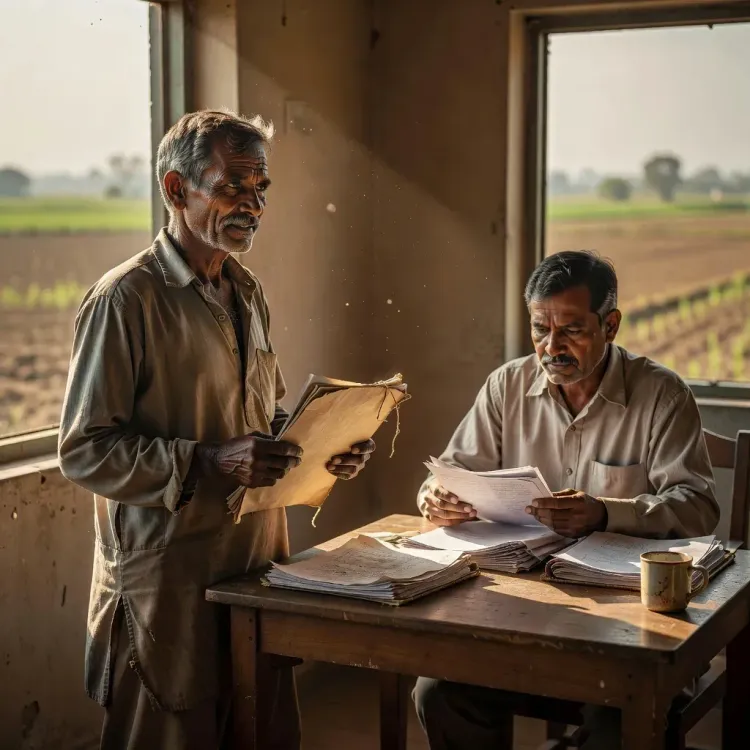
The Maharashtra Revenue Department issued a formal circular establishing this SOP, which covers three categories: eligible farmers, landholding cultivators, and individuals who are प्रत्यक्ष शेती करणाऱ्या व्यक्ती (persons actually engaged in cultivation) — a critical inclusion that extends the net beyond just registered landowners. Under the new framework, verification of relevant documents and official land records will determine eligibility, replacing the previously opaque, often discretionary process.
The stated goal is straightforward: make the process 'more simplified and transparent' (अधिक सुलभ आणि पारदर्शक). Once a Farmer ID is issued, it becomes the single digital key unlocking government scheme benefits, subsidies, crop loans, crop insurance, and the full suite of digital agricultural services — without the farmer having to prove their identity anew at every touchpoint.
Agri Stack: The National Framework Maharashtra Is Now Operationalising
The Agri Stack initiative is a Government of India project under the Digital Agriculture Mission — an ambitious effort to build a unified, interoperable farmer database linking land records, identity credentials, and scheme entitlements in a single digital layer. Think of it as a UPI moment for agriculture: one ID, every benefit.
Maharashtra's SOP is a state-level operationalisation of that national architecture. By anchoring registration to document verification through the Revenue Department — which already manages land records — the state is using existing administrative infrastructure rather than building from scratch. It is a pragmatic, low-friction approach to a problem that has bedevilled farm welfare delivery for decades: leakages, duplication, and exclusion.
Why Transparent Verification Matters for Crop Loans and Insurance
The chain of benefits the Farmer ID unlocks — subsidies, crop loans, crop insurance (पीक कर्ज, पीकविमा), and digital agriculture services — represents the financial lifeline of rural Maharashtra. Each of these schemes has historically suffered from mis-targeting: benefits reaching those who do not cultivate, while actual tillers with no registered land go unserved. A verified, document-backed digital ID directly addresses that structural flaw.
Across India, states aligning with the central Agri Stack framework are using SOPs and standardised circulars precisely to reduce these leakages. Maharashtra's move places it squarely within that national momentum — but the proof will be in district-level rollout, in how quickly the new SOP translates into actual registrations, and in whether the verification process remains accessible to small and marginal farmers.
The Revenue Department's circular is the starting gun. The race now is implementation.
Point of View
The government is choosing institutional depth over new bureaucratic layers — a sensible choice given the complexity of Maharashtra's landholding patterns. The explicit inclusion of actual cultivators without registered land titles is politically and socially significant, as this group is historically the most excluded from formal agricultural welfare. The real test, however, will be district-level implementation speed and whether the SOP's verification requirements prove enabling or exclusionary in practice for marginal farmers.
NationPress
7 Nov 2026
Frequently Asked Questions
What is the Farmer ID under Agri Stack in Maharashtra?
The Farmer ID is a unique digital identifier issued under the national Agri Stack (Digital Agriculture Mission) framework that links a farmer's identity, land records, and scheme entitlements, enabling seamless access to subsidies, crop loans, crop insurance, and digital agricultural services.
Who is eligible for a Farmer ID in Maharashtra?
Three categories are eligible: registered farmers, landholding cultivators, and individuals who are actually engaged in cultivation — even if they do not hold formal land title — subject to document and land-record verification by the Revenue Department.
What is the new SOP issued by the Maharashtra Revenue Department?
The Special Operating Procedure (SOP) is a standardised, document-based process for verifying and issuing Farmer IDs under the Agri Stack campaign. It was established via a formal circular from the Maharashtra Revenue Department to make registration more transparent and simplified.
What benefits will a Farmer ID unlock for Maharashtra farmers?
A Farmer ID will simplify access to government scheme benefits, agricultural subsidies, crop loans, crop insurance (Pik Vima), and the full range of digital agricultural services offered by the state and central governments.
What is Agri Stack and why does it matter?
Agri Stack is a Government of India initiative under the Digital Agriculture Mission to build a unified national farmer database. It links land records, farmer identity, and scheme data to reduce leakages in subsidy and credit delivery. Maharashtra's SOP is part of its state-level implementation of this framework.