Meghwal hits back at Rahul Gandhi over Voter ID-Aadhaar row, invokes Emergency
Synopsis
Union Minister Arjun Ram Meghwal used a Bikaner press address to go on the offensive against Rahul Gandhi and Ashok Gehlot — invoking surgical strikes, the 1975 Emergency, and an Akashvani 'anarchy' episode — all sparked by the Congress's opposition to replacing Aadhaar with Voter ID cards for welfare scheme authentication. The row signals that the Voter ID-Aadhaar proposal has become the latest flashpoint in the ongoing BJP-Congress political battle.
Key Takeaways
Union Minister Arjun Ram Meghwal attacked Rahul Gandhi and the Congress in Bikaner on 7 November over remarks on the Voter ID-Aadhaar proposal.
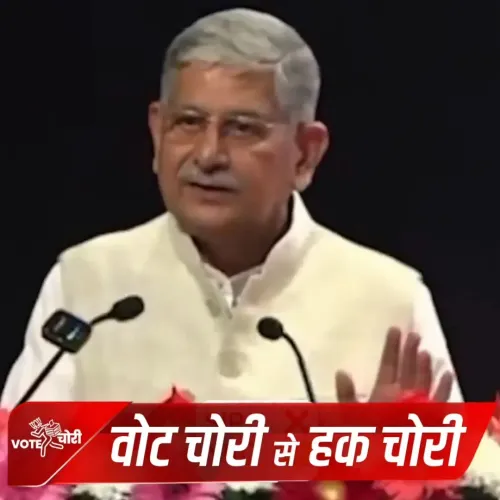
Rahul Gandhi had called the Centre's plan to replace Aadhaar with Voter ID cards (EPIC) for welfare authentication a 'conspiracy' and 'rights theft.' Meghwal accused Rahul of criticising every government initiative, including surgical strikes and air strikes.
Ashok Gehlot was targeted over an alleged procedural lapse in seeking a meeting with the Chief Election Commissioner at the Akashvani complex.
Meghwal invoked the Emergency of 1975 to argue the Congress has a record of undermining democratic institutions.
The BJP has launched the 'Loktantra Bachao, Arajakta Hatao' public awareness campaign amid the dispute.
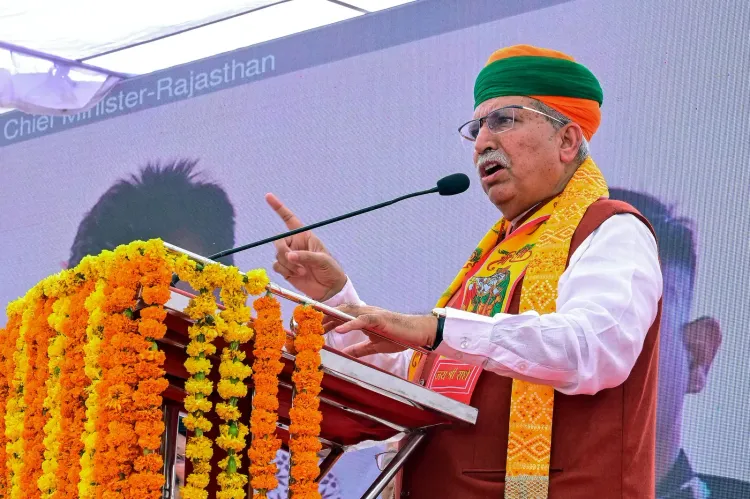
Union Law and Justice Minister Arjun Ram Meghwal launched a sharp political counteroffensive against the Indian National Congress and its leadership on Saturday, 7 November, accusing the opposition of routinely opposing constructive governance measures and attempting to destabilise constitutional institutions. His remarks came in response to Leader of the Opposition Rahul Gandhi's characterisation of the Centre's proposal to replace Aadhaar with Voter ID cards (EPIC) and biometric authentication for welfare scheme benefits as a 'conspiracy' and 'rights theft.'
Meghwal's Direct Attack on Rahul Gandhi
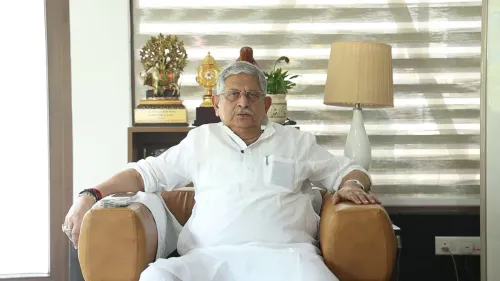
Speaking to reporters in Bikaner, Rajasthan, Meghwal did not hold back. 'Rahul Gandhi criticises every positive initiative these days, without considering the reasons behind it or the purpose it is meant to serve. Technological advancement is an ongoing process, so what is there to criticise? No matter how good our work is, he always finds something to criticise. He even criticised the surgical strikes and air strikes. What more can one say about him?' the minister said.
The Bharatiya Janata Party (BJP) minister framed Rahul's objections to the Voter ID-Aadhaar shift as part of a broader pattern of reflexive opposition rather than principled disagreement, arguing that the Congress consistently attempts to 'create confusion over constitutional institutions and disturb the political atmosphere.'
Ashok Gehlot and the Akashvani Incident
Meghwal also turned his fire on former Rajasthan Chief Minister Ashok Gehlot, referencing what he described as an episode of disorder at the All India Radio (Akashvani) complex in Delhi. 'Ashok Gehlot has himself been part of the government and knows very well that anyone seeking a meeting with the Chief Election Commissioner at the Election Commission of India (ECI) has to submit a memorandum along with the list of members of the delegation. The Commission then decides the time and schedules the meeting. In this case, they neither submitted the list of delegation members nor prepared a memorandum,' the minister said.
He added that insisting the meeting be held at Akashvani amounted to 'anarchy,' and said the BJP's 'Loktantra Bachao, Arajakta Hatao' (Save Democracy, End Anarchy) campaign had been launched precisely to counter such conduct.
Emergency Invoked as Historical Counterpoint
Invoking one of independent India's most contested political episodes, Meghwal alleged that the Congress has a long record of weakening democratic institutions. He recalled the Emergency of 1975, imposed during the tenure of former Prime Minister Indira Gandhi, saying the country had witnessed firsthand how the party had used state power to suppress democratic norms.
'In 1975, their approach was aimed at weakening democracy. Have we not witnessed the Emergency? Now, they are trying to create an atmosphere of anarchy and bring about a change in power. Is this what they call 'teaching a lesson in democracy'? They accuse others of promoting anarchy, but in reality, it is Congress leaders themselves who are doing so,' Meghwal said.
Notably, the Congress has consistently contested the BJP's framing of the Emergency legacy, and critics argue that invoking 1975 to deflect current criticism is a well-worn deflection tactic.
The Voter ID-Aadhaar Proposal at the Centre of the Row
The immediate trigger for the exchange was the Centre's reported proposal to shift welfare scheme authentication from Aadhaar to Voter ID cards (EPIC) along with biometric verification. Rahul Gandhi had publicly opposed the move, terming it a threat to citizens' rights and alleging it was designed to enable political manipulation of welfare delivery. The government has not yet formally detailed the operational scope or timeline of the proposed change.
The row comes amid a broader political contest over the architecture of welfare delivery and digital identity in India — a debate with implications for crores of beneficiaries across schemes ranging from food subsidies to direct benefit transfers. With the BJP's public awareness campaign now underway, the dispute is set to extend well beyond the floor of Parliament.
Point of View
But it also reveals the absence of a detailed policy rebuttal: Meghwal offered no technical justification for why replacing Aadhaar with EPIC serves beneficiaries better. The Congress, for its part, has not addressed the government's operational rationale either — both sides are fighting over symbolism while the actual mechanics of the proposed switch remain publicly unexamined. For the crores of citizens whose welfare transfers depend on this authentication layer, that silence is the real story.
NationPress
7 Nov 2026
Frequently Asked Questions
What is the Voter ID-Aadhaar row that triggered Meghwal's remarks?
The row centres on a reported Central Government proposal to replace Aadhaar-based authentication with Voter ID cards (EPIC) and biometric verification for welfare scheme benefits. Rahul Gandhi publicly opposed the move, calling it a 'conspiracy' and 'rights theft,' which prompted Union Minister Arjun Ram Meghwal to defend the proposal and attack the Congress.
What did Arjun Ram Meghwal say about Rahul Gandhi?
Meghwal accused Rahul Gandhi of reflexively criticising every government initiative without understanding its purpose, citing the opposition leader's past criticism of surgical strikes and air strikes as examples. He argued that Gandhi finds fault with all positive work regardless of its merit.
Why did Meghwal target Ashok Gehlot?
Meghwal alleged that former Rajasthan Chief Minister Ashok Gehlot created disorder by attempting to hold a meeting with the Chief Election Commissioner at the Akashvani complex without submitting a delegation list or formal memorandum, which is the prescribed procedure. He said this amounted to 'anarchy' and was inconsistent with Gehlot's own experience in government.
What is the BJP's 'Loktantra Bachao, Arajakta Hatao' campaign?
It is a public awareness campaign launched by the BJP, which translates as 'Save Democracy, End Anarchy.' Meghwal described it as a drive to counter what the party characterises as destabilising conduct by the opposition and to inform citizens about the importance of protecting democratic institutions.
Why did Meghwal invoke the Emergency of 1975?
Meghwal cited the Emergency imposed by then Prime Minister Indira Gandhi in 1975 to argue that the Congress has a historical pattern of weakening democratic institutions. He drew a parallel between that period and what the BJP alleges is the Congress's current attempt to create political unrest and pressurize constitutional bodies.