Kejriwal Calls Modi Govt 'Worse Than Emergency', Demands PM's Exit
Synopsis
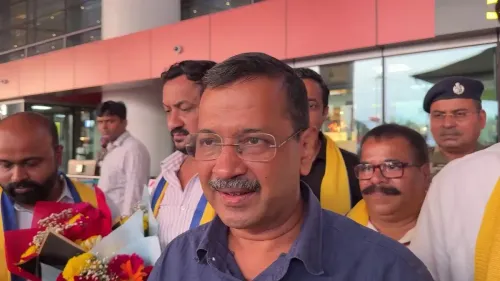
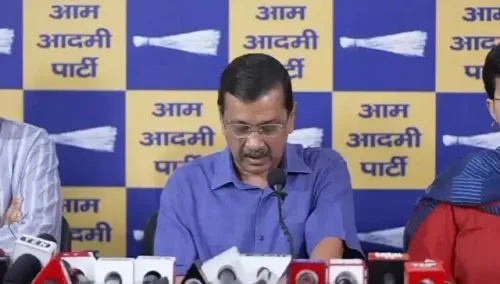
AAP convenor Arvind Kejriwal escalated his attack on the Centre on 10 October 2026, calling the Modi government 'worse than the Emergency', alleging vote fraud, and demanding the resignations of both CEC Gyanesh Kumar and Prime Minister Modi following a reported airport arrest.
Key Takeaways
AAP convenor Arvind Kejriwal on 10 October 2026 publicly labelled the Modi government 'worse than the 1975 Emergency .' He alleged that individuals were arrested directly off a flight, calling it 'an unprecedented level of fear' from the ruling establishment.
Kejriwal repeated his claim of vote chori (vote theft), arguing PM Modi is 'protecting his fraud by crushing democracy.' He demanded the removal of Chief Election Commissioner Gyanesh Kumar alongside PM Narendra Modi .
The government had not responded publicly to the post at the time of publication; the identity of those arrested was not specified in Kejriwal's post.
A scathing political broadside landed on Saturday, 10 October 2026, as AAP national convenor Arvind Kejriwal compared the current Central government to a dictatorship surpassing the 1975 Emergency — and demanded not just the ouster of Election Commission chief Gyanesh Kumar, but of Prime Minister Narendra Modi himself.
Kejriwal's post, timed at mid-morning, was triggered by the reported arrest of individuals directly off a flight — a move he described as signalling 'an unprecedented level of fear' within the ruling establishment. 'This is worse than the Emergency. It's official — we are living under an absolute dictatorship ruled by Modi,' he wrote, escalating his rhetoric to its sharpest pitch in recent memory.
The Emergency Comparison — and Why It Lands Hard
Invoking Indira Gandhi's Emergency of 1975–77 is among the most charged accusations in Indian political discourse. That period saw suspension of civil liberties, mass arrests of opposition leaders, and press censorship — and has since become the constitutional benchmark against which any democratic backsliding is measured. Kejriwal's claim that the present moment is 'isse bhi bura' ('even worse than that') is a deliberate attempt to frame the current administration not merely as authoritarian, but as historically unprecedented in its suppression.
The specific trigger — arrests at an airport immediately upon landing — amplifies that framing. Targeting individuals before they can even leave the tarmac signals, in Kejriwal's telling, a government acting out of acute political anxiety rather than legal process.
Vote Fraud Allegation and the 'Gyanesh Must Go' Demand
Kejriwal doubled down on a claim he has made repeatedly: that PM Modi won his most recent electoral mandate through 'vote chori' — vote theft. The allegation, which the ruling party has consistently denied, is now being linked by Kejriwal directly to the government's behaviour in office: if the mandate is illegitimate, he argues, the crackdown on dissent is the mechanism to protect that illegitimacy.
The call for Chief Election Commissioner Gyanesh Kumar to resign is not new in opposition circles, but placing it alongside a demand for Modi's own exit sharpens AAP's posture ahead of any coming electoral contest. For Kejriwal — himself a former Delhi Chief Minister who served time in custody in a case his party called politically motivated — the framing is also deeply personal.
AAP's Escalating Anti-Centre Offensive
The post is consistent with a pattern Kejriwal has pursued since his release: relentless frontal attacks on the Centre, positioning AAP as the principal custodian of constitutional democracy at a time when the traditional opposition remains fragmented. By demanding both the CEC's removal and the PM's, he is staking out maximum ground — a signal to potential allies as much as a message to voters.
Whether the arrested individuals are named, what charges they face, or what flight they were on remains unspecified in Kejriwal's post, and NationPress could not independently verify those details at the time of publication. The government has not responded publicly to this specific post.
What is clear: Kejriwal is not dialling the temperature down. The question now is whether the broader opposition consolidates around this language — or leaves AAP to fight on this ground alone.
Point of View
Not mere rhetoric — it plants AAP squarely in the lineage of the 1977 Janata wave that swept Indira Gandhi from power, inviting voters to draw the same conclusion about Modi. The dual demand — CEC and PM both exit — positions AAP as the most uncompromising opposition voice at a moment when the INDIA bloc remains structurally loose. The airport-arrest framing is significant: it personalises the abstract threat of authoritarianism into a visceral image, the kind that travels on social media without needing a byline. The risk for Kejriwal is that unverified specifics, if contested, allow the government to shift the story from the principle to the facts.
NationPress
10 Oct 2026
Frequently Asked Questions
What did Arvind Kejriwal say about the Modi government on 10 October 2026?
Kejriwal called the Modi government 'worse than the Emergency' and an 'absolute dictatorship,' citing a reported airport arrest and alleging that PM Modi won his election through vote fraud.
Why is Kejriwal demanding Gyanesh Kumar's resignation?
Kejriwal has called for CEC Gyanesh Kumar's removal as part of his broader allegation that the Election Commission facilitated or failed to prevent what he terms 'vote chori' — vote theft — during the last general election.
What is the Emergency that Kejriwal is comparing Modi's rule to?
The reference is to the 1975–77 Emergency declared by Prime Minister Indira Gandhi, during which civil liberties were suspended, opposition leaders were jailed, and press freedom was curtailed — widely regarded as India's darkest chapter in post-independence democratic history.
Who was arrested at the airport that triggered Kejriwal's post?
Kejriwal's post did not name the individuals arrested. NationPress could not independently verify the identity of those detained or the specific flight involved at the time of publication.
Has the Modi government responded to Kejriwal's Emergency comparison?
As of the time of publication, the government had not issued a public response to this specific post by Kejriwal.