Kejriwal Demands CEC Gyanesh Kumar's Resignation Over Voter Fraud
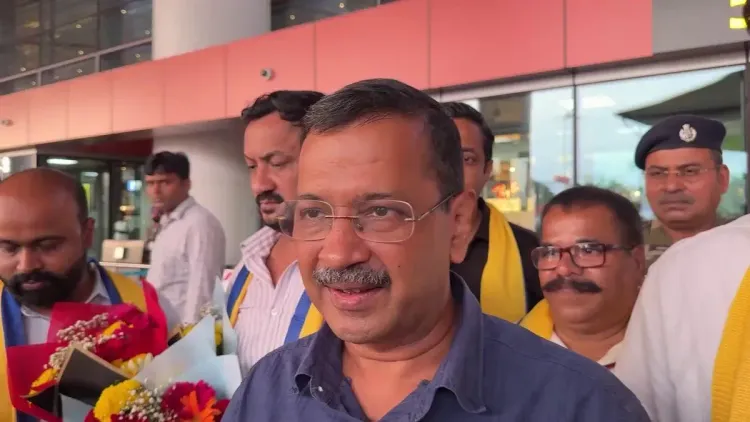
Synopsis
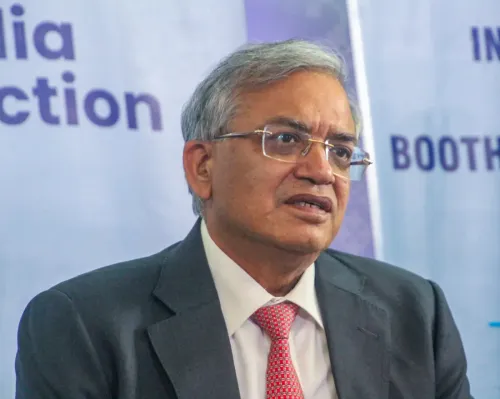
AAP convenor Arvind Kejriwal on October 6, 2026, publicly demanded Chief Election Commissioner Gyanesh Kumar's resignation, alleging that genuine votes have been deleted and fake votes added across elections to benefit PM Modi's BJP. He declared support for a nationwide anti-vote-theft movement.
Key Takeaways
Arvind Kejriwal on October 6, 2026 publicly called on Chief Election Commissioner Gyanesh Kumar to resign.
He alleged a multi-year pattern of real votes being deleted and bogus votes being added to electoral rolls to benefit PM Narendra Modi .
Kejriwal declared support for an ongoing nationwide 'movement against vote theft.' The post was in Hindi and directed the demand bluntly: 'ज्ञानेश कुमार, इस्तीफ़ा दो' — 'Gyanesh Kumar, resign.' The 2023 Election Commission appointment law had already drawn opposition criticism for reducing institutional independence in selecting the CEC.
A national movement against alleged electoral fraud found a loud new voice on Tuesday, October 6, 2026, when AAP convenor Arvind Kejriwal called for the immediate resignation of Chief Election Commissioner Gyanesh Kumar, accusing him of presiding over systematic vote manipulation that he claims has handed Prime Minister Narendra Modi consecutive electoral victories.
Posting in Hindi on X, Kejriwal wrote: 'पूरा देश एकजुट होकर ज्ञानेश कुमार का इस्तीफा मांग रहा है' — 'The entire country, united, is demanding the resignation of Gyanesh Kumar.' He alleged that 'over the past few years, Modi ji has been winning elections by getting genuine votes deleted and fake votes added through the Election Commission of India.' He ended with a direct, unambiguous two-word demand: 'ज्ञानेश कुमार, इस्तीफ़ा दो' — 'Gyanesh Kumar, resign.'
The Allegations at the Centre of the Storm
Kejriwal's post levels two distinct charges: the systematic deletion of legitimate voter entries from electoral rolls, and the fraudulent addition of bogus voter registrations — both allegedly engineered to tilt outcomes. He frames these not as isolated irregularities but as a coordinated, multi-election pattern. The AAP leader also declared his support for what he described as an ongoing nationwide 'movement against vote theft,' suggesting the agitation has already built ground-level momentum beyond opposition party circles.Gyanesh Kumar and the Election Commission in the Crosshairs
Gyanesh Kumar, a retired IAS officer, was appointed Chief Election Commissioner following the passage of the Chief Election Commissioners and Other Election Commissioners (Appointment, Conditions of Service and Term of Office) Act, 2023 — legislation that itself attracted fierce criticism from opposition parties, who argued it diluted the independence of the appointment process by replacing the Supreme Court's recommended selection panel with one effectively dominated by the central government. For Kejriwal and other opposition voices, that legislative change is inseparable from the credibility questions now being raised about the Commission's conduct.A Pattern of Electoral Disputes in Indian Politics
Allegations of voter roll manipulation — ranging from 'ghost voters' to bulk deletions targeting specific communities — have been a recurring flashpoint in Indian electoral politics, raised by parties across the spectrum depending on their position in or out of power. What distinguishes the current moment, if Kejriwal's framing holds, is the claim that this has crossed from sporadic grievance into an organised, street-level agitation demanding institutional accountability at the very top of the electoral machinery. Whether that claim translates into verified, documented evidence before courts or election tribunals will determine how far this movement travels. For now, the demand is stark and public. The ball, as Kejriwal sees it, is squarely in Gyanesh Kumar's court.Point of View
Name-first resignation demand signals a deliberate escalation — moving the opposition's electoral integrity argument from parliamentary debate to street-facing agitation. The invocation of a 'unified nation' framing is a classic coalition-building move, designed to absorb non-AAP protesters under a single narrative umbrella. Coming in the context of the controversial 2023 CEC appointment law, this moment connects to a longer arc of opposition anxiety about the structural independence of election administration. Whether the agitation generates documented legal challenges or remains in the rhetorical register will define its lasting impact.
NationPress
6 Oct 2026
Frequently Asked Questions
Why is Kejriwal demanding Gyanesh Kumar's resignation?
Kejriwal alleges that Chief Election Commissioner Gyanesh Kumar has presided over systematic deletion of genuine votes and fraudulent addition of fake votes, helping PM Modi win elections. He posted this demand on October 6, 2026.
Who is Gyanesh Kumar?
Gyanesh Kumar is the Chief Election Commissioner of India, a retired IAS officer appointed under the 2023 Chief Election Commissioners Act, which opposition parties criticised for giving the central government greater influence over the selection process.
What is the vote theft movement Kejriwal mentioned?
Kejriwal referred to an ongoing nationwide agitation against alleged electoral roll manipulation — the deletion of legitimate voter entries and addition of bogus ones. He declared AAP's support for this movement in his October 6 post.
What did Kejriwal say exactly about PM Modi and elections?
Kejriwal alleged that 'over the past few years, Modi ji has been winning elections by getting genuine votes deleted and fake votes added through the Election Commission,' calling it a mockery of democracy.
What is the 2023 Election Commission appointment law?
The Chief Election Commissioners and Other Election Commissioners (Appointment, Conditions of Service and Term of Office) Act, 2023 changed how the CEC and ECs are selected, replacing a Supreme Court-recommended panel with one that opposition parties say is dominated by the ruling government.