CM Dhami Flags Off Special Train to Somnath from Dehradun
Synopsis
Chief Minister Pushkar Singh Dhami flagged off a special train from Dehradun to Somnath on 13 July 2026 for the 'Somnath Swabhiman Parv,' carrying around 700 pilgrims from diverse sections of Uttarakhand society as part of the state's cultural revival agenda.
Key Takeaways
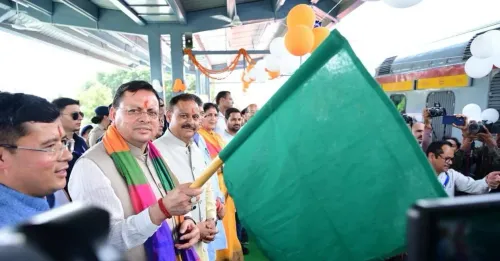
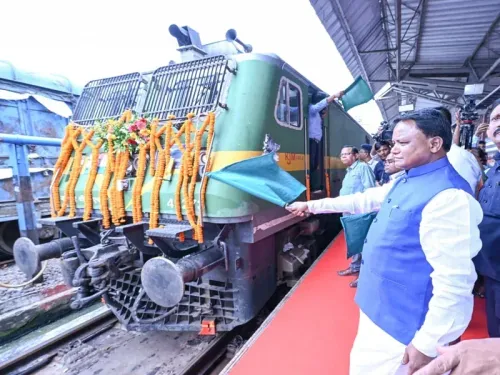
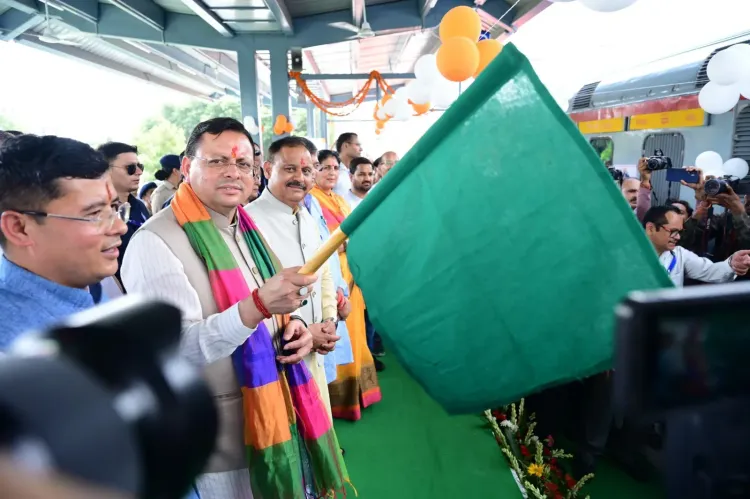
CM Pushkar Singh Dhami flagged off the special train from Harrrawala Railway Station, Dehradun on 13 July 2026 .
The six-day yatra to Veraval (Somnath) carries approximately 700 pilgrims , including self-help group members, welfare beneficiaries, saints, and community leaders.
The event is branded 'Somnath Swabhiman Parv' — framing the pilgrimage as an assertion of national self-respect and Sanatan cultural identity.
CM Dhami cited the Uniform Civil Code , anti-conversion law, anti-riot law, and recovery of more than 13,000 acres of government land as complementary cultural preservation measures.
The Madrasa Board has been replaced by the Uttarakhand State Minority Education Authority as part of state educational restructuring.
MLA Brij Bhushan Gairola and Dehradun Mayor Saurabh Thapliyal were present at the flag-off ceremony.
Chief Minister Pushkar Singh Dhami on Monday, 13 July 2026 flagged off a special train from Harrrawala Railway Station, Dehradun, bound for Veraval (Somnath) in Gujarat, marking the occasion of the 'Somnath Swabhiman Parv'. The six-day pilgrimage carries approximately 700 devotees drawn from diverse sections of Uttarakhand society, including members of self-help groups, beneficiaries of state welfare schemes, the Sant Samaj, and community representatives.
Context
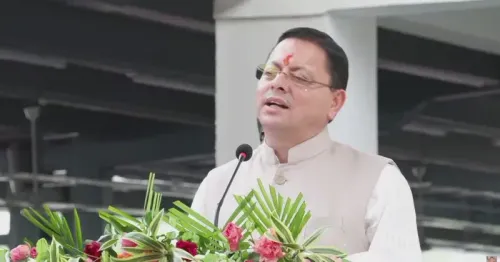
Addressing pilgrims at the flag-off, CM Dhami described the yatra as far more than a religious journey. He called it 'rashtra ke swabhiman, sanskritik chetna aur Sanatan paramparaon se judne ka sashakt madhyam' — 'a powerful medium to connect with national self-respect, cultural consciousness, and Sanatan traditions.' The journey is framed by the state government as an assertion of civilisational pride, not merely a temple visit.
Somnath Temple, one of the twelve Dwadash Jyotirlingas, stands in Veraval, Gujarat, and carries deep historical resonance as a site repeatedly destroyed and rebuilt over centuries. CM Dhami invoked this history, stating that Somnath has conveyed to the world that 'India rises with greater strength and resolve after every challenge.'
Policy Backdrop
The pilgrimage initiative sits within a broader governance framework that Uttarakhand has built around cultural preservation. The state enacted the Uniform Civil Code (UCC) in 2024, becoming the first Indian state to implement common personal laws for all citizens. CM Dhami also referenced an anti-conversion law and a riot-prevention law as part of the same commitment to protecting the state's cultural character.
The Chief Minister further stated that an anti-encroachment drive has freed more than 13,000 acres of government land across the state. He also noted the replacement of the Madrasa Board with the Uttarakhand State Minority Education Authority as part of educational restructuring. These measures, he argued, collectively protect 'Devbhoomi Uttarakhand ke sanskritik mulyon aur mool swaroop' — the cultural values and original character of the land.
CM Dhami credited Prime Minister Narendra Modi with inspiring an 'unprecedented cultural renaissance' across the country, and said the Uttarakhand government is working to establish Devbhoomi Uttarakhand as the 'spiritual capital of the world.'
Stakeholders and Impact
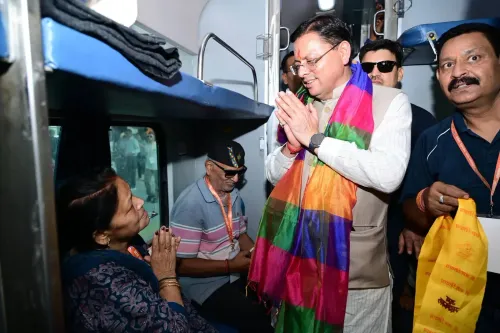
The participant profile of the yatra is deliberate: women from self-help groups, welfare scheme beneficiaries, saints, and community leaders travel together, projecting the journey as inclusive and cross-sectional. CM Dhami urged all travellers to represent Uttarakhand's culture and the spirit of 'Atithi Devo Bhava' — 'the guest is God' — wherever they go, positioning them as cultural ambassadors of the state.
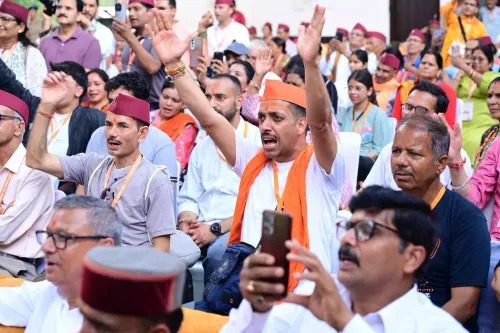
The event was attended by MLA Brij Bhushan Gairola, Dehradun Mayor Saurabh Thapliyal, other elected representatives, and a large number of local residents, signalling broad political and civic support for the initiative.
What's Next
The six-day yatra will conclude with pilgrims visiting the Somnath Jyotirlinga before returning to Uttarakhand. The state government's pattern of organising special religious trains and cultural events suggests further such initiatives to other Jyotirlinga or heritage sites are plausible. Progress on UCC implementation and ongoing land-clearance drives will remain closely watched as the Dhami administration continues to align religious outreach with domestic policy milestones.
Point of View
Using a state-organised pilgrimage to reinforce its cultural-nationalist credentials ahead of any electoral cycle. By including self-help group women and welfare beneficiaries alongside saints, the government signals that its Hindu-heritage agenda is intended to cut across class lines rather than appeal only to traditional religious constituencies. The explicit linkage to the UCC, anti-conversion legislation, and land-clearance drives in the same speech transforms a devotional event into a policy showcase. This pattern mirrors the broader BJP-governed states' strategy of anchoring governance narratives in civilisational pride, a theme that Prime Minister Modi has consistently amplified at the national level.
NationPress
13 Jul 2026
Frequently Asked Questions
What is the Somnath Swabhiman Parv yatra from Uttarakhand?
The 'Somnath Swabhiman Parv' is a state-organised six-day pilgrimage by special train from Dehradun to Veraval (Somnath) in Gujarat, flagged off by Chief Minister Pushkar Singh Dhami on 13 July 2026 for around 700 pilgrims from diverse sections of Uttarakhand society.
Who attended the flag-off ceremony at Dehradun?
The ceremony at Harrrawala Railway Station was attended by MLA Brij Bhushan Gairola, Dehradun Mayor Saurabh Thapliyal, other elected representatives, and a large number of local residents.
What is the significance of Somnath Temple?
Somnath Temple in Veraval, Gujarat, is one of the twelve Dwadash Jyotirlingas and is considered a symbol of India's resilience, having been repeatedly destroyed and rebuilt over centuries. It holds deep religious and cultural significance for Hindus across the country.
What cultural policies has the Uttarakhand government implemented?
Uttarakhand has enacted the Uniform Civil Code (2024) — the first Indian state to do so — along with an anti-conversion law, a riot-prevention law, and has replaced the Madrasa Board with the Uttarakhand State Minority Education Authority. The state has also recovered more than 13,000 acres of government land through an anti-encroachment drive.
Who are the pilgrims travelling on the Somnath special train from Dehradun?
The approximately 700 pilgrims include women from self-help groups, beneficiaries of state welfare schemes, members of the Sant Samaj, and representatives from various sections of Uttarakhand society.