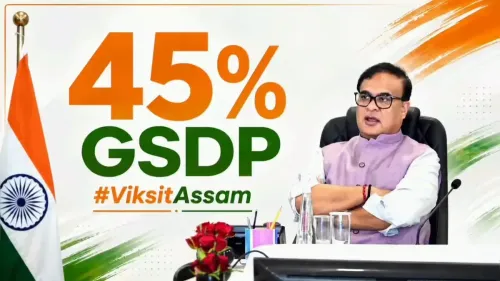
CM Himanta Reviews GSDP Matters with T&D and Statistics Dept
Synopsis
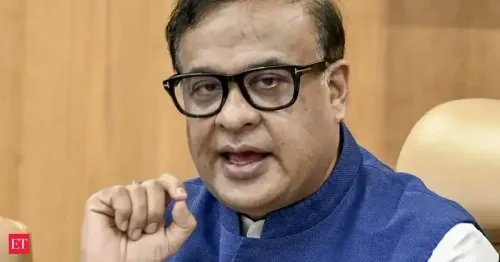
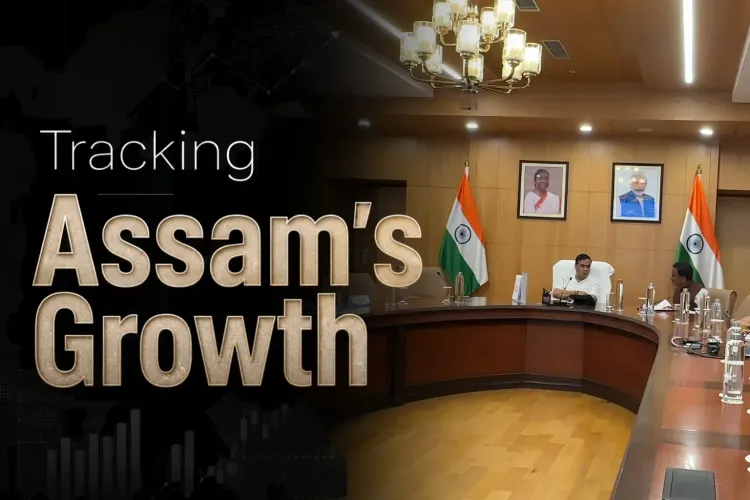
Chief Minister Himanta Biswa Sarma on 13 July 2026 reviewed GSDP-related matters with Assam's Transformation and Development Department and the Directorate of Economics and Statistics, reinforcing the state's data-driven approach to economic planning and growth tracking.
Key Takeaways
Himanta Biswa Sarma chaired a review of GSDP-related matters on 13 July 2026 .
The meeting involved the Transformation and Development Department and the Directorate of Economics and Statistics .
GSDP reviews in Assam feed directly into annual budget formulation, scheme prioritisation, and investment planning.
Since May 2021 , the Sarma government has emphasised data-driven economic governance and centralised GSDP monitoring.
Northeast states including Assam have intensified focus on official economic indicators to support infrastructure investment and attract capital.
Follow-up outputs may include updated GSDP projections in Assam's next economic survey or budget documents.
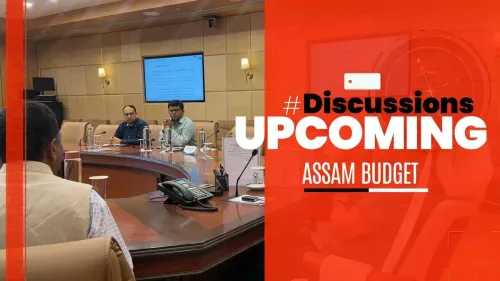
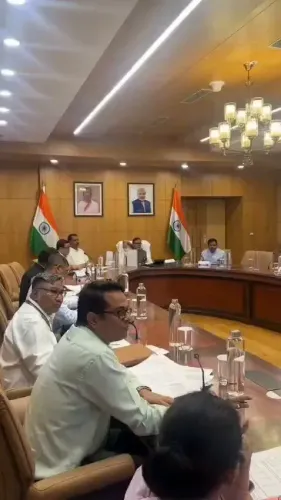
The Chief Minister's Office of Assam announced on Monday, 13 July 2026 that Chief Minister Dr. Himanta Biswa Sarma held a review meeting focused on Gross State Domestic Product (GSDP)-related matters, engaging officials from the Transformation and Development (T&D) Department and the Directorate of Economics and Statistics.
Context
The meeting brings together the two state bodies most directly responsible for economic planning and official data compilation in Assam. The T&D Department coordinates development schemes and integrates statistical inputs into policy decisions, while the Directorate of Economics and Statistics is the nodal agency for compiling GSDP estimates, conducting surveys, and publishing statistical reports that underpin state budgeting.
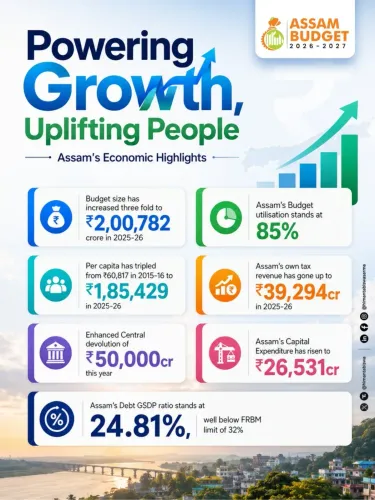
GSDP — the state-level equivalent of GDP — is the primary indicator used to measure Assam's economic output across agriculture, industry, and services. Accurate and timely GSDP data is essential for framing annual budgets, attracting investment, and aligning state targets with national statistical frameworks.
Policy Backdrop
Since assuming office in May 2021, Dr. Himanta Biswa Sarma has placed data-driven planning at the centre of Assam's governance agenda. In the immediate post-pandemic period, the state government announced a renewed emphasis on GSDP monitoring as part of its economic recovery strategy, signalling a shift toward centralising economic oversight within the Chief Minister's office.
Assam and other Northeast Indian states have significantly increased attention to official economic indicators since the early 2020s, driven by the need to support large-scale infrastructure investment and improve the state's positioning for central government grants and private capital. Periodic high-level GSDP reviews have become a feature of this approach, ensuring that growth projections across key sectors remain current and credible.
Stakeholders and Impact
State planners and economic statisticians are the immediate stakeholders in such a review. The outputs of meetings of this nature typically feed into the state's economic survey, mid-year budget assessments, and scheme prioritisation exercises. For citizens, accurate GSDP tracking influences resource allocation across sectors including agriculture, health, and infrastructure.
Businesses and investors monitoring Assam as a destination also rely on official GSDP data to benchmark growth and assess market potential. A high-level review signals that the state leadership is actively engaged in validating and potentially updating its economic projections, which can have downstream implications for investment promotion efforts.
What's Next
Observers will watch for the release of Assam's next economic survey or annual budget documents, which may incorporate updated GSDP projections arising from this review. Any follow-up announcements regarding new development schemes, statistical reforms, or revised growth targets would indicate the concrete outcomes of the Chief Minister's engagement with these departments.
The review underscores a broader pattern in which state governments in Northeast India are increasingly treating economic data governance as a strategic priority — one that links local planning cycles to national frameworks and positions states more competitively for central allocations and external investment.
Point of View
Credible and up-to-date GSDP figures carry fiscal and political weight — stronger numbers can support arguments for larger devolution and investment promotion. The meeting also reflects a Northeast-wide trend of states building internal statistical capacity to reduce dependence on delayed national estimates.
NationPress
12 Oct 2026
Frequently Asked Questions
What is GSDP and why does it matter for Assam?
GSDP, or Gross State Domestic Product, measures the total economic output of Assam across agriculture, industry, and services. It is the key indicator used for budget planning, attracting investment, and determining the state's share in central government financial transfers.
Why did CM Himanta Biswa Sarma review GSDP matters on 13 July 2026?
The Chief Minister's Office of Assam stated that CM Dr. Himanta Biswa Sarma reviewed GSDP-related matters with the T&D Department and the Directorate of Economics and Statistics as part of the state's ongoing data-driven planning process. No specific trigger beyond the routine review was cited in the post.
What is the role of the Directorate of Economics and Statistics in Assam?
The Directorate of Economics and Statistics is the Assam state agency responsible for compiling official economic data, including GSDP estimates, conducting surveys, and publishing statistical reports that inform state budgets and policy decisions.
What is the Transformation and Development Department of Assam?
The Transformation and Development Department coordinates development schemes across Assam, integrates statistical inputs into policy, and aligns state planning with broader national development frameworks.
What decisions or outcomes came from the GSDP review meeting?
The Chief Minister's Office did not announce specific decisions from the 13 July 2026 meeting. Observers expect any outcomes to be reflected in Assam's next economic survey, budget documents, or follow-up scheme announcements.