US invests $25 mn in ReElement to boost rare earth refining capacity

Synopsis
The US Department of War is putting $25 million into a single Indiana facility to process recycled magnets into high-purity rare earth materials — a targeted bet on domestic refining over new mining. With China dominating global rare earth processing, the ReElement deal signals Washington is moving from strategic concern to direct industrial investment.
Key Takeaways
The US Department of War announced a $25 million investment in ReElement Technologies Corp. on 14 July .
Funds will expand rare earth refining operations at ReElement's Marion, Indiana facility, covering equipment, installation, and working capital.
ReElement will process end-of-life magnets and recycled materials to produce yttrium, gadolinium, germanium, and gallium for defence applications.
The deal is executed by the Economic Defence Unit (EDU) and financed through the OASW(IBP) Industrial Base Fund .
The agreement includes restrictions on transactions with foreign entities of concern as a safeguard.
Officials say the project is part of a broader effort to rebuild a domestic mine-to-magnet supply chain for US defence needs.
The US Department of War has announced a $25 million investment in ReElement Technologies Corp. to expand domestic refining capacity for rare earth elements and other defence-critical minerals, in a move aimed at reducing American dependence on overseas supply chains and reinforcing its industrial base.
Key Developments
The investment, announced on Monday, 14 July by the Department's Economic Defence Unit (EDU) in partnership with the Office of the Under Secretary of War for Acquisition and Sustainment (OUSW(A&S)), will fund expansion of ReElement's refining operations at its facility in Marion, Indiana. The funding covers equipment, installation, and working capital required to scale up the company's production lines.
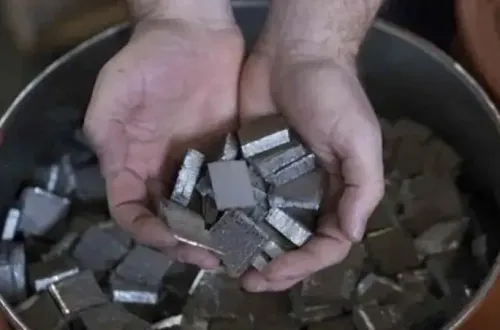
ReElement will focus on processing end-of-life magnets and other recycled materials to produce high-purity rare earth oxides, as well as yttrium, gadolinium, germanium, and gallium — materials considered indispensable for advanced defence systems, aerospace components, and secure communications infrastructure.
What the Government Said
'Strengthening our domestic refining capacity for rare earth elements and other critical minerals is a national security imperative,' said Michael Cadenazzi, Assistant Secretary of War for Industrial Base Policy. He added that the investment 'actively rebuilds a domestic, mine-to-magnet supply chain' and 'guarantees the joint force has reliable access to the critical materials required for advanced defence systems.'
George K. Kollitides II, Director of the Economic Defence Unit, described the agreement as part of a broader mandate to act 'quickly and decisively to address economic vulnerabilities and strengthen our military advantage,' adding that it 'helps secure domestic capacity, protect the industrial base behind the warfighter, and ensure the United States has reliable access to the materials that make deterrence credible and military advantage possible.'
Safeguards and Structure
According to the Department, the agreement includes safeguards designed to protect US interests, notably restrictions on transactions involving foreign entities of concern. Officials described the approach as 'performance-driven,' combining targeted government support with private-sector execution to accelerate critical industrial capabilities.
The investment is financed through the OASW(IBP) Industrial Base Fund and executed by the EDU — a unit the Department says was specifically created to identify industrial bottlenecks and apply commercial-sector best practices to government procurement timelines.
Why Critical Minerals Matter
Rare earth elements and critical minerals underpin a broad spectrum of modern defence technologies, including precision-guided munitions, fighter aircraft, naval platforms, radar systems, satellites, and advanced communications equipment. Their strategic importance extends beyond defence: they are also core inputs for electric vehicles, renewable energy systems, and consumer electronics.
This comes amid a wider US government push to onshore supply chains for materials where China currently dominates global refining capacity — a vulnerability that defence planners have flagged repeatedly in recent years. The ReElement deal represents one of the more targeted attempts to build domestic processing capability through recycled feedstocks rather than new mining alone.
Whether the $25 million outlay is sufficient to meaningfully shift the supply balance remains to be seen, but officials say further agreements under the EDU framework are expected as the programme scales.
Point of View
Not a solution — but that may be the point. The EDU appears to be building a playbook of targeted, fast-executing agreements rather than waiting for large-scale mining legislation. The recycled-feedstock angle is notable: it sidesteps the decade-long timelines of new mine development. The harder question is whether domestic refining capacity, even if scaled, can compete on cost with Chinese processors who benefit from integrated supply chains and state subsidies. Washington is betting on performance-driven contracts and safeguard clauses to compensate — a framework whose real test comes when production targets are due.
NationPress
12 Oct 2026
Frequently Asked Questions
What is the US Department of War's $25 million investment in ReElement Technologies?
It is a direct government investment announced on 14 July to expand ReElement Technologies Corp.'s rare earth refining operations at its Marion, Indiana facility. The funding covers equipment, installation, and working capital to produce high-purity rare earth oxides and critical minerals for US defence applications.
Why is the US investing in domestic rare earth refining?
The US is seeking to reduce dependence on overseas — particularly Chinese — supply chains for rare earth elements and critical minerals essential to defence systems, aerospace, and secure communications. Officials described domestic refining capacity as a 'national security imperative.'
What materials will ReElement Technologies produce?
ReElement will process end-of-life magnets and recycled materials to produce high-purity rare earth oxides, yttrium, gadolinium, germanium, and gallium — all used in advanced defence systems, precision-guided weapons, radar, satellites, and high-technology applications.
What safeguards are included in the agreement?
The Department of War said the agreement contains restrictions on transactions involving foreign entities of concern, designed to protect US interests and ensure the investment does not benefit adversarial supply chains.
Who oversees this investment and how is it funded?
The investment is executed by the Economic Defence Unit (EDU) and financed through the OASW(IBP) Industrial Base Fund, in partnership with the Office of the Under Secretary of War for Acquisition and Sustainment.