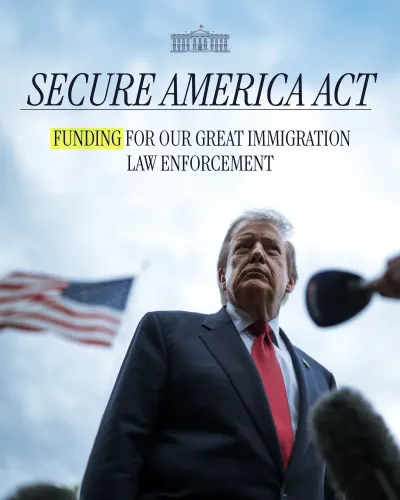
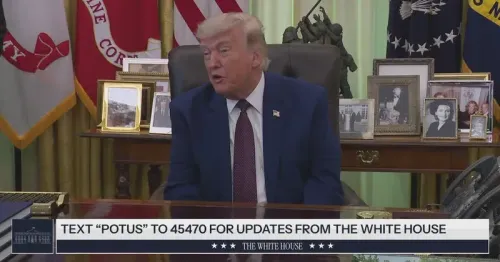
Trump Signs Executive Order on July 13, 2026
Synopsis
The White House announced that President Donald Trump signed an executive order on July 13, 2026. The subject of the order was not disclosed in the official post, but the full text is expected to be released via official government channels. Executive orders direct federal agencies without requiring congressional approval.
Key Takeaways
President Donald Trump signed an executive order on July 13, 2026 , as announced by the official White House account.
The specific subject matter of the order was not disclosed in the announcement post.
A linked URL in the post is expected to direct to the full text on official government channels.
Trump's first term (2017–2021) saw more than 200 executive orders signed across a range of policy areas.
Executive orders carry the force of law and are directed at federal agencies, but are subject to judicial review.
The full order is expected to be formally published in the Federal Register , with agency guidance to follow.
The White House announced on Monday, July 13, 2026, that President Donald Trump signed an executive order, continuing the administration's practice of using presidential directives to shape federal policy outside the congressional legislative process.
Context
The announcement, posted by the official White House communications account on X (formerly Twitter), did not disclose the subject matter of the order in the post text itself. A linked URL accompanying the post is expected to direct readers to the full text of the order on official government channels.
Executive orders carry the force of law and instruct federal agencies on how to implement or prioritise existing statutory authority. They do not require congressional approval but are subject to judicial review.
Policy Backdrop
The use of executive orders as a primary governance tool has deep roots in American presidential history, dating back to the early 20th century. During Trump's first term (2017–2021), the administration issued more than 200 executive orders, spanning areas including immigration enforcement, trade policy, and regulatory rollback — particularly in areas where legislative action in Congress had stalled.
Presidents across administrations have leaned on executive orders when bipartisan consensus in the legislature proves difficult to achieve, making them a bellwether for an administration's immediate policy priorities.
Stakeholders and Impact
Federal agencies are the primary actors tasked with implementing executive orders, often within tight timelines and with guidance issued by the relevant department or the Office of Management and Budget. The scope of impact on the American public depends entirely on the subject matter of the order.
Legal advocacy groups and opposition legislators routinely monitor newly signed executive orders for potential constitutional or statutory conflicts, and court challenges have historically followed orders on contentious subjects within days of their signing.
What's Next
The full text of the July 13, 2026 executive order is expected to be published in the Federal Register, the official journal of the U.S. federal government, which provides public notice of all presidential actions. Agency implementation guidance typically follows within days to weeks.
Observers and legal analysts will be watching closely for the order's specific directives, the agencies it tasks, and any immediate legal responses it may draw. The signing marks another step in what has historically been an active use of executive authority by the Trump administration.
Point of View
Not its subject — is consistent with a communications pattern where the official social media post serves as a headline hook directing traffic to the full document. For India-based observers, executive orders from Washington carry significance whenever they touch trade, technology, immigration, or defence — all areas where US-India bilateral interests intersect. The volume and pace of executive orders in any administration signals the degree to which the White House is bypassing legislative negotiation, a dynamic that has implications for the predictability of US policy for foreign governments and investors. Until the full text is public, the political weight of this particular order remains an open question.
NationPress
14 Jul 2026
Frequently Asked Questions
What executive order did Trump sign on July 13, 2026?
The White House announced that President Trump signed an executive order on July 13, 2026, but the subject matter was not disclosed in the social media post. The full text is expected to be available through official US government channels.
What is an executive order and does it need Congress approval?
An executive order is a directive issued by the US President to federal agencies, carrying the force of law. It does not require approval from Congress but can be challenged in court.
How many executive orders did Trump sign in his first term?
During his first term from 2017 to 2021, President Trump signed more than 200 executive orders, covering areas such as immigration, trade, and regulatory policy.
Where can I read the full text of Trump's July 2026 executive order?
The full text of presidential executive orders is formally published in the Federal Register, the official journal of the US federal government, typically within days of signing.
Can a US executive order be challenged legally?
Yes. Executive orders are subject to judicial review, and legal challenges can be filed if an order is believed to conflict with existing federal law or the US Constitution.