CM Yogi recalls UP's era of fear, contrasts with law-order turnaround
Synopsis
CM Yogi Adityanath evoked a time when UP residents could not safely step out after dark, using the stark contrast to highlight his government's claimed transformation of the state's law-and-order landscape.
Key Takeaways
CM Yogi Adityanath posted a video on 8 October 2026 recalling when life in Uttar Pradesh was confined to daylight hours due to lawlessness.
He described a past where citizens could not move freely before sunrise or after sunset, using it as a baseline contrast with his government's record.
The 'sunrise-to-sunset' framing is a recurring rhetorical device CM Yogi has deployed since taking office in March 2017 .
Uttar Pradesh is home to roughly 240 million people , making it the most populous and one of the most politically consequential states in India.
The post arrives as the state edges closer to its next assembly election cycle, lending the statement dual weight as governance claim and electoral messaging.
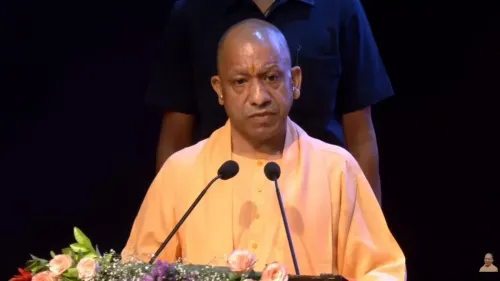
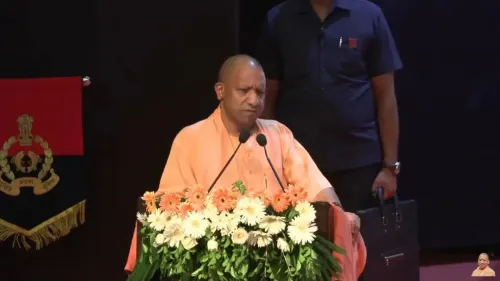
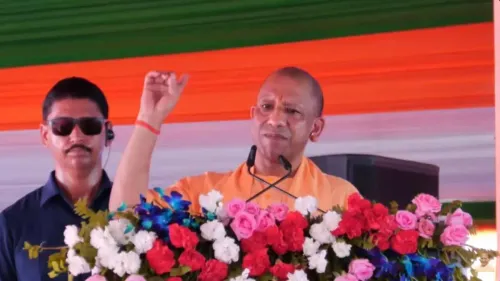
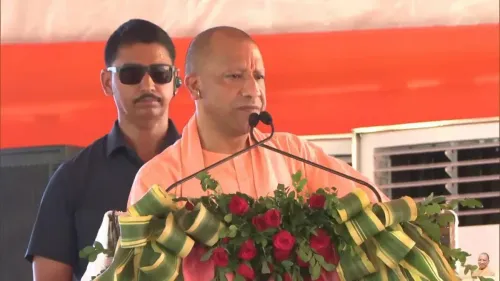
There was a time in Uttar Pradesh when life was squeezed between sunrise and sunset — step outside before dawn or after dusk, and you were gambling with your safety. Uttar Pradesh Chief Minister Yogi Adityanath invoked that stark memory on Thursday, 8 October 2026, in a video post on X, drawing a pointed contrast between the state's troubled past and its present law-and-order standing.
Speaking in Hindi, CM Yogi said: 'Ek samay tha, jab Uttar Pradesh ke andar suryoday se suryast ke beech hi life hua karti thi. Iske pehle aur baad mein aap bahar nahin nikal sakte the...' — ('There was a time when, inside Uttar Pradesh, life existed only between sunrise and sunset. Before and after that, you could not step out...'). The framing was deliberate: a before-and-after narrative that his government has consistently used to benchmark its tenure against the preceding years of perceived administrative drift.
The 'sunrise-to-sunset' image and what it captured
The phrase 'sunrise to sunset' is a vivid shorthand for the curfew-like atmosphere that large parts of Uttar Pradesh — India's most populous state with roughly 240 million people — were associated with through much of the preceding decade. Reports of rampant extortion, communal tension, and criminal networks that operated with near-impunity formed a persistent national narrative about the state. CM Yogi has returned to this imagery repeatedly since taking office in March 2017, using it as a baseline against which to measure bulldozer-era enforcement, encounter statistics, and investor-confidence metrics.
A governing pitch built on contrast
The rhetorical move is classic Yogi Adityanath political communication: anchor the present in a visceral memory of the past, then let the implied transformation speak for itself. His administration has cited falling crime indices, the dismantling of organised criminal networks, and the state's rising position in ease-of-doing-business rankings as evidence of that change. Whether those metrics fully capture ground-level safety — particularly for marginalised communities — remains a subject of active political debate in the state.
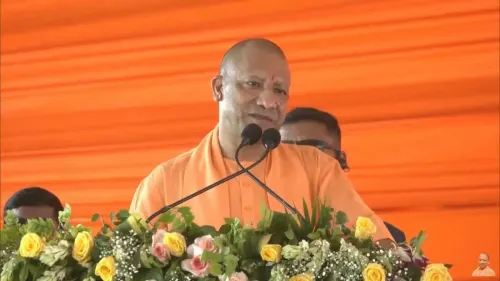
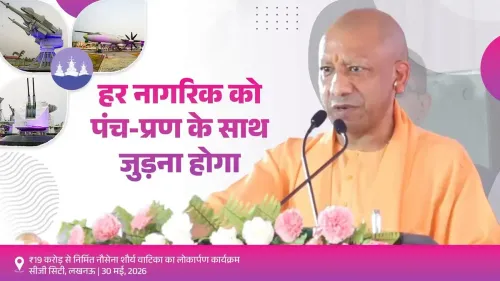
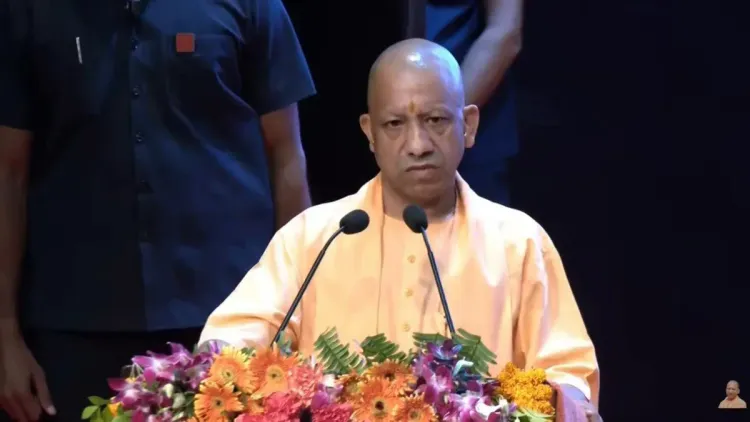
The video post, which carries no attached images but includes a video clip of CM Yogi speaking directly to camera, lands at a moment when Uttar Pradesh is approaching its next assembly election cycle. In that context, the 'then versus now' framing doubles as both a governance report card and an early electoral pitch — reminding voters of an era they lived through and asking them to weigh it against the present.
For a state that has long been the decisive prize in Indian national politics, the battle over that memory — and who gets credit for changing it — is very much still being fought.
Point of View
His administration keeps the baseline of comparison firmly in its own favour, making any incremental improvement read as a transformation. The timing of this post — with an election cycle on the horizon — suggests the before-and-after contrast is being refreshed and rereleased as political collateral. Critics, however, argue that aggregate law-and-order metrics can obscure uneven ground-level realities, meaning the fight over this narrative is far from settled.
NationPress
8 Oct 2026
Frequently Asked Questions
What did CM Yogi mean by 'life only between sunrise and sunset' in UP?
He was referring to a period when lawlessness and crime were so severe in Uttar Pradesh that citizens feared moving outside their homes before dawn or after dark. He used this image to contrast the past with his government's claimed improvements in law and order since 2017.
When did Yogi Adityanath become Chief Minister of Uttar Pradesh?
Yogi Adityanath first became Chief Minister of Uttar Pradesh in March 2017 after the BJP won a decisive majority in the state assembly elections.
What is Yogi Adityanath's law-and-order record in UP?
His government has cited falling crime indices, dismantling of organised criminal networks, and improved ease-of-doing-business rankings. These claims are contested by opposition parties who argue that ground-level safety, especially for marginalised communities, presents a more complex picture.
Why is Uttar Pradesh politically important in India?
Uttar Pradesh is India's most populous state with roughly 240 million people and sends the largest bloc of members to the Lok Sabha, making it the single most consequential state in national elections.
What is the Gorakhnath Math and its connection to CM Yogi?
The Gorakhnath Math is a prominent religious monastery in Gorakhpur, Uttar Pradesh. Yogi Adityanath is its head priest (Mahant), a position that forms the spiritual and political foundation of his public identity.