CM Yogi on AI: Let It Assist, Never Decide
Synopsis
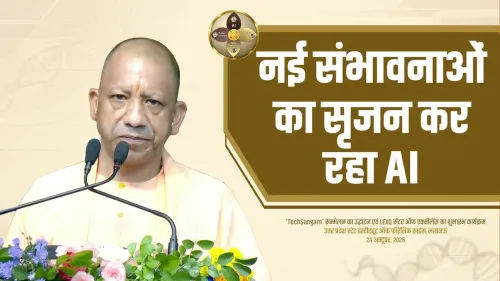
Chief Minister Yogi Adityanath declared on October 24, 2026, that AI must accelerate but never replace human decision-making in governance, asserting that discretion must remain with people, not machines — a pointed signal to UP's vast administrative apparatus.
Key Takeaways
CM Yogi Adityanath on October 24, 2026 stated that AI should help officials make faster decisions but must not become the decision-maker itself.
He emphasised that AI must be 'operated by us and used according to our discretion' — humans govern the tool, not the other way around.
The statement was issued by the Chief Minister's Office of Uttar Pradesh , giving it the weight of an administrative principle for the state's governance machinery.
India's NITI Aayog laid the philosophical groundwork for this position in 2018 with the 'AI for All' national strategy, which stressed human oversight.
Uttar Pradesh , with over 200 million residents , is one of India's most administratively complex states, making CM Yogi's framing particularly consequential for public-sector AI adoption.
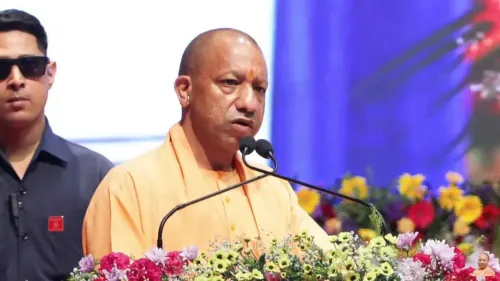
A machine should serve the mind, not replace it. On Saturday, October 24, 2026, the Chief Minister's Office of Uttar Pradesh posted a sharp public statement from Chief Minister Yogi Adityanath laying down a clear philosophical boundary on the use of Artificial Intelligence in governance and public life.
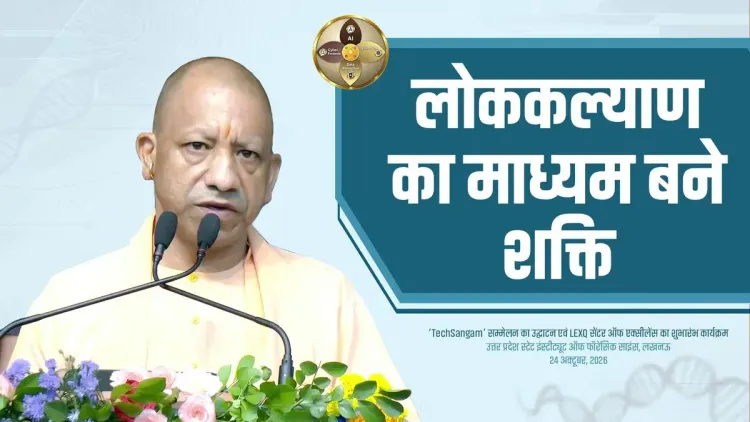
Translated from Hindi, CM Yogi Adityanath's words were direct: 'Artificial Intelligence hamare liye sheeghra nirnay lene mein madadgar ho sakta hai, lekin woh hamare liye nirnaayak na bane' — 'AI can help us make quick decisions, but it must not become the decision-maker for us. AI should be operated by us and used according to our discretion. We should not walk by its discretion.'
The Line CM Yogi Is Drawing
The statement distils a tension that policymakers worldwide are grappling with: efficiency versus agency. AI, by design, accelerates analysis and surfaces options — qualities enormously useful in a state like Uttar Pradesh, home to over 200 million people and one of India's most complex administrative units. The CM's framing is not anti-technology. It is a hierarchy: humans at the top, machines in service.
The distinction matters. A government official using AI to rapidly process welfare applications is one scenario. That same AI autonomously deciding who qualifies — with no human checkpoint — is another. CM Yogi's statement targets precisely the second scenario as unacceptable.
Where This Sits in India's AI Governance Conversation
India's engagement with responsible AI goes back at least to 2018, when NITI Aayog released the national strategy titled 'AI for All', which explicitly called for human oversight and inclusive deployment across government functions. That document became a philosophical anchor for how Indian institutions were expected to approach the technology.
CM Yogi's remark is consistent with — and publicly reinforces — that framework. It signals to Uttar Pradesh's administrative machinery that digital tools are welcome, but accountability cannot be delegated to an algorithm. In governance, the buck stops with the official, not the model.
This also arrives at a moment when AI tools are rapidly entering public administration globally — from automated benefit processing to predictive policing — raising urgent questions about transparency, bias, and democratic accountability that no country has fully resolved.
What Uttar Pradesh's Administrators Are Being Told
For the hundreds of thousands of government employees in Uttar Pradesh, the message from the CM's office is essentially a policy directive in the form of a principle: adopt AI as a productivity tool, never as an authority. Discretion — vivek — remains a human obligation, not something to be outsourced.
The statement stops short of announcing specific guidelines or legislative action. But in a state with the political and administrative weight of Uttar Pradesh, a CM's public articulation of first principles often precedes formal policy. The AI debate in Lucknow just got a north star.
Point of View
In plain language, a hierarchy of authority that subordinates AI to human judgement. It positions the UP administration within the mainstream of India's 'AI for All' framework rather than as an outlier. The political subtext is notable: by publicly championing human discretion over algorithmic authority, the CM insulates his administration from future accountability questions around automated decisions. If formal state-level AI guidelines follow, this post will likely be cited as their foundational rationale.
NationPress
24 Oct 2026
Frequently Asked Questions
What did CM Yogi Adityanath say about AI?
CM Yogi Adityanath said that AI can help make quick decisions but must never become the actual decision-maker. He stated that AI should be operated and used according to human discretion, not the other way around.
Does Uttar Pradesh have an AI policy?
As of October 2026, CM Yogi's statement sets out a clear governing principle — human oversight over AI — but no specific formal state-level AI policy document has been announced alongside this statement.
What is India's national AI strategy?
India's national AI strategy, titled 'AI for All', was released by NITI Aayog in 2018. It outlined principles for responsible, inclusive AI deployment across government functions, including an emphasis on human oversight.
Why is human oversight in AI important for governance?
Human oversight ensures that accountability for government decisions — such as welfare eligibility or law enforcement actions — rests with elected or appointed officials, not with automated systems that may carry bias or lack democratic legitimacy.
What does 'vivek' mean in CM Yogi's AI statement?
'Vivek' is a Hindi word meaning discretion or wisdom. CM Yogi used it to argue that human judgement must govern how AI is applied, rather than allowing AI's own logic to drive decisions.