CM Yogi Warns: Let AI Assist, Not Govern Human Decisions

Synopsis
Chief Minister Yogi Adityanath has cautioned that AI must assist and not govern human decisions, warning that total dependence on the technology could itself become a crisis — a statement that sets a clear human-sovereignty doctrine for Uttar Pradesh's growing AI adoption.
Key Takeaways
The Chief Minister's Office of Uttar Pradesh shared a direct caution from CM Yogi Adityanath on 24 October 2026 on AI's role in governance.
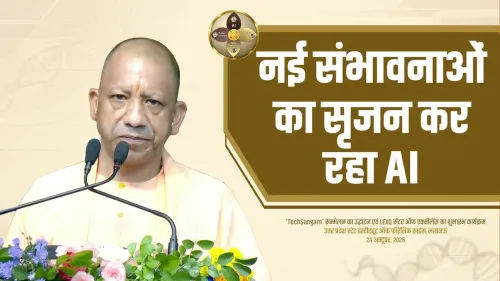
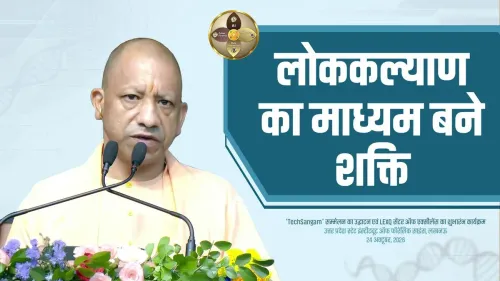
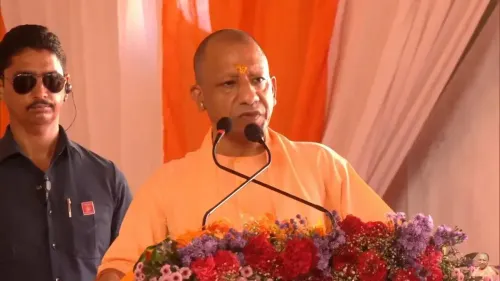
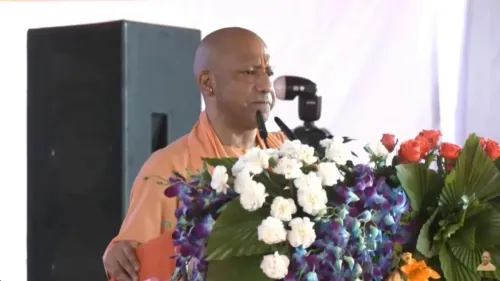
CM Yogi stated AI should 'assist in swift decision-making' but must never become 'the decision-maker itself.' He stressed that AI must be operated by humans and guided by human discretion — not the reverse.
He warned that over-reliance on AI could turn the same technology into a source of crisis.
NITI Aayog's 2018 National Strategy for AI similarly mandated responsible, human-centric deployment — a principle CM Yogi's remark publicly reinforces.
The statement signals a clear human-oversight doctrine for Uttar Pradesh as the IndiaAI Mission continues to expand state-level adoption.
A sharp caution from the top floor of power in Lucknow — Chief Minister Yogi Adityanath has warned that while Artificial Intelligence can accelerate decision-making, it must never become the final decision-maker. The Chief Minister's Office of Uttar Pradesh shared the remark on Saturday, 24 October 2026, framing it as a boundary every administrator and policymaker must hold firm.
In the original Hindi, CM Adityanath's words cut directly to the point: 'AI हमारे द्वारा संचालित हो और उसका उपयोग हमारे विवेक पर आधारित हो, न कि हम उसके विवेक पर चलें' — 'AI must be operated by us and its use must be grounded in our judgement, not the other way around.' The warning extends further: if governance becomes wholly dependent on AI, that same technology could become the source of crisis.
The line CM Yogi is drawing in governance
The statement arrives at a moment when AI tools are being actively piloted across Indian states for public administration — from grievance redressal portals to predictive analytics in law enforcement. Yogi Adityanath's framing is deliberate: AI as a tool, not a principal. The distinction matters enormously in a state as large as Uttar Pradesh, home to over 240 million people, where administrative decisions touch lives at a scale few systems in the world match.
The concern is not abstract. Across governments globally, questions about algorithmic accountability — who is responsible when an AI-driven decision harms a citizen — remain largely unanswered. CM Yogi is, in effect, pre-empting that question with a doctrine: human discretion stays sovereign.
India's broader AI reckoning — and what UP's stance signals
NITI Aayog's National Strategy for Artificial Intelligence, released in 2018, explicitly stressed responsible and human-centric AI deployment — a principle that has since been threaded through central and state-level policy conversations. The IndiaAI Mission, which continues to roll out, puts similar emphasis on ethical guardrails. CM Yogi's public articulation of this boundary aligns with — and amplifies — that national posture.
What makes the remark notable is its register: this is not a technical conference speech or a policy white paper. It is a direct instruction in plain language, shared on a public platform, addressed implicitly to every official under his administration. The message is clear. Use the tool. Master it. But never outsource your judgement to it.
As AI adoption deepens inside government — and as state-level AI ethics guidelines remain a work in progress across India — Uttar Pradesh's Chief Minister has staked out an early, unambiguous position. Human oversight is not optional. It is the line.
Point of View
Not sovereign' doctrine is a politically significant move — it positions Uttar Pradesh as a state that embraces technology without ceding administrative accountability. In a national environment where AI adoption in governance is accelerating faster than ethical frameworks can keep pace, staking out this boundary publicly also serves as a shield against future criticism over algorithmic mis-governance. The remark dovetails with the Centre's IndiaAI Mission rhetoric but translates it into a governing instruction, not just a policy aspiration. Analysts will watch whether this philosophy is codified into state-level AI use guidelines — or remains an influential but unenforced statement of intent.
NationPress
24 Oct 2026
Frequently Asked Questions
What did CM Yogi Adityanath say about Artificial Intelligence?
CM Yogi Adityanath said AI can help humans make faster decisions but must never become the final decision-maker. He stressed that AI should be operated by humans and guided by human judgement, warning that over-dependence on AI could itself become a crisis.
Why is CM Yogi's statement on AI significant for governance?
Uttar Pradesh is one of India's largest states, and any doctrine on AI use in its administration affects over 240 million people. The statement sets a clear human-oversight principle that could shape how state officials adopt AI tools in public service delivery.
What is India's national policy on AI in government?
NITI Aayog released India's National Strategy for Artificial Intelligence in 2018, emphasising responsible and human-centric deployment. The IndiaAI Mission continues to expand this framework across central and state governments.
Is Uttar Pradesh using AI in administration?
Several Indian states, including Uttar Pradesh, have expanded AI pilots in public administration and service delivery since the late 2010s, covering areas like grievance redressal and data analytics.
What does 'human-centric AI' mean in the context of Indian governance?
Human-centric AI means that technology is used as a support tool for human officials, with final decisions remaining the responsibility of accountable human administrators — not automated systems. This is the principle CM Yogi publicly endorsed on 24 October 2026.