Giriraj Singh Chairs Textiles Review on Sustainable Growth
Synopsis
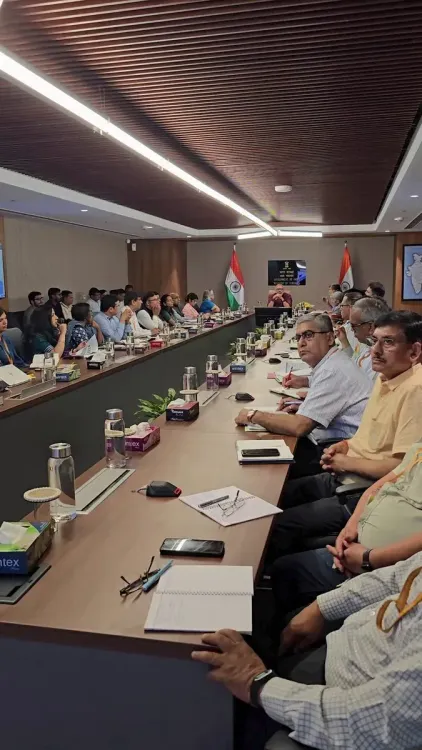
Union Textiles Minister Giriraj Singh chaired a high-level review meeting on 25 May 2026, focusing on holistic textile sector growth with special emphasis on eco-friendly and sustainable development strategies, reinforcing India's push to balance industrial growth with environmental responsibility.
Key Takeaways
Union Textiles Minister Giriraj Singh chaired a review meeting with senior officials on 25 May 2026 , centred on the textile sector's holistic development.
Special discussions were held on eco-friendly and sustainable development plans to balance nature and industrial growth.
The meeting aligns with existing schemes including the PLI for textiles , ATUFS , and the PM MITRA parks programme, all of which carry sustainability components.
The Atmanirbhar Bharat framework underpins the ministry's push for domestic green-fibre innovation and reduced import dependence.
Key stakeholders — textile manufacturers, MSME exporters, and handloom weavers — stand to be affected by any new sustainability-linked guidelines emerging from the review.
Global export market demands for eco-compliance, especially from the EU and US , give the sustainability push direct commercial urgency.
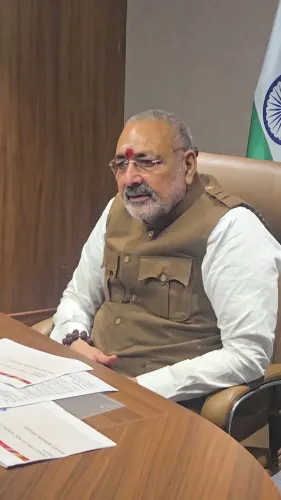
Union Textiles Minister Giriraj Singh on Monday, 25 May 2026, chaired a high-level review meeting with senior ministry officials, placing the holistic development of India's textile sector and environmentally sustainable growth strategies at the centre of deliberations.
Context
Singh posted on X that the meeting focused on 'टेक्सटाइल सेक्टर का समग्र विकास' — 'the holistic development of the textile sector' — with special discussions on eco-friendly and sustainable development plans. The minister emphasised building 'a strong balance between nature and development' as the sector moves forward. The post was tagged with #GreenFibre, #SustainableFibre, #SustainableDevelopment, and #AtmanirbharBharat, signalling a deliberate policy alignment.
Policy Backdrop
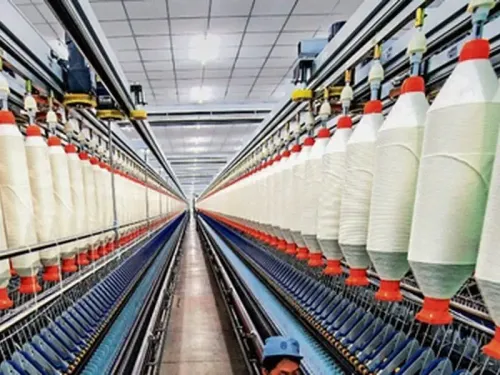
India's textile ministry has progressively woven sustainability into its core policy architecture over recent years. The Production Linked Incentive (PLI) scheme for textiles, notified in 2021, was designed to boost investment specifically in man-made fibre and technical textiles — segments where green innovation is increasingly critical for export competitiveness. The Amended Technology Upgradation Fund Scheme (ATUFS), operational since 2016, has provided support for modernisation and cleaner production technologies across mills and units.
The government's announcement of seven PM MITRA (Mega Integrated Textile Region and Apparel) parks in 2021 further embedded environmental safeguards into world-class textile infrastructure planning. These parks are designed to host integrated value chains — from fibre to finished product — with sustainability compliance built in from the ground up. The Atmanirbhar Bharat framework, launched in 2020, underpins all these efforts by encouraging domestic innovation in green technologies rather than reliance on imports.
Stakeholders and Impact
The review meeting's emphasis on sustainable development has direct implications for textile manufacturers, MSME exporters, and handloom weavers across the country. Global buyers — particularly in the European Union and United States — have tightened environmental compliance requirements for apparel and fabric imports, making green certification a market-access issue for Indian exporters, not merely a policy preference.
For small and medium enterprises, the direction signalled by the minister suggests that forthcoming guidelines or scheme revisions may prioritise eco-friendly fibre production and circular economy practices. Handloom weavers, whose traditional processes are inherently low-impact, could stand to benefit from any new incentive structures that reward sustainable methods.
What's Next
The outcomes of such ministerial review meetings typically feed into scheme guidelines, budget allocations, and inter-ministerial coordination notes. Any new directives on sustainability incentives under the PLI or ATUFS frameworks would be closely watched by the industry. The upcoming monsoon session of Parliament is expected to see debates on textile-sector allocations and export promotion, which may provide the next formal window for the ministry to signal further policy shifts. India's ambition to position itself as a global hub for sustainable textiles will depend on translating ministerial intent — as expressed in meetings like this — into measurable targets and funded programmes.
Point of View
The minister signals that future scheme revisions may carry environmental conditionalities. This also fits a wider pattern of BJP-led governance linking Atmanirbhar Bharat with green economy goals, seeking to pre-empt international carbon-border mechanisms. The real test will be whether the review translates into measurable scheme updates before the next parliamentary session.
NationPress
15 Oct 2026
Frequently Asked Questions
What was the Giriraj Singh textiles meeting about on 25 May 2026?
Union Textiles Minister Giriraj Singh chaired a review meeting with senior officials on 25 May 2026, focused on the holistic development of India's textile sector, with special discussions on eco-friendly and sustainable development plans.
What is India's policy on sustainable textiles?
India has integrated sustainability into textile policy through schemes like the PLI for textiles, the Amended Technology Upgradation Fund Scheme (ATUFS), and the seven PM MITRA textile parks announced in 2021, all of which include environmental safeguards and support for green production technologies.
What are PM MITRA textile parks?
PM MITRA — Mega Integrated Textile Region and Apparel — parks are seven large-scale textile infrastructure projects announced by the Indian government in 2021 to develop integrated value chains from fibre to finished product, with world-class facilities and built-in environmental compliance.
How does Atmanirbhar Bharat relate to the textile sector?
The Atmanirbhar Bharat initiative, launched in 2020, encourages domestic manufacturing and innovation across sectors including textiles, pushing for self-reliance in green fibre technologies and reducing dependence on imported raw materials and machinery.
Why is sustainable textile production important for India's exports?
Major import markets like the European Union and the United States have tightened environmental compliance requirements for apparel and fabric, making eco-friendly certification a market-access necessity for Indian exporters and not just a domestic policy preference.