Giriraj Singh Reviews New Age Fibre Products at NITRA, Ghaziabad
Synopsis
Union Textiles Minister Giriraj Singh visited NITRA in Ghaziabad on 22 June 2026 to review new age fibre products, calling them central to innovation-led, environment-friendly growth in India's textile sector.
Key Takeaways
Union Textiles Minister Giriraj Singh attended a programme at NITRA, Ghaziabad on 22 June 2026 .
He reviewed products manufactured from new age fibres , described as innovation- and sustainability-driven.
NITRA (Northern India Textile Research Association) is a premier R&D body for technical textiles headquartered in Ghaziabad, Uttar Pradesh .
The PLI scheme for man-made fibre and technical textiles , launched in 2021 , forms part of the policy backdrop supporting such initiatives.
The minister emphasised that such efforts make the textile industry 'more capable and aligned with future needs.' Policy watchers will track whether the event leads to fresh funding or a revised national textile policy with sustainability benchmarks.
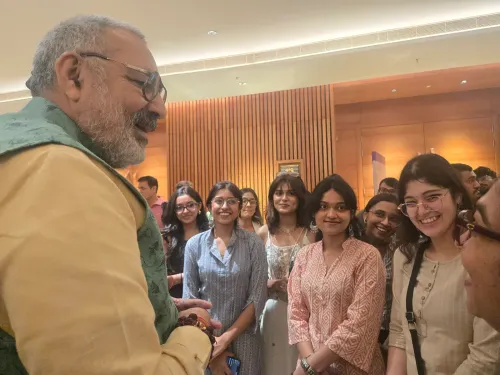
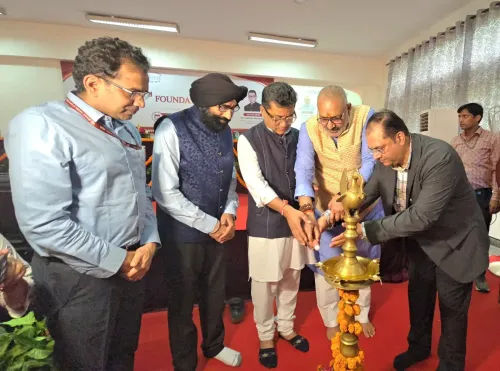
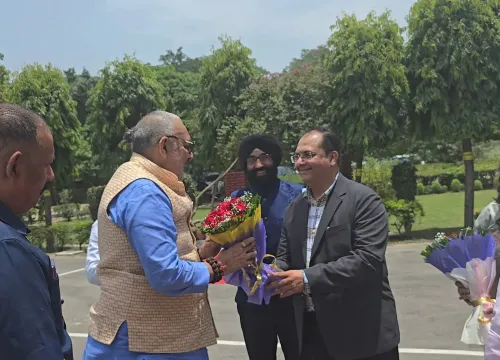
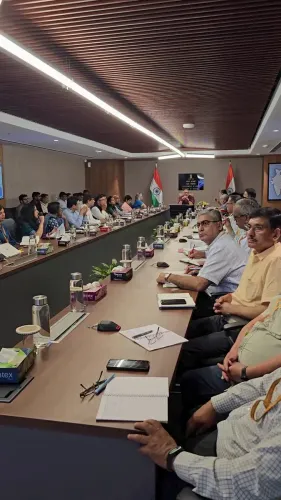
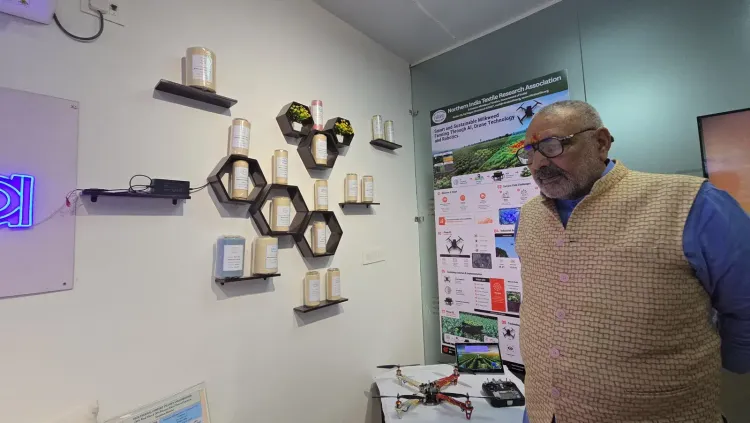
Union Textiles Minister Giriraj Singh on Monday, 22 June 2026 visited the Northern India Textile Research Association (NITRA) in Ghaziabad, Uttar Pradesh, where he reviewed a range of products manufactured from new age fibres, underscoring the government's push for sustainable and innovation-led growth in the textile sector.
Context
Sharing his observations from the event, Minister Singh wrote in Hindi: 'न्यू एज फाइबर से निर्मित विभिन्न उत्पादों का अवलोकन किया' ('reviewed various products manufactured from new age fibres'). He noted that these products, grounded in innovation and sustainability, 'reflect the emerging new possibilities in the textile sector.' The minister added that such initiatives play a 'vital role in promoting environment-friendly development while making the industry more capable and aligned with future needs.'
The event at NITRA brought together product demonstrations centred on next-generation fibres designed to reduce dependence on water- and chemical-intensive conventional textile manufacturing processes.
Policy Backdrop
NITRA, headquartered in Ghaziabad, is one of India's premier textile research and development bodies with a focus on technical textiles and process innovation. It has been a key institutional partner in successive government programmes aimed at upgrading the sector's technological base.
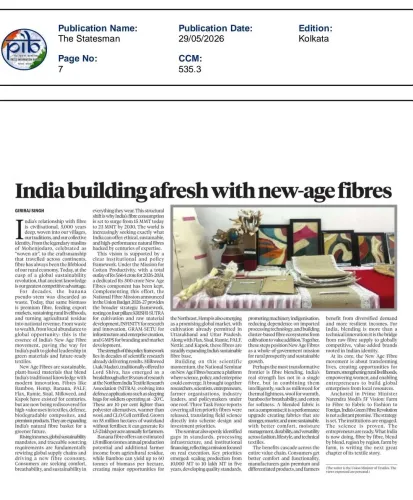
The Ministry of Textiles launched the Production Linked Incentive (PLI) scheme for man-made fibre and technical textiles in 2021, aimed at strengthening domestic value chains and boosting exports. India's broader textile policy has progressively shifted from volume-driven growth to technology-led, resource-efficient production, driven in part by global buyer demands for traceability and lower environmental impact. Public research bodies such as NITRA are central to that transition.
Stakeholders and Impact
The push for new age fibres has direct implications for textile manufacturers and MSME exporters who face increasing pressure from international markets to demonstrate sustainable sourcing and production credentials. Alternatives to conventional fibres can reduce input costs tied to water and chemicals, while opening access to premium, eco-conscious global markets.
India's emphasis on circular-economy practices across manufacturing sectors mirrors this shift in textiles. Research demonstrations at institutions like NITRA serve as a pipeline connecting laboratory-stage innovation with industry-scale adoption, particularly for smaller manufacturers who may lack independent R&D capacity.
What's Next
Attention will now turn to whether the Ministry of Textiles translates ministerial engagement at events like the NITRA programme into concrete policy measures — including revised funding allocations for green-fibre pilot projects or dedicated support lines in upcoming Union Budget discussions. Any announcement of a revised national textile policy incorporating sustainability benchmarks would mark a significant step beyond current PLI-era incentives. Industry stakeholders will watch for follow-up action that moves new age fibre development from showcase to mainstream supply chain integration.
Point of View
Singh signals that green textiles are moving from a niche policy aspiration to a ministerial priority. The optics also serve a dual purpose: reinforcing India's credentials with ESG-conscious export markets while positioning domestic R&D institutions as drivers of industrial transformation. Whether this translates into budgetary commitments or regulatory standards will determine if the momentum is substantive or ceremonial.
NationPress
21 Sept 2026
Frequently Asked Questions
What is NITRA and where is it located?
NITRA stands for Northern India Textile Research Association, a premier textile R&D body headquartered in Ghaziabad, Uttar Pradesh, focused on technical textiles and sustainable process innovation.
What are new age fibres in textiles?
New age fibres refer to next-generation textile raw materials designed to replace conventional, resource-intensive fibres. They prioritise lower water and chemical usage, recyclability, and alignment with circular-economy principles.
What did Giriraj Singh say at the NITRA event?
Minister Singh said the new age fibre products 'reflect emerging new possibilities in the textile sector' and that such initiatives play a 'vital role in promoting environment-friendly development while making the industry more capable and aligned with future needs.'
What is India's PLI scheme for textiles?
The Production Linked Incentive (PLI) scheme for man-made fibre and technical textiles was launched by the Ministry of Textiles in 2021 to strengthen domestic value chains, encourage innovation, and boost India's textile exports.
How does the NITRA event connect to India's textile export goals?
Global buyers increasingly demand sustainable sourcing and traceability. Developing new age fibres through institutions like NITRA helps Indian manufacturers — especially MSMEs — access premium eco-conscious markets and meet international ESG standards.