Jal Shakti Ministry ranks among India's top 6 on Google Trends
Synopsis
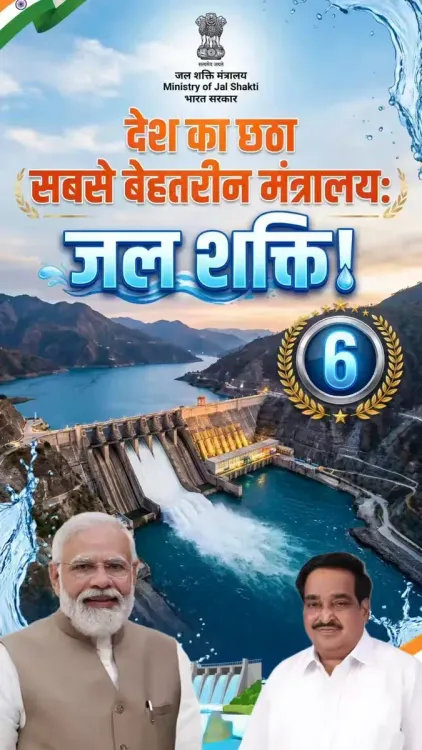
Union Jal Shakti Minister C. R. Paatil on 30 May 2026 cited a Google Trends ranking placing his ministry sixth among India's most influential ministries, crediting PM Modi's governance and ongoing work under the Jal Jeevan Mission, Swachh Bharat Mission, and Atal Bhujal Yojana.
Key Takeaways
The Jal Shakti Ministry ranked sixth among India's most influential ministries in recent Google Trends data, as cited by Minister C.
Paatil on 30 May 2026 .
Minister Paatil attributed the recognition to sustained work in water conservation, water security, sanitation , and public welfare.
The Jal Shakti Ministry was formed in 2019 by merging two earlier ministries and oversees the Jal Jeevan Mission , Swachh Bharat Mission , and Atal Bhujal Yojana .
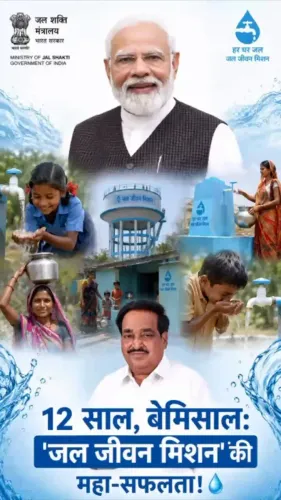
The Jal Jeevan Mission , launched in August 2019 , aims to deliver piped tap water connections to all rural households across India.
The post reflects a growing trend of central ministries using third-party digital metrics to communicate public engagement and scheme performance.
Next milestones to watch include updated Jal Jeevan Mission coverage data and fresh allocations in the forthcoming Union Budget .
Union Jal Shakti Minister C. R. Paatil on Saturday, 30 May 2026 highlighted that the Ministry of Jal Shakti has emerged among the country's six most influential and top-ranked ministries in recent Google Trends data, attributing the recognition to sustained work in water conservation, water security, sanitation, and public welfare under Prime Minister Narendra Modi's leadership.
Context
In his post, Minister Paatil wrote — 'हालिया गूगल ट्रेंड्स में भारत सरकार के जल शक्ति मंत्रालय का देश के छठे सबसे प्रभावशाली और सर्वश्रेष्ठ मंत्रालयों में उभरना' — meaning that the Jal Shakti Ministry has surfaced as the sixth most impactful and best-performing ministry in recent Google Trends rankings. He described this as proof of continuous efforts in water conservation, water security, sanitation, and public welfare. The minister extended congratulations to all 'karmayogis' (dedicated workers), officers, and citizens associated with this mission.
The post credits Prime Minister Modi's 'visionary leadership, people-participation-based good governance, and resolve for development' as having written a new chapter of positive transformation across every sector of the country.
Policy Backdrop
The Ministry of Jal Shakti was formed in 2019 by merging the erstwhile ministries of Water Resources and Drinking Water and Sanitation. Since its formation, it has served as the nodal body for flagship schemes including the Jal Jeevan Mission, launched in August 2019 to provide functional household tap connections to every rural household in India, and the Swachh Bharat Mission, initiated on 2 October 2014 to achieve universal sanitation coverage and end open defecation.
The Atal Bhujal Yojana, approved in 2019, further extended the ministry's mandate to community-led groundwater management across 7 states. Together, these schemes represent one of the largest water and sanitation drives in the country's history, targeting rural households, state water departments, and sanitation workers as primary stakeholders.
Significance of the Google Trends Metric
The use of third-party digital engagement metrics such as Google Trends to communicate scheme performance and ministry visibility reflects a broader pattern among central ministries in recent years. Such metrics are increasingly cited as indicators of public interest and awareness, complementing official coverage data released periodically by the ministry. However, the precise methodology and exact time window of the Google Trends ranking cited in the post have not been independently specified.
Minister Paatil, who also served as BJP Gujarat state president before taking charge of the Jal Shakti portfolio, has consistently used digital platforms to amplify the ministry's outreach and highlight progress on water and sanitation targets.
What's Next
Attention will now turn to the release of the next Jal Jeevan Mission coverage data, which tracks the number of rural households receiving functional tap connections. Any revised targets or fresh allocations announced in the forthcoming Union Budget or parliamentary session will be closely watched by state governments and civil society organisations working in the water and sanitation sector.
The ministry's growing digital footprint, as indicated by the Google Trends ranking, could also translate into greater public accountability pressure — with citizens and stakeholders increasingly tracking scheme delivery in real time.
Point of View
While unverified in methodology, serves a dual purpose: it validates the ministry's outreach efforts and signals to stakeholders that Jal Shakti remains a high-priority portfolio within the BJP-led government's development narrative. Situating the ranking within PM Modi's broader 'visionary leadership' frame also ties ministerial performance directly to the party's central electoral messaging on governance and delivery. Analysts will note that such digital benchmarks are increasingly being used as surrogate performance indicators in the absence of real-time scheme data.
NationPress
14 Oct 2026
Frequently Asked Questions
Why did the Jal Shakti Ministry trend on Google?
According to Union Minister C. R. Paatil, the Jal Shakti Ministry appeared among India's six most influential ministries in recent Google Trends data, reflecting sustained public interest in its work on water conservation, water security, and sanitation. The precise methodology and time window of the ranking have not been officially specified.
What is the Jal Jeevan Mission?
The Jal Jeevan Mission is a flagship central government scheme launched in August 2019 to provide functional household tap connections to every rural household in India. It is administered by the Ministry of Jal Shakti.
Who is C. R. Paatil?
C. R. Paatil is the Union Minister of Jal Shakti in the Government of India and a senior BJP leader who previously served as BJP Gujarat state president. He oversees India's water resources, drinking water, and sanitation programmes.
What schemes does the Jal Shakti Ministry run?
The Jal Shakti Ministry oversees several major schemes including the Jal Jeevan Mission for rural piped water supply, the Swachh Bharat Mission for sanitation and open-defecation-free villages, and the Atal Bhujal Yojana for community-led groundwater management in 7 states.
When was the Jal Shakti Ministry formed?
The Ministry of Jal Shakti was formed in 2019 by merging the erstwhile Ministry of Water Resources, River Development and Ganga Rejuvenation with the Ministry of Drinking Water and Sanitation.