Jal Shakti Min Paatil flags 75 heritage water structures
Synopsis
Union Jal Shakti Minister C. R. Paatil announced on 20 October 2026 that the National Water Mission has identified 75 historical water conservation structures, linking India's ancient water heritage to a modern push for efficient use in irrigation and industry under PM Modi's leadership.
Key Takeaways
Union Jal Shakti Minister C.
Paatil posted on 20 October 2026 calling for preservation of India's water heritage alongside modern efficiency.
The National Water Mission has identified 75 historical water conservation structures as a key initiative in this direction.
The National Water Mission was established in 2008 under the National Action Plan on Climate Change for integrated water resource management.
The initiative complements the Jal Jeevan Mission (2019) , which expanded rural water access across India.
The twin focus — heritage revival plus efficiency in irrigation and industry — targets farmers, rural communities, and industrial users as primary beneficiaries.
Ancient structures such as stepwells, tanks, and kunds are framed as distributed rainwater-harvesting networks relevant to modern climate-resilience strategy.
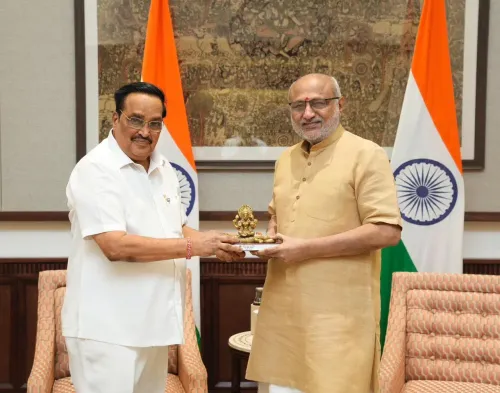
Every stepwell, tank, and baoli that survived centuries of Indian summers carries a message — and Union Jal Shakti Minister C. R. Paatil wants the country to hear it. On Tuesday, 20 October 2026, Paatil took to X to invoke the water wisdom of India's ancestors, announcing that the National Water Mission has identified 75 historical water conservation structures as a landmark step toward securing the country's water future.
Translating from his Hindi post: 'जल विरासत का संरक्षण, जल सुरक्षित भविष्य का संकल्प' — 'Preserving our water heritage, pledging a water-secure future' — Paatil framed these ancient structures not as museum pieces but as 'living heritage' that embodies his ancestors' foresight and their balance with nature. He credited Prime Minister Narendra Modi's leadership for driving efforts to both conserve this irreplaceable legacy and promote efficient water use across irrigation and industry.
What the 75 structures represent
The identification of 75 historical water conservation structures by the National Water Mission is the headline policy move in Paatil's post. India's pre-modern water engineering — stepwells in Gujarat and Rajasthan, temple tanks in the south, kunds in the Deccan — kept agrarian civilisations alive through monsoon variability for millennia. Flagging them formally under the Mission signals intent to study, restore, and potentially replicate their design logic at scale.
The National Water Mission itself dates to 2008, when it was established as one of eight missions under the National Action Plan on Climate Change. Its mandate: integrated water resource management, conservation targets, and sustainable use. The heritage identification exercise fits squarely within that lineage — pairing climate resilience with cultural memory.
Efficiency in irrigation and industry — the other half of the push
Paatil's post is not only about preservation. It explicitly calls for 'judicious use of every drop' and urges citizens to partner in building a 'water-rich India for coming generations.' The twin emphasis on heritage conservation and modern efficiency — irrigation systems, industrial water use — mirrors the broader strategic logic India has pursued since the Jal Jeevan Mission launched in 2019, which expanded rural water access while running parallel to traditional structure revival efforts.
Farmers, rural communities, and industries are the primary stakeholders this policy arc is designed to serve. Irrigation accounts for roughly 80 per cent of India's fresh water demand, making efficiency gains there the single biggest lever for national water security.
Heritage as climate strategy
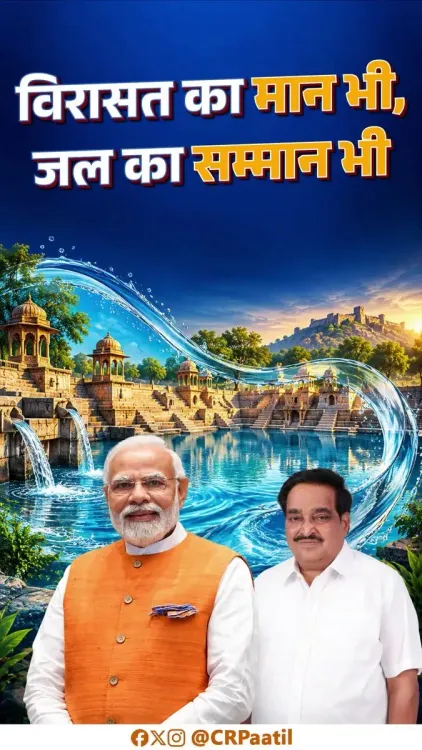
There is a sharper argument beneath the ceremonial language. Ancient Indian water structures were, in effect, distributed rainwater harvesting networks — engineered for a world without municipal supply or pumped groundwater. As aquifer stress deepens across the Indo-Gangetic plain and peninsular India, their revival is less nostalgia and more adaptation. Paatil's closing couplet — 'विरासत का मान भी, जल का सम्मान भी' ('Honour the heritage, honour the water') — lands that argument in a single resonant line.
What follows next matters enormously: whether the 75 identified structures get restoration budgets, whether state water plans integrate them, and whether the exercise scales beyond a symbolic list. That is the work ahead.
Point of View
The government frames frugality and efficiency not as sacrifice but as civilisational pride. The identification of 75 structures, however, will be tested by whether restoration funding and state-level integration follow — without that, it risks remaining symbolic. Longer term, the heritage-conservation framing could prove strategically durable as groundwater stress intensifies across north and peninsular India and demands a politically viable vocabulary for water rationing.
NationPress
20 Oct 2026
Frequently Asked Questions
What are the 75 historical water conservation structures identified by the National Water Mission?
The National Water Mission has identified 75 historical water conservation structures across India — including ancient stepwells, temple tanks, and traditional reservoirs — as part of efforts to preserve water heritage and draw on time-tested harvesting techniques for modern conservation goals. Specific details of the full list have been referenced by Minister C. R. Paatil in October 2026.
What is the National Water Mission and when was it started?
The National Water Mission was established in 2008 as one of eight missions under India's National Action Plan on Climate Change. Its mandate covers integrated water resource management, conservation, and promoting sustainable water use across agriculture, industry, and households.
What is Jal Jeevan Mission and how does it relate to water heritage conservation?
The Jal Jeevan Mission, launched in 2019, focuses on providing piped drinking water to every rural household in India. It runs alongside heritage conservation efforts — together they represent the government's dual strategy of expanding access while reviving traditional water management structures.
Why is India reviving ancient water structures like stepwells and tanks?
Ancient Indian water structures functioned as distributed rainwater-harvesting networks built for monsoon variability. As groundwater stress intensifies across major agricultural belts, their revival is seen as a low-cost, climate-resilient complement to modern infrastructure — not merely a cultural exercise.
What did C. R. Paatil say about water conservation on 20 October 2026?
Minister C. R. Paatil said India's historical water structures are a 'living heritage' of ancestral foresight and harmony with nature. He announced that the National Water Mission has identified 75 such structures, and called on citizens to use every drop judiciously to build a water-rich India for future generations.