MPs' panel backs power grid stability push as India adds 50 GW renewables
Synopsis
India's grid is being rewired in real time. With over 50 GW of renewables added in a year and inverter-based generation surging, the Power Ministry is leaning on STATCOMs, synchronous condensers, pumped storage and black-start drills to keep the system stable. The Consultative Committee's nod signals political backing for the heavy capex transition ahead.
Key Takeaways
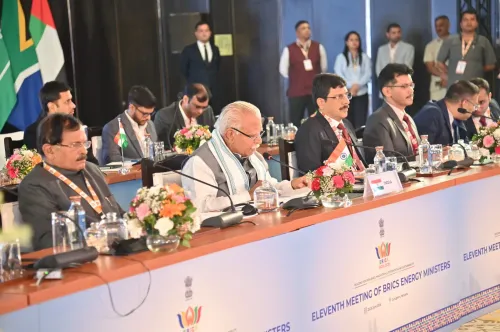
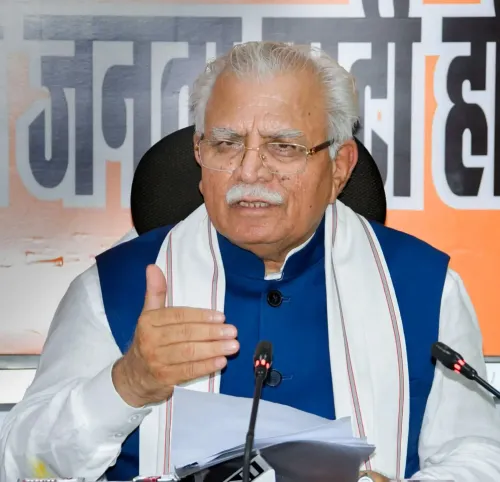
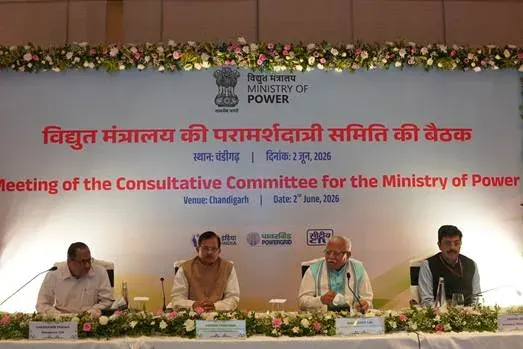
Union Power Minister Manohar Lal Khattar chaired the Consultative Committee meeting in Chandigarh on Tuesday.
India integrated a record 50 GW-plus renewable capacity in a single year.
Measures include deployment of STATCOMs , synchronous condensers, pumped storage and PMU-based monitoring.
Technical standards are being reviewed for battery storage, grid-forming inverters, electrolysers and data centre loads.
Black-start capability and weather-prone corridor reinforcement are being augmented for resilience.
MoS Power Shripad Yesso Naik , CEA, Grid Controller of India and CTUIL attended the meeting.
The Consultative Committee of the Ministry of Power, chaired by Union Power Minister Manohar Lal Khattar, on Tuesday endorsed the Centre's measures to maintain a reliable and resilient electricity grid amid surging demand and a record 50 GW-plus renewable capacity addition in a single year. The meeting, held in Chandigarh, focused on grid stability challenges arising from large-scale integration of inverter-based generation and bulk loads.
Key Developments
The panel deliberated on secure renewable integration, transmission strengthening, energy storage, dynamic reactive power support, grid flexibility, technical standards compliance, forecasting, power quality and overall grid resilience. Members observed that grid stability is central to India's energy security and that the clean energy transition must rest on a flexible, dependable backbone.
Steps Lauded by the Committee
MPs appreciated ongoing initiatives including resource adequacy planning, ancillary services, energy storage promotion, deployment of STATCOMs and synchronous condensers, PMU-based monitoring, black-start mock drills and tightening of technical standards. The integration of more than 50 GW of renewable capacity in a year was highlighted as a landmark.
Tackling Inverter-Based Generation Risks
The committee was informed that the Ministry is working to avoid mismatches between transmission line commissioning and renewable energy project rollouts to prevent curtailment. Pumped storage projects are being promoted for long-duration storage and inertial support, while bulk consumers near large renewable complexes are being encouraged to set up closer to generation hubs to optimise transmission investments.
Equipment such as STATCOMs and synchronous condensers is being deployed for voltage stability and system strength. Regulatory and commercial mechanisms are being framed to harness flexibility services from renewable energy sources and storage systems. Technical standards for emerging technologies — including battery energy storage systems, grid-forming inverters, electrolysers and data centre loads — are being reviewed periodically.
Forecasting and Resilience Measures
Compliance monitoring is being strengthened through periodic self-audits and reporting by grid-connected entities. Renewable forecasting is being improved through better weather data, calibration of weather stations and installation of automatic weather stations at renewable plants. The Centre is also reinforcing transmission and distribution infrastructure in weather-prone corridors, maintaining emergency restoration systems and augmenting black-start capability for faster recovery.
Who Attended
The meeting was attended by Shripad Yesso Naik, Minister of State for Power, members of the Consultative Committee, the Secretary, Ministry of Power, and senior representatives from the Central Electricity Authority, Grid Controller of India Limited and Central Transmission Utility of India Limited.
With electricity demand projected to keep rising and renewable penetration deepening, the next phase of grid investment — particularly in storage and reactive power infrastructure — will be decisive in averting curtailment and cascading outages.
Point of View
But the harder problem — keeping a grid stable when nearly half its incremental supply is intermittent and inverter-based — is only now being confronted at scale. STATCOMs, synchronous condensers and pumped storage are the unglamorous spine of any credible energy transition, and India is finally treating them as priorities rather than afterthoughts. The real test is execution speed: transmission build-outs have historically lagged generation, and curtailment is already a live risk in renewable-heavy states. Without a tighter commissioning sync between lines and projects, the 50 GW headline could mask growing system stress.
NationPress
17 Oct 2026
Frequently Asked Questions
What did the Power Ministry's Consultative Committee discuss?
The committee, chaired by Union Power Minister Manohar Lal Khattar on Tuesday, discussed grid stability challenges arising from India's rapid renewable energy integration and rising electricity demand. Talks covered transmission strengthening, energy storage, reactive power support, forecasting and resilience measures.
How much renewable capacity has India integrated recently?
India added more than 50 GW of renewable capacity in a single year, a record highlighted by the committee. This scale of inverter-based generation has made grid stability planning a central policy priority.
What steps is the Centre taking to stabilise the grid?
The Centre is deploying STATCOMs and synchronous condensers for voltage stability, promoting pumped storage for long-duration backup, conducting black-start mock drills and using PMU-based monitoring. It is also tightening technical standards for battery storage, grid-forming inverters and data centre loads.
Why does inverter-based generation pose a challenge for the grid?
Unlike traditional thermal plants, inverter-based renewables such as solar and wind do not provide natural inertia or strong voltage support, which can affect grid stability during disturbances. India is countering this with synchronous condensers, STATCOMs and storage-based flexibility services.
Who attended the Consultative Committee meeting?
The meeting was attended by Minister of State for Power Shripad Yesso Naik, MPs on the committee, the Secretary of the Ministry of Power, and senior officials from the Central Electricity Authority, Grid Controller of India Limited and Central Transmission Utility of India Limited.