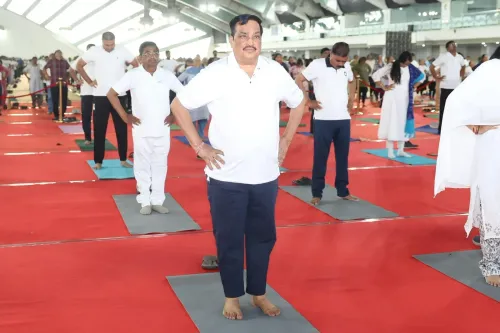
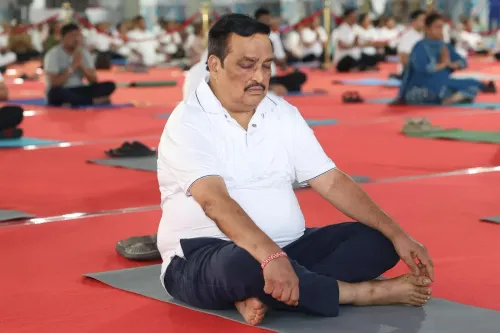
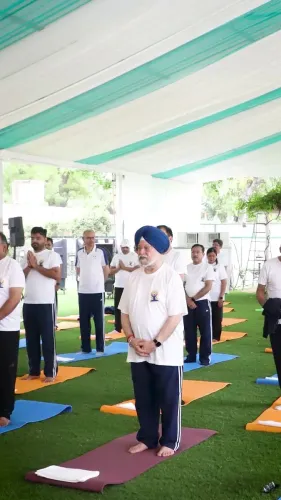
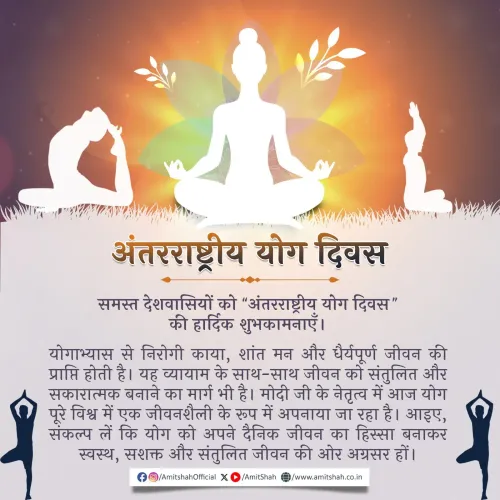
Jal Shakti Minister Paatil links Yoga Day to Swachh Bharat push
Synopsis
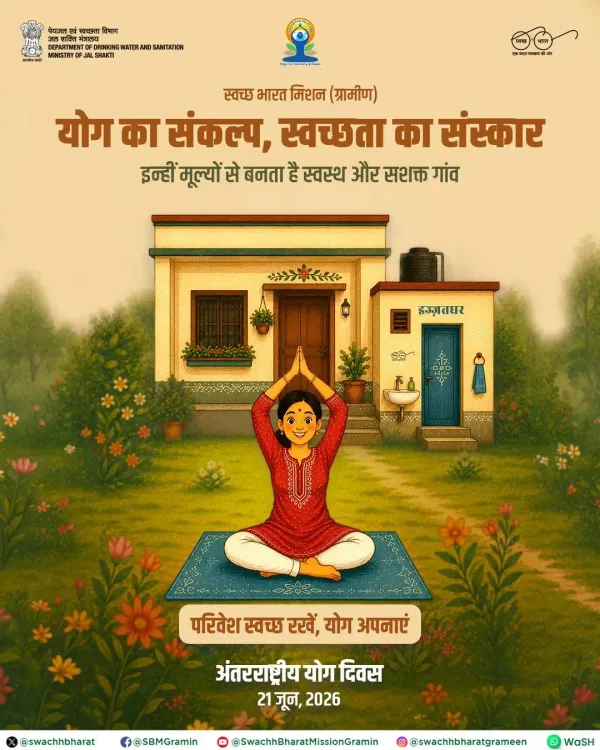
Union Jal Shakti Minister C. R. Paatil on International Day of Yoga 2026 called on citizens to embrace both yoga and cleanliness as lifestyle habits, directly linking the annual wellness observance to the Swachh Bharat Mission Gramin's goal of building healthy, clean and empowered rural villages.
Key Takeaways
Union Jal Shakti Minister C.
Paatil posted on 21 June 2026 , International Day of Yoga, urging citizens to adopt yoga and cleanliness together.
The post carried hashtags #IDY2026 and #SBMG , explicitly linking the yoga observance to the Swachh Bharat Mission Gramin .
International Day of Yoga has been observed every 21 June since 2015, following a 2014 UN General Assembly resolution.
SBM-G Phase II , approved in 2020, focuses on ODF-plus villages, solid and liquid waste management, and long-term sanitation sustainability.
The Ministry of Jal Shakti administers both rural water resources and sanitation programmes, making it the nodal body for this combined wellness-sanitation messaging.
The primary target stakeholders are rural households and village panchayats responsible for implementing ODF-plus goals.
Union Jal Shakti Minister C. R. Paatil on Sunday, 21 June 2026 called on citizens to adopt both yoga and cleanliness as daily habits, framing the twin practices as complementary pillars of rural transformation on the occasion of International Day of Yoga.
In a post on X tagged to @PMOIndia and carrying the hashtags #IDY2026 and #SBMG, the minister wrote: 'Yog sharir aur man ko swasth banata hai, jabki swachhata hamare parivesh ko surakshit aur behtar banati hai' — 'Yoga makes the body and mind healthy, while cleanliness makes our surroundings safe and better.' He urged people to contribute to the building of 'healthy, clean and empowered villages' by making both yoga and sanitation part of their lifestyle.
Context
International Day of Yoga has been observed every year on 21 June since 2015, following a 2014 United Nations General Assembly resolution in which India was the lead proponent. The day has grown into a large-scale public observance, with government ministries routinely using it to reinforce health and social messaging. Paatil's post is notable for explicitly linking the yoga observance to the Swachh Bharat Mission Gramin (SBM-G), the central rural sanitation programme overseen by his own ministry.
Policy Backdrop
The Swachh Bharat Mission was launched nationwide in October 2014 to achieve universal sanitation coverage, with a primary goal of eliminating open defecation. SBM-G Phase II, approved in 2020, shifted focus toward sustainability, solid and liquid waste management, and the creation of ODF-plus villages — settlements that go beyond open-defecation-free status to achieve broader environmental hygiene standards. The Ministry of Jal Shakti holds administrative responsibility for both water resources and rural sanitation, making it a natural institutional home for messaging that ties personal wellness to community cleanliness.
Successive administrations have sought to weave traditional health practices into large-scale public health and sanitation narratives. Yoga, as a globally recognised Indian wellness tradition, has repeatedly been positioned alongside hygiene drives in government communication as part of a broader rural development vision.
Stakeholders and Impact
The primary audience for this messaging is rural households and village panchayats, which are the on-ground implementing units of SBM-G. By invoking International Day of Yoga, the minister's communication attempts to reach citizens already engaged in the day's public activities and redirect that energy toward sustained sanitation behaviour. The #SBMG hashtag signals that the post is part of coordinated ministry outreach rather than a standalone personal statement.
Village-level change under SBM-G depends heavily on behavioural adoption, not just infrastructure. Linking sanitation to a widely observed wellness day is consistent with the programme's emphasis on community participation and habit formation as the foundation of ODF-plus status.
What's Next
Progress on ODF-plus village targets under SBM-G Phase II and state-level participation data from International Day of Yoga 2026 events will indicate how effectively this dual messaging translates into ground-level action. The Ministry of Jal Shakti is expected to continue integrating national observance days into its rural outreach calendar as it works toward the mission's sustainability goals.
Point of View
The minister signals a coordinated ministry communication strategy rather than a personal reflection. This approach reflects a broader pattern in which national observance days are consciously repurposed as low-cost amplification channels for flagship programmes. The real test, however, lies in whether such messaging nudges measurable uptake in ODF-plus village compliance rather than remaining a one-day social media moment.
NationPress
19 Sept 2026
Frequently Asked Questions
What did Jal Shakti Minister C. R. Paatil say on International Day of Yoga 2026?
C. R. Paatil posted on 21 June 2026 urging citizens to make both yoga and cleanliness part of their daily lifestyle, calling it a contribution toward building healthy, clean and empowered villages under the Swachh Bharat Mission Gramin.
What is the Swachh Bharat Mission Gramin (SBM-G)?
SBM-G is the central government's rural sanitation programme launched in October 2014 to eliminate open defecation. Its Phase II, approved in 2020, focuses on ODF-plus villages, solid and liquid waste management, and sustainable sanitation behaviour.
When is International Day of Yoga observed and why?
International Day of Yoga is observed every year on 21 June following a 2014 United Nations General Assembly resolution. India was the lead proponent, and the day has been marked globally since 2015.
Why is the Ministry of Jal Shakti involved in sanitation messaging?
The Ministry of Jal Shakti holds administrative responsibility for both water resources and rural sanitation programmes, including SBM-G, making it the nodal ministry for cleanliness and hygiene outreach at the village level.
What are ODF-plus villages under SBM-G Phase II?
ODF-plus villages are settlements that have gone beyond open-defecation-free status to achieve broader environmental hygiene standards, including solid and liquid waste management, under the goals of SBM-G Phase II approved in 2020.