Puri Greets Nation on International Day of Yoga 2026
Synopsis
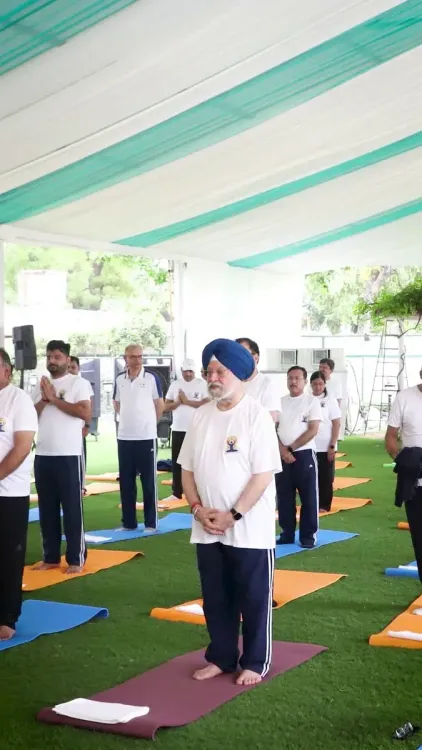
Union Petroleum Minister Hardeep Singh Puri marked International Day of Yoga 2026 by invoking the sage Patanjali and crediting PM Modi's decade-long efforts for elevating yoga into a global movement embraced by millions, rooted in India's civilisational and philosophical traditions.
Key Takeaways
Union Petroleum Minister Hardeep Singh Puri greeted yoga practitioners on International Day of Yoga, 21 June 2026 .
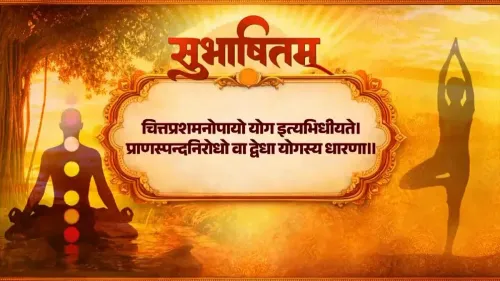
Puri opened with a Sanskrit shloka honouring the sage Patanjali , compiler of the classical Yoga Sutras.
He credited PM Narendra Modi with enabling yoga to transcend geographical and cultural boundaries into a global movement.
International Day of Yoga was established by UN General Assembly Resolution 69/131 in December 2014 following Modi's proposal at the UN in September 2014 .
Puri described yoga as making 'not only the body but also the mind and intellect healthy, balanced, and empowered.' He framed yoga as 'one of Bharat's most wholesome cultural imports to the world,' reinforcing India's soft-power diplomacy.
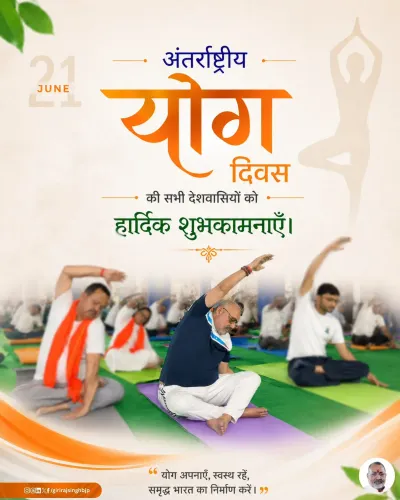
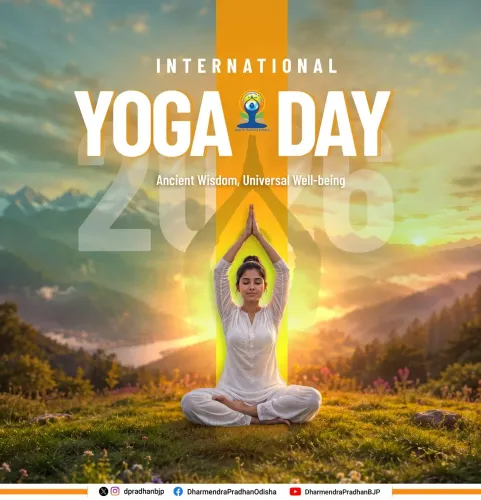
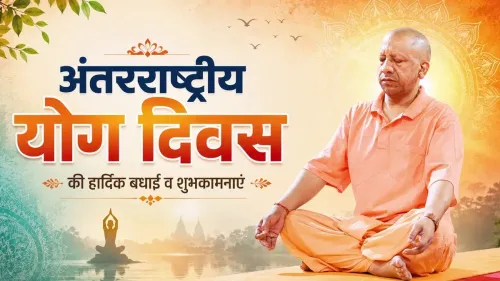
Union Petroleum Minister Hardeep Singh Puri extended greetings to yoga practitioners and exponents across the world on International Day of Yoga, observed annually on 21 June, hailing the ancient practice as a cornerstone of India's civilisational heritage and a gift to global wellness.
Context
Puri opened his post with a classical Sanskrit shloka paying homage to the sage Patanjali — 'Patanjalim pranjaliranato'smi' (I bow with folded hands to Patanjali) — the ancient sage traditionally credited with compiling the Yoga Sutras, the foundational philosophical text of classical yoga. The verse is among the most recited invocations in yoga tradition, situating his message firmly within India's philosophical lineage rather than treating the occasion as a routine calendar event.
Puri described yoga as 'deeply rooted in Bhartiya wisdom and philosophical traditions that emphasize a holistic way of life that nurtures harmony between the body, mind, and spirit,' framing it as a living civilisational value rather than a fitness trend.
Policy Backdrop
The observance traces its institutional origins to September 2014, when Prime Minister Narendra Modi proposed the creation of an International Day of Yoga in his address to the UN General Assembly. The proposal was adopted through UN General Assembly Resolution 69/131 in December 2014, with the first global observance held on 21 June 2015.
Puri credited Modi's 'untiring efforts during the last many years' for yoga having 'transcended geographical and cultural boundaries to become an even greater global movement embraced by millions across the world.' In Hindi, he added: 'Yog keval sharir ko hi nahin, balki man aur mastishk ko bhi swasth, santulit aur sashakt banata hai' — 'Yoga makes not only the body but also the mind and intellect healthy, balanced, and empowered.'
Successive Indian governments have used cultural diplomacy to position traditional practices such as yoga within multilateral forums, and the annual UN observance has become a recurring platform for India to highlight wellness and holistic health as contributions to global discourse.
Stakeholders and Impact
Puri noted that yoga has become 'an integral part of the lifestyle of crores of people worldwide,' underscoring its scale as a mass movement rather than an elite or niche pursuit. He described it as 'one of Bharat's most wholesome cultural imports to the world,' a framing that positions India as a net exporter of wellness philosophy.
Yoga practitioners, global health advocates, and institutions linked to AYUSH — India's ministry overseeing traditional medicine systems — are among the primary stakeholders who mark the day with mass public events, from community sessions in parks to official programmes at Indian diplomatic missions abroad.
What's Next
The annual observance continues to expand in scale, with Indian missions worldwide coordinating events at UN headquarters and in host capitals. Policymakers are expected to deepen linkages between yoga promotion and national health frameworks, including programmes under the AYUSH ministry, as India sustains its soft-power positioning of the practice on the global stage.
Point of View
The post also illustrates how the party deploys its entire cabinet as a unified messaging apparatus on symbolic occasions. The framing of yoga as Bharat's 'cultural import' to the world subtly reinforces the Hindutva-adjacent narrative of India as a civilisational teacher, a theme that has grown more explicit in official communication since 2014.
NationPress
19 Sept 2026
Frequently Asked Questions
When is International Day of Yoga celebrated?
International Day of Yoga is celebrated every year on 21 June . The date was established by a UN General Assembly resolution in December 2014 following a proposal by PM Narendra Modi at the UN in September 2014, with the first global observance held in 2015 .
Who proposed International Day of Yoga at the United Nations?
Prime Minister Narendra Modi proposed the creation of an International Day of Yoga in his address to the UN General Assembly in September 2014 . The proposal was adopted unanimously through Resolution 69/131 in December 2014.
What did Hardeep Singh Puri say on Yoga Day 2026?
Union Petroleum Minister Hardeep Singh Puri extended greetings to yoga practitioners worldwide, invoking a Sanskrit shloka honouring the sage Patanjali and crediting PM Modi's efforts for making yoga a global movement embraced by millions.
Who is Patanjali and why is he associated with yoga?
Patanjali is an ancient Indian sage traditionally credited with compiling the Yoga Sutras , the foundational philosophical text of classical yoga. The Sanskrit shloka quoted by Puri is a traditional invocation paying homage to Patanjali as the foremost among sages.
How has India used yoga as soft power diplomacy?
Successive Indian governments have positioned yoga within multilateral forums as a symbol of India's civilisational heritage. The annual UN observance on 21 June is marked by Indian diplomatic missions worldwide and has become a key platform for India's cultural outreach and soft-power projection.