Jal Shakti Minister Paatil hails Gondal APMC rainwater recharge model
Synopsis
On Independence Day 2026, Union Jal Shakti Minister C. R. Paatil highlighted Gondal APMC's innovative system of 40–50 recharge bores that channel rooftop rainwater directly into the ground, calling it a model for mandis nationwide under PM Modi's Jal Sanchay Jan Bhagidari initiative.
Key Takeaways
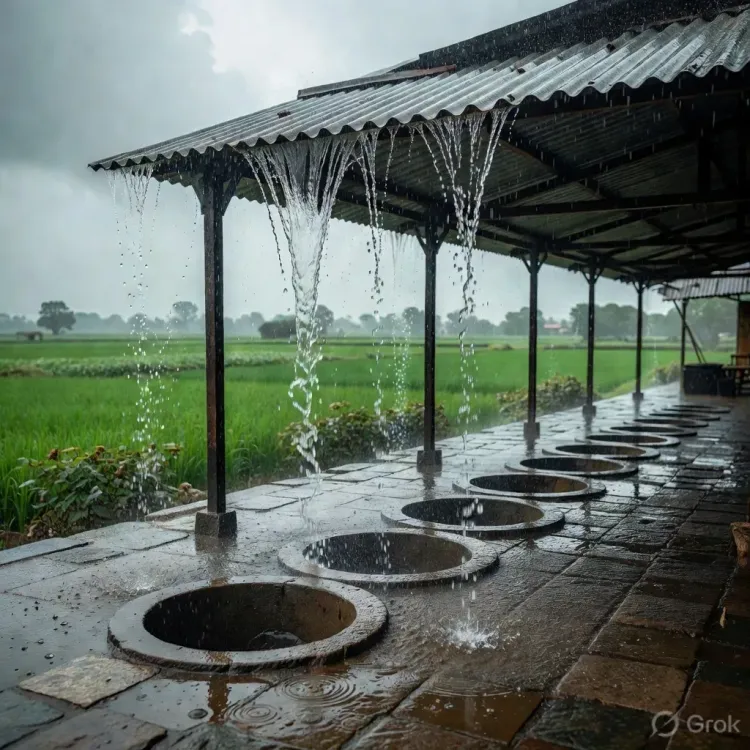
Gondal APMC in Rajkot district, Gujarat has installed 40–50 recharge bores beneath its market shed to direct rooftop rainwater into the aquifer.
Union Jal Shakti Minister C.
Paatil praised the initiative on 15 August 2026 and called it a replicable model for other institutions and mandis.
The effort is framed as a ground-level realisation of PM Narendra Modi 's Jal Sanchay, Jan Bhagidari campaign.
Gujarat has been a national leader in decentralised water harvesting since the early 2000s; this extends the approach to APMC market infrastructure.
The Jal Shakti Abhiyan (2019) and Atal Bhujal Yojana (2018) provide the national policy backbone for such community-driven groundwater recharge projects.
Rain fell on Gondal APMC's vast market shed on 15 August 2026 — and for the first time, almost none of it was wasted. Union Jal Shakti Minister C. R. Paatil spotlighted the Rajkot district market committee's innovation: routing rooftop runoff through 40–50 recharge bores drilled directly into the earth beneath the shed, replenishing the aquifer below rather than letting the water drain away.
Paatil, posting on Independence Day, called the effort a living demonstration of Prime Minister Narendra Modi's 'Jal Sanchay, Jan Bhagidari' (Water Storage, People's Participation) call to action. 'The rainwater falling on the shed is becoming a medium for groundwater recharge,' he wrote, extending warm congratulations to the entire Gondal APMC team and urging other institutions and mandis across the country to treat the model as a replicable blueprint.
How Gondal APMC engineered a working recharge grid
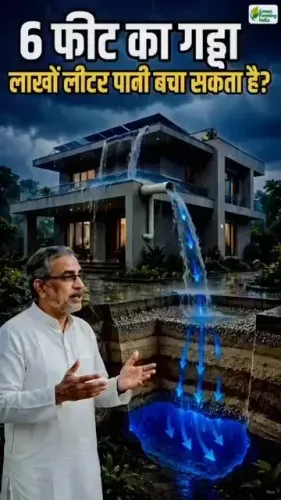
The design is deliberately low-tech and high-impact. Rainwater collected from the large roofed market shed — which covers a substantial surface area — is channelled into a network of recharge bores rather than conventional stormwater drains. Each bore acts as a direct conduit to the sub-surface, bypassing the slow percolation of open pits and delivering water to the water table faster and with less evaporation loss.
Gujarat has been a national laboratory for decentralised water harvesting since the early 2000s, building hundreds of thousands of check dams and recharge wells across its districts. The Gondal APMC initiative extends that tradition into agricultural market infrastructure — a category of public building that covers large impervious surfaces across every district in India yet has rarely been systematically harnessed for recharge.
Where this fits in the Centre's groundwater push
The Ministry of Jal Shakti launched the Jal Shakti Abhiyan in 2019 to drive rainwater harvesting and groundwater recharge in water-stressed blocks nationwide. The Atal Bhujal Yojana, approved in 2018, specifically targets community-led groundwater management in Gujarat and six other states, providing institutional and financial scaffolding for exactly this kind of local initiative.
Paatil's post, timed to Independence Day, carries clear ministerial intent: visible monsoon-season success stories are the most persuasive argument for replication. The question the ministry now faces is whether to formalise this into national guidelines or dedicated funding for APMC-based recharge systems in the 2026–27 cycle — a step that could multiply the Gondal model across hundreds of mandis in water-stressed states.
For the farmers and traders of Gondal, and for the generations who will draw from that aquifer long after the rains stop, the arithmetic is simple: every drop that goes down a recharge bore is a drop that stays.
Point of View
The Jal Shakti Ministry signals that its groundwater agenda is producing visible, verifiable results — not just policy documents. The choice of an APMC, a workaday piece of agricultural infrastructure, is significant; it broadens the recharge model beyond the usual suspects of check dams and ponds into the vast, underutilised rooftop area of India's mandi network. The post also quietly reinforces Gujarat's role as the BJP government's preferred proof-of-concept state for water governance. Whether the ministry converts this showcase into binding APMC guidelines will determine whether Gondal remains an inspiring exception or becomes a national standard.
NationPress
29 Sept 2026
Frequently Asked Questions
What has Gondal APMC done for water conservation?
Gondal APMC in Rajkot district, Gujarat, has installed approximately 40–50 recharge bores beneath its large market shed to channel rooftop rainwater directly into the ground, replenishing the local aquifer instead of letting it drain away.
What is the Jal Sanchay Jan Bhagidari initiative?
Jal Sanchay Jan Bhagidari is a central government campaign promoted by Prime Minister Narendra Modi that encourages community participation in water storage and groundwater recharge across India.
What is a recharge bore and how does it work?
A recharge bore is a borehole drilled into the earth that directs surface or rooftop water rapidly to the sub-surface water table, bypassing slow natural percolation and reducing evaporation losses.
What is the Jal Shakti Abhiyan?
The Jal Shakti Abhiyan is a central government mission launched in 2019 to promote rainwater harvesting, groundwater recharge, and water conservation in water-stressed districts across India.
Can other APMCs replicate the Gondal model?
Union Minister C. R. Paatil has explicitly called the Gondal APMC initiative an inspiring example for other institutions and mandis. Whether the Ministry of Jal Shakti issues formal guidelines or funding for similar systems in other state APMCs is being watched for the 2026–27 policy cycle.