Jal Shakti Minister Paatil hails Gujarat farmer's recharge well

Synopsis
Union Jal Shakti Minister C. R. Paatil has spotlighted a Banaskantha farmer who converted an old tubewell into a low-cost rainwater recharge well, calling it a model of citizen-led water conservation aligned with PM Modi's Jal Shakti Abhiyan and Viksit Bharat goals.
Key Takeaways
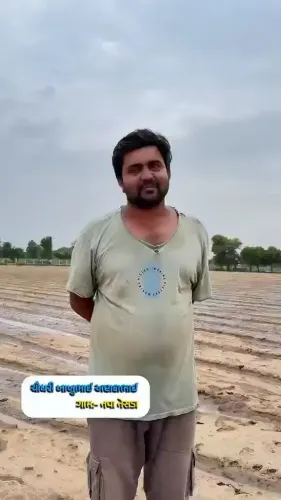
Prahladbhai Gangaramji Solanki of Malgadh village, Disa tehsil, Banaskantha, Gujarat converted a defunct tubewell into a groundwater recharge well at minimal cost.
Union Jal Shakti Minister C.
Paatil shared the story on 3 August 2026 , framing it as an example of PM Modi's water-conservation jan andolan .
Banaskantha is an arid, drought-prone district with historically over-exploited aquifers, making recharge innovation especially critical.
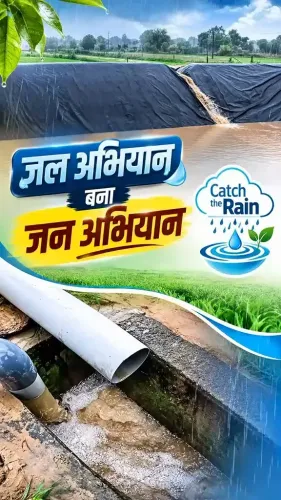
The initiative aligns with three central schemes: Jal Shakti Abhiyan (2019) , Catch the Rain (2021) , and Atal Bhujal Yojana (2018) .
Paatil linked the farmer's effort to the Viksit Bharat framework, signalling it as a potential replicable model for other water-stressed blocks.
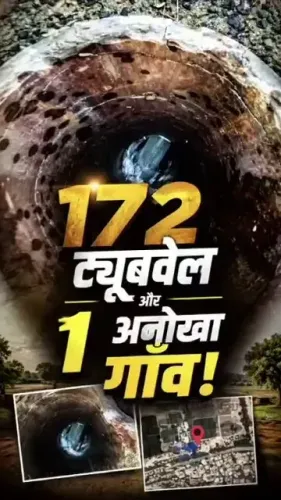
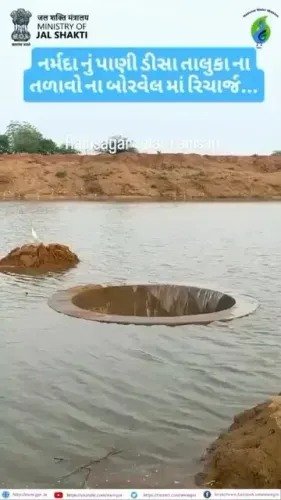
A farmer in one of Gujarat's most water-stressed districts has turned a defunct tubewell into a groundwater lifeline — and Union Jal Shakti Minister C. R. Paatil wants the country to take note. On Monday, 3 August 2026, Paatil shared the story of Prahladbhai Gangaramji Solanki of Malgadh village, Disa tehsil, Banaskantha district, who converted an old tubewell into a recharge well at minimal cost, channelling his entire farm's rainwater back into the aquifer beneath.
Posting in Hindi, Paatil wrote that under Prime Minister Narendra Modi's leadership, the resolve to turn water conservation into a jan andolan (people's movement) 'is giving new inspiration across the country.' He called Solanki's innovation proof that 'when public participation and technology come together, every drop becomes the foundation of future water security.'
Why Banaskantha makes this story matter
Banaskantha sits in north Gujarat's arid belt — a region historically hammered by over-exploited aquifers and recurrent drought. Groundwater depletion here is not a statistic; it is a livelihood crisis for thousands of farming families who depend on wells and tubewells for irrigation. A single farmer engineering a low-cost fix to recharge that depleted aquifer is the kind of ground-up solution that water managers spend years trying to institutionalise. The district has been a focus area under the Jal Shakti Abhiyan, the nationwide water conservation campaign launched in 2019 targeting the most water-stressed blocks in India. The campaign was followed by the Catch the Rain initiative in 2021, which pushed rooftop rainwater harvesting and groundwater recharge as annual pre-monsoon priorities. Gujarat is also among the seven states covered under the Atal Bhujal Yojana, approved in 2018 to strengthen community-based groundwater management.Tubewell to recharge well: the logic of the innovation
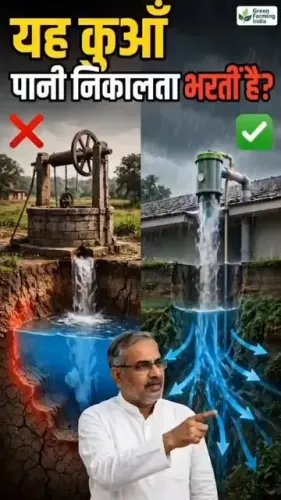
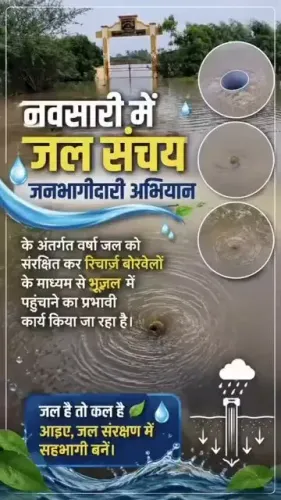
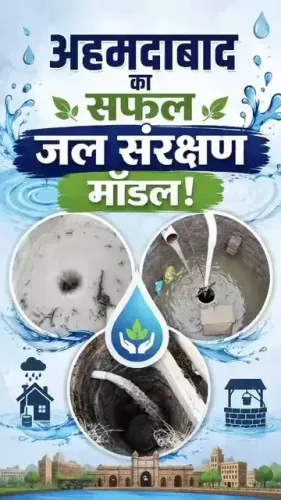
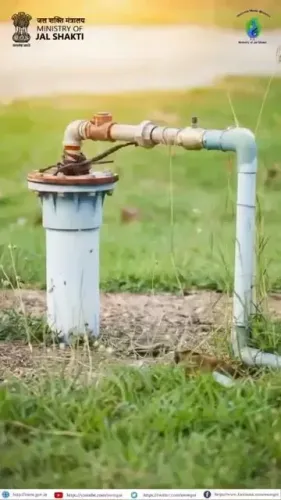
The concept Solanki applied is straightforward in principle but underused in practice: instead of allowing monsoon runoff to drain away, a recharge well funnels surface rainwater downward through an existing borehole, replenishing the water table directly. The low cost matters enormously — it puts the technique within reach of smallholders who cannot afford dedicated recharge structures. Paatil framed the initiative within the government's Viksit Bharat (Developed India) framework, arguing that such efforts give 'new strength to the resolve of a developed India and a water-prosperous India.' The minister's amplification on a national platform signals that Solanki's approach could be positioned as a replicable model for other arid blocks in Gujarat and beyond. Whether district groundwater management plans in Banaskantha formally integrate this kind of farmer-led recharge structure at scale is the next test — and the one that will determine whether an inspiring individual story becomes a genuine policy shift.Point of View
The ministry converts an abstract conservation target into a human proof-of-concept. It reinforces the BJP government's long-running strategy of framing water security as a bottom-up movement rather than a top-down bureaucratic programme — a framing that deflects criticism of slow infrastructure delivery by celebrating citizen initiative. The Banaskantha focus is also politically pointed: north Gujarat's agrarian communities are a key constituency, and visible ministerial attention to local innovation carries electoral as well as policy weight. The real measure will be whether Solanki's technique gets embedded in district groundwater plans or remains a social-media moment.
NationPress
17 Sept 2026
Frequently Asked Questions
What did the Gujarat farmer do to conserve water?
Prahladbhai Gangaramji Solanki of Malgadh village in Banaskantha converted an old, unused tubewell into a recharge well, channelling rainwater from his entire farm back into the groundwater table at very low cost.
What is the Jal Shakti Abhiyan?
The Jal Shakti Abhiyan is a nationwide water conservation campaign launched in 2019 by the central government, targeting water-stressed blocks across India to promote rainwater harvesting, groundwater recharge, and community participation.
What is the Catch the Rain scheme?
Catch the Rain is an annual rainwater harvesting drive launched in 2021 that encourages individuals, communities, and institutions to store rainwater and recharge groundwater before and during the monsoon season.
Why is Banaskantha important for water conservation?
Banaskantha in north Gujarat is an arid district with severely over-exploited aquifers and a farming economy heavily dependent on groundwater, making it one of India's most critical zones for recharge and conservation efforts.
What is the Atal Bhujal Yojana?
The Atal Bhujal Yojana is a central scheme approved in 2018 to improve groundwater management through community participation in seven water-stressed states, including Gujarat .