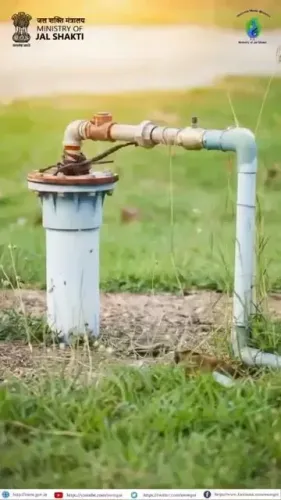
Jal Shakti Minister Paatil Highlights Bore Recharge Drive in Banaskantha
Synopsis
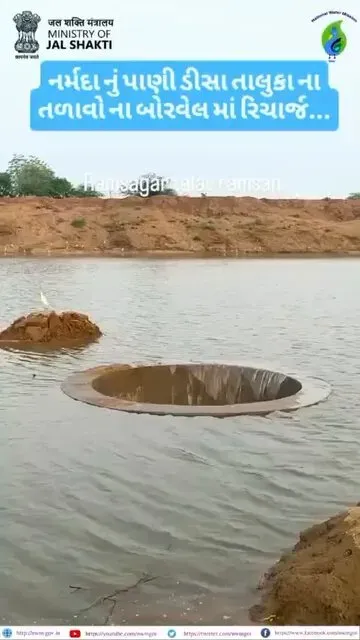
Union Jal Shakti Minister C. R. Paatil has highlighted bore recharge works at ponds in Disa Taluka, Banaskantha, aimed at raising groundwater levels and reviving water sources under PM Modi's 'Catch the Rain' campaign through community participation.
Key Takeaways
Union Jal Shakti Minister C.
Paatil posted on 25 July 2026 about bore recharge works underway at multiple ponds in Disa Taluka, Banaskantha, Gujarat .
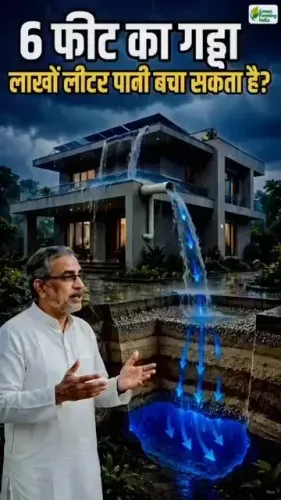
The initiative channels rainwater underground to raise the groundwater table and revive local water sources rather than letting it run off.
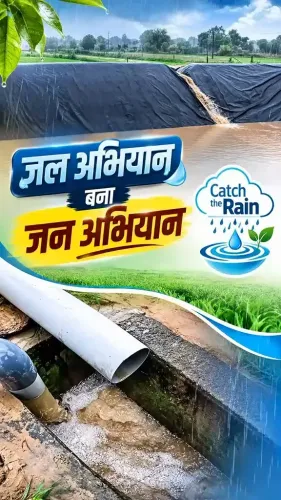
The effort is being implemented under PM Narendra Modi 's 'Catch the Rain' campaign through public participation and local water management.
Farmers and rural households in the arid Banaskantha district are the primary intended beneficiaries.
The works align with national schemes including Jal Shakti Abhiyan (launched 2019 ), the Catch the Rain campaign (intensified 2021 ), and the Atal Bhujal Yojana .
Outcomes will be assessed after the current monsoon season , with potential for expansion to other Gujarat talukas.
Union Jal Shakti Minister C. R. Paatil on Saturday, 25 July 2026 spotlighted an ongoing bore recharge initiative across multiple ponds in Disa Taluka of Banaskantha district, Gujarat, describing it as a concrete step toward groundwater revival and rural prosperity.
Context
In his post, Minister Paatil wrote that instead of letting rainwater run off wastefully, it is being channelled underground to raise groundwater levels and revive water sources — 'वर्षा जल को व्यर्थ बहने देने के बजाय उसे भूगर्भ में पहुंचाकर भूजल स्तर बढ़ाने' ('rather than letting rainwater flow away uselessly, channelling it underground to raise the water table'). He described the effort as one that 'will prove beneficial for farmers and local citizens in the time to come.'
Banaskantha is a northern Gujarat district characterised by an arid climate and a long history of groundwater depletion, making artificial recharge interventions particularly significant for agricultural communities dependent on wells and borewells.
Policy Backdrop
The bore recharge works are being framed explicitly within Prime Minister Narendra Modi's 'Catch the Rain' campaign — a national call to action under the Jal Shakti Abhiyan urging communities to capture every raindrop before it is lost to runoff. Paatil described the Banaskantha drive as translating that resolve 'to the ground through public participation and effective water management.'
The Jal Shakti Abhiyan was launched in 2019 to promote water conservation in water-stressed districts across India. The Catch the Rain campaign was intensified in 2021 with a focus on community-led rainwater storage structures. Separately, the Atal Bhujal Yojana, also introduced in 2019, targets sustainable groundwater management in over-exploited aquifer zones, including parts of Gujarat.
The Banaskantha initiative reflects a broader policy direction under which central missions are executed through district- and taluka-level structures, combining technical interventions such as bore recharge with community mobilisation.
Stakeholders and Impact
Farmers and rural households in Banaskantha stand to be the primary beneficiaries if groundwater levels rise as a result of the recharge works. In arid north Gujarat, agricultural viability is closely tied to borewell availability, and declining water tables have historically forced farmers into distress.
The initiative also connects to the Jal Jeevan Mission, which aims to provide tap water connections to every rural household — a goal that depends on sustainable local water sources. Reviving ponds and recharging aquifers in talukas like Disa can strengthen the source sustainability that underpins last-mile water delivery.
What's Next
The measurable outcomes of bore recharge works in Disa Taluka are expected to become clearer after the current monsoon season concludes, when groundwater level monitoring can indicate whether the intervention has produced a meaningful rise in the local water table. Positive results could accelerate the replication of similar structures in other talukas across Banaskantha and neighbouring arid districts of Gujarat.
At the national level, parliamentary discussions and budget allocations for artificial recharge projects under the Jal Shakti Abhiyan framework will determine the scale at which such community-level water conservation efforts can be sustained and expanded in the years ahead.
Point of View
Using Banaskantha — a perennially water-stressed constituency in Gujarat — as a visible proof point. The explicit invocation of PM Modi's 'Catch the Rain' slogan ties grassroots groundwater work to the Prime Minister's brand, reinforcing a pattern where state-level implementation is narrated upward as central-government success. Coming mid-monsoon, the timing is politically astute: it frames bore recharge as proactive water stewardship rather than reactive crisis management. The post also signals continued prioritisation of integrated water resource management in Gujarat ahead of any assessment of outcomes from schemes launched since 2019.
NationPress
24 Oct 2026
Frequently Asked Questions
What is bore recharge and how does it help groundwater?
Bore recharge is a technique where rainwater or surface water is directed into existing borewells or specially constructed pits to replenish underground aquifers. In areas like Banaskantha where the water table has fallen due to over-extraction and low rainfall, bore recharge can meaningfully raise groundwater levels over time, benefiting farmers and households dependent on wells.
What is the 'Catch the Rain' campaign?
'Catch the Rain' is a national water conservation campaign launched under the Jal Shakti Abhiyan, promoted by Prime Minister Narendra Modi, with the tagline urging citizens and local bodies to 'catch the rain where it falls, when it falls.' It focuses on creating and reviving rainwater harvesting structures before and during the monsoon season.
Why is Banaskantha significant for water conservation efforts?
Banaskantha is a northern Gujarat district with an arid climate and a history of groundwater depletion. Agriculture in the region is heavily dependent on borewells, making groundwater recharge initiatives particularly important for the livelihoods of local farmers and rural communities.
What is the Jal Shakti Abhiyan?
The Jal Shakti Abhiyan is a time-bound, mission-mode water conservation campaign launched by the Government of India in 2019. It targets water-stressed districts across the country, focusing on rainwater harvesting, watershed development, and groundwater recharge through community participation and government coordination.
What is the Atal Bhujal Yojana and does it cover Gujarat?
The Atal Bhujal Yojana is a centrally sponsored scheme introduced in 2019 for sustainable groundwater management in over-exploited and water-stressed areas. Gujarat is among the states covered under this scheme, which encourages community-led groundwater governance and data-driven management of aquifers.