China's Dalai Lama reincarnation bid sparks religious freedom alarm
Synopsis
An officially atheist party insisting on certifying a Buddhist reincarnation — the CCP's bid to pick the next Dalai Lama is less about religion and more about control. With a new ethnic unity law now in force, Beijing is systematically closing every avenue through which Tibetan Buddhist identity can reproduce itself on its own terms.
Key Takeaways
The Chinese Communist Party (CCP) is asserting the right to certify the reincarnation of the next Dalai Lama , despite being an officially atheist government.
A report in Providence journal calls this one of the most 'darkly ironic episodes in modern political history.' China's Law on the Promotion of Ethnic Unity , adopted at the 'Two Sessions,' came into force last month and further institutionalises assimilation of ethnic minorities.
The report warns that state-controlled succession would hollow out the Dalai Lama institution — preserving its outward form while stripping its spiritual legitimacy.
The issue raises broader questions about state authority over religious succession and the rights of distinct cultures to self-perpetuate.
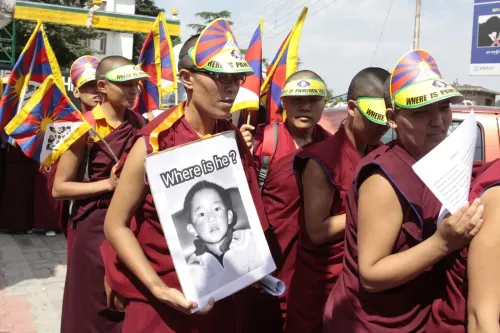
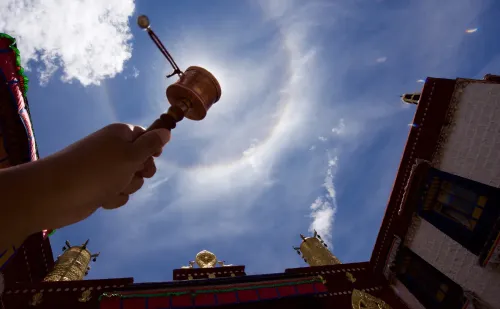
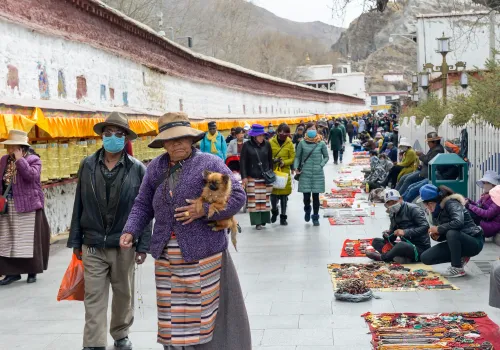
The Chinese Communist Party (CCP) is intensifying efforts to assert state control over the reincarnation of the Dalai Lama, drawing sharp criticism from religious freedom advocates who argue that Beijing's claims of upholding religious belief are fundamentally contradicted by its actions in Tibet. A detailed report in the journal Providence has described the situation as one of the most darkly ironic episodes in modern political history.
The Core Contradiction
According to the report, the CCP — which officially regards religion as 'the opium of the people' — is simultaneously insisting on certifying the reincarnation of Tibetan Buddhism's highest spiritual leader. The report states: 'Few episodes in modern political history are as darkly ironic as an officially atheist regime attempting to preside over a religious ritual whose underlying beliefs it explicitly rejects.'
For Tibetan Buddhists, the recognition of reincarnated lamas is not a ceremonial formality but a foundational mechanism of doctrinal continuity and spiritual succession. Denying the community authority over this process, the report argues, renders any government assurance of religious freedom meaningless.
Assimilation Policies Tighten
The report notes that Beijing has in recent years escalated efforts to promote a 'shared consciousness of the Chinese nation,' backed by a raft of legislation and administrative measures. The Law on the Promotion of Ethnic Unity, adopted during China's annual 'Two Sessions' and which came into force last month, further institutionalises the CCP's assimilation drive toward ethnic minorities.
Under this framework, religious, linguistic, and cultural distinctions are treated not as forms of diversity warranting protection, but as differences to be absorbed into what the report describes as a 'single homogeneous national identity.' Critics argue this approach systematically erodes the distinct character of Tibetan religious and cultural life.
Legitimacy at Stake
By claiming the authority to select the next Dalai Lama, the report warns, the Chinese government could preserve the institution in outward form while hollowing out its religious substance. 'When a religious leader derives authority from the state rather than from the religious community, their spiritual legitimacy is fundamentally compromised,' the report states.
The report cautions that what it calls 'orchestrated continuity' may prove the most effective method of dismantling a living tradition — keeping the structure intact while stripping away its meaning. It draws on historical precedent to argue that prolonged campaigns of suppression impose very real costs on communities and individuals, and that silence in the face of such realities risks becoming a form of acquiescence.
Broader Implications for Religious Freedom
The debate over the Dalai Lama's reincarnation, the report emphasises, extends well beyond the future of Tibetan Buddhism. It raises fundamental questions about the proper limits of state authority over religious institutions, the meaning of religious freedom in practice, and whether distinct cultures in a pluralistic world retain the right to preserve and perpetuate themselves on their own terms.
Notably, this is not an isolated concern: international religious freedom bodies and governments including the United States have repeatedly flagged China's interference in Tibetan Buddhist succession as a violation of international norms. How the global community responds — or fails to — will shape the precedent for state interference in religious succession worldwide.
Point of View
And in Tibetan Buddhism, no succession is more consequential. What the new ethnic unity law makes clear is that this is not an aberration but a policy architecture: assimilation by institutional capture. The international community's muted response so far risks normalising state interference in religious succession as a template others could follow.
NationPress
15 Aug 2026
Frequently Asked Questions
Why is China trying to control the Dalai Lama's reincarnation?
Beijing seeks to control the selection of the next Dalai Lama in order to shape the spiritual authority of Tibetan Buddhism and align it with state interests. By determining who is recognised as the reincarnated leader, the CCP would effectively control the institution's legitimacy and its influence over Tibetan communities.
What is the Law on the Promotion of Ethnic Unity?
It is a Chinese law adopted during the annual 'Two Sessions' parliamentary session that came into force last month. It institutionalises the CCP's assimilation policies toward ethnic minorities, treating religious, linguistic, and cultural differences as elements to be integrated into a unified national identity rather than protected as diversity.
Why does the reincarnation process matter to Tibetan Buddhists?
For Tibetan Buddhists, the recognition of reincarnated lamas is a foundational mechanism of doctrinal continuity and spiritual succession — not a ceremonial formality. Denying the community authority over this process fundamentally undermines the religious tradition's ability to perpetuate itself on its own terms.
What does the Providence report warn could happen?
The report warns that state-controlled succession could result in 'orchestrated continuity' — preserving the Dalai Lama institution in name while emptying it of genuine spiritual legitimacy. It argues this may be the most effective means of dismantling a living religious tradition over time.
What broader issues does the Dalai Lama reincarnation dispute raise?
Beyond Tibetan Buddhism, the dispute raises questions about the proper limits of state authority over religious institutions, the practical meaning of religious freedom, and whether distinct cultures in a pluralistic world have the right to preserve and perpetuate themselves according to their own traditions.