Beijing's Dalai Lama succession bid risks repeating Panchen Lama failure
Synopsis
Beijing's plan to appoint the 15th Dalai Lama is not a new gambit — it is a replay of the 1995 Panchen Lama abduction, which produced a figure with zero legitimacy after three decades. The Dalai Lama's nephew argues in a US journal that a state-manufactured successor would alienate Buddhist communities from Mongolia to Japan and deepen China's diplomatic isolation on Tibet.
Key Takeaways
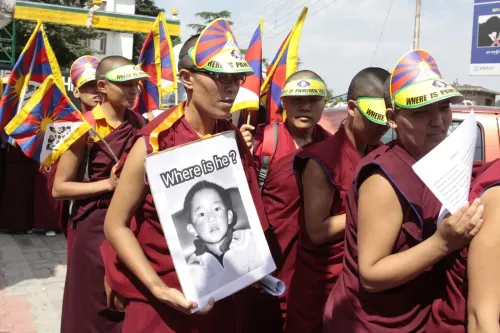
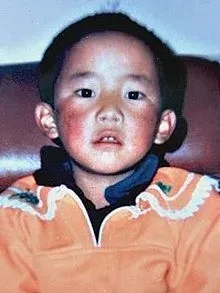
In 1995 , the CCP abducted Gedhun Choekyi Nyima , aged six , recognised as the 11th Panchen Lama , and installed Gyaincain Norbu in his place.
Nearly three decades later, Norbu holds no legitimacy among Tibetans or the broader Buddhist world, according to the analysis.
Khedroob Thondup , nephew of the Dalai Lama, published the findings in the US journal Journal of Democracy .
Beijing has signalled intent to approve the 15th Dalai Lama 's succession, citing the Qing dynasty's 'Golden Urn' system as precedent.
A state-appointed Dalai Lama would be seen as "a political puppet," risking condemnation from India , the US , Europe , and Buddhist communities across Asia .
China's attempt to control the succession of the 14th Dalai Lama risks repeating the widely rejected Panchen Lama experiment, according to an analysis published in the US journal Journal of Democracy. The piece, authored by Khedroob Thondup, nephew of the Dalai Lama, argues that the Chinese Communist Party (CCP)'s track record on imposed religious leadership offers a cautionary lesson — one Beijing appears to be ignoring.
The Panchen Lama as a Case Study in Failure
In 1995, the CCP abducted Gedhun Choekyi Nyima, a six-year-old boy whom the 14th Dalai Lama had recognised as the 11th Panchen Lama. In his place, Beijing installed Gyaincain Norbu, a figure groomed to represent the Party's vision of Tibetan Buddhism under state control.
Nearly three decades later, Norbu commands no spiritual authority in the Buddhist world and holds no legitimacy among Tibetans, according to Thondup. "Norbu remains a ceremonial presence with no legitimacy among Tibetans, no spiritual authority in the Buddhist world, and no recognition beyond the machinery of the CCP itself. This failure is not merely a religious matter — it is a geopolitical lesson," he wrote.
Beijing's Stated Intent on the Dalai Lama's Succession
Thondup noted that Beijing has already signalled its intention to control the selection of the 15th Dalai Lama, insisting that the next incarnation must receive state approval. The CCP has invoked the Qing dynasty's 'Golden Urn' system as historical precedent for state involvement in Tibetan religious succession.
Thondup challenged that framing directly. "This argument is historically tenuous and strategically misguided. The Dalai Lama is not merely a religious figure but a global symbol of compassion, resilience and nonviolent resistance," he stated.
Geopolitical and Diplomatic Costs
A state-appointed Dalai Lama would be viewed widely "not as a spiritual leader but as a political puppet," the analysis argues, undermining China's credibility and alienating Buddhist communities across Asia — from Mongolia to Sri Lanka, from Nepal to Japan.
The strategic fallout would extend further, according to the report. Tibet remains a pressure point in China's relations with India, the United States, and Europe. The Dalai Lama's global stature means his succession will be closely monitored by governments and civil society alike. "A manufactured Dalai Lama would invite condemnation, deepen mistrust, and complicate China's diplomatic engagements. Instead of securing stability, Beijing would entrench conflict," the analysis states.
Tibetan Identity and Resilience
The report stresses that decades of Chinese repression have failed to erase Tibetan identity. Tibetans have faced "cultural erasure, religious restrictions, and political marginalisation" yet have continued to preserve their traditions, language, and faith.
"The failure of the CCP's Panchen Lama experiment underscores the resilience of Tibetan identity. Despite state control, Tibetans have refused to accept a manufactured spiritual leader. This resilience will extend to the succession of the Dalai Lama," Thondup wrote.
The analysis concludes that imposed religious leaders do not guarantee stability — they risk reinforcing failure, and Beijing's insistence on controlling the Dalai Lama's succession could prove its most consequential miscalculation on Tibet yet.
Point of View
Mongolia, and Southeast Asian nations a perpetual diplomatic lever at minimal cost to them.
NationPress
13 Oct 2026
Frequently Asked Questions
What is the controversy over Beijing's control of the Dalai Lama's succession?
Beijing has stated that the 15th Dalai Lama must receive state approval, citing the Qing dynasty's 'Golden Urn' system as historical precedent. Critics, including Khedroob Thondup writing in the Journal of Democracy, argue this claim is historically tenuous and that an imposed successor would lack legitimacy among Tibetans and the global Buddhist community.
What happened to the 11th Panchen Lama recognised by the Dalai Lama?
In 1995, the CCP abducted Gedhun Choekyi Nyima, a six-year-old boy recognised by the 14th Dalai Lama as the 11th Panchen Lama. Beijing installed Gyaincain Norbu in his place; Nyima's whereabouts remain unknown to the public.
Why does the Panchen Lama case matter for the Dalai Lama's succession?
The Panchen Lama episode is seen as a direct precedent for how Beijing might handle the Dalai Lama's succession. After nearly three decades, Beijing's chosen Panchen Lama holds no spiritual authority outside CCP-controlled institutions, demonstrating that imposed religious leaders do not generate genuine legitimacy.
Who is Khedroob Thondup and why is his analysis significant?
Khedroob Thondup is the nephew of the 14th Dalai Lama and the author of the analysis published in the Journal of Democracy. His proximity to the Dalai Lama and detailed account of the Panchen Lama's history give his assessment particular weight in international policy discussions on Tibet.
What are the diplomatic consequences if China appoints the next Dalai Lama?
According to the analysis, a state-appointed Dalai Lama would be widely viewed as a political puppet, alienating Buddhist communities across Asia — from Mongolia to Sri Lanka and Nepal to Japan. It would also deepen tensions in China's relations with India, the United States, and Europe, complicating Beijing's diplomatic standing rather than securing stability.