Panchen Lama kidnapping: ICT urges China to free him after 30 years
Synopsis
Thirty years after China abducted a six-year-old boy recognised as the 11th Panchen Lama, his fate remains unknown — and the ICT is now calling on Trump and Rubio to press Beijing directly. The case is no longer just a religious dispute; it is the CCP's template for controlling the next Dalai Lama succession.
Key Takeaways
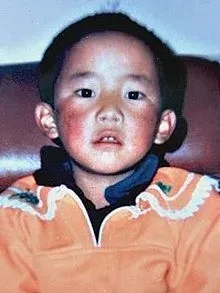
The ICT and global Tibetan communities are demanding the immediate release of the 11th Panchen Lama, Gedhun Choekyi Nyima , on the 30th anniversary of his abduction.
Chinese authorities seized the then six-year-old boy and his parents on 17 May 1995 , days after the Dalai Lama recognised him as the reincarnated Panchen Lama.
The Panchen Lama turned 37 in April 2025; neither he nor his family has been seen in public since 1995.
China installed Gyaltsen Norbu as a state-endorsed alternative — a move rejected by Tibetans and the international community.
ICT has urged President Trump and Secretary Rubio to press President Xi Jinping for his release.
China's new 'Ethnic Unity and Progress Law' , effective 1 July , and its 15th Five-Year Plan are cited as fresh threats to Tibetan cultural and religious heritage.
The International Campaign for Tibet (ICT) and Tibetan Buddhist communities worldwide are demanding that the Chinese Communist Party (CCP) immediately release the 11th Panchen Lama, Gedhun Choekyi Nyima, and restore his rights under Chinese law and international commitments. The call comes on 17 May 2025, marking 30 years since Chinese authorities abducted the then six-year-old boy from Tibet.
The 1995 Abduction
On 17 May 1995, just days after the Dalai Lama recognised Gedhun Choekyi Nyima as the reincarnated Panchen Lama — one of Tibetan Buddhism's most revered figures — Chinese authorities seized the child and his parents. Neither he nor his family has been seen in public since. Tibetans in exile marked his 37th birthday in April 2025, but his whereabouts remain unknown.
What ICT and Its President Said
ICT President Tencho Gyatso stated: 'On May 17, we mark a tragic day in Tibetan history, when the Chinese government stole a venerated religious leader — a six-year-old boy — from us. The CCP continues to hold him and his family to this day.'
Gyatso further appealed to international leaders: 'We implore President Trump, Secretary Rubio and other international leaders to tell President Xi and other Chinese officials to immediately release the Panchen Lama and end their interference in Tibetan cultural and religious practices.'
China's Parallel Appointment and Broader Repression
Following the abduction, Chinese authorities installed another Tibetan boy, Gyaltsen Norbu, as their state-endorsed Panchen Lama — a move rejected by Tibetans and widely dismissed by the international community. According to ICT, the kidnapping was 'the CCP's first move to enforce its plan to interfere in the succession of Dalai Lama.'
The ICT statement also flagged two recent developments as escalating threats to Tibetan heritage: the 'Ethnic Unity and Progress Law', set to enter into force on 1 July, and provisions within China's 15th Five-Year Plan, which the group argues are designed to accelerate the erosion of Tibet's linguistic, religious, and cultural identity.
Decades of Stalled Dialogue
According to ICT, the CCP has refused to negotiate with Tibetan leaders on Tibet's political status since 2010. Chinese authorities have also blocked the return of the Dalai Lama, who has lived in exile since 1959 — nearly seven decades — after being forced to flee Tibet. ICT characterises China's occupation of Tibet, which it describes as a 'historically independent country,' as having persisted for over 60 years.
International Pressure and What Comes Next
The ICT's appeal explicitly names US President Donald Trump and Secretary of State Marco Rubio as key figures who could press Chinese President Xi Jinping on the issue. The call reflects a broader strategy by Tibet advocacy groups to leverage current geopolitical tensions between Washington and Beijing to spotlight human rights concerns. Whether any formal diplomatic action follows remains to be seen.
Point of View
Beijing has effectively rehearsed the playbook it intends to use when the Dalai Lama succession arises. The ICT's decision to name Trump and Rubio by name is a calculated move: it ties the case to the current US-China rivalry, raising the diplomatic cost of inaction. The 'Ethnic Unity and Progress Law' entering force in July adds urgency — it signals that Beijing is accelerating, not pausing, its assimilation agenda in Tibet.
NationPress
23 Sept 2026
Frequently Asked Questions
Who is the Panchen Lama and why was he abducted?
Gedhun Choekyi Nyima is the boy recognised by the Dalai Lama in May 1995 as the reincarnated 11th Panchen Lama, one of Tibetan Buddhism's most important spiritual leaders. Chinese authorities abducted him and his parents just days after that recognition, reportedly to assert state control over the succession process and prevent an independent religious authority from taking hold.
How old is the Panchen Lama now and where is he?
Gedhun Choekyi Nyima turned 37 in April 2025, according to Tibetans in exile who marked his birthday. His exact whereabouts are unknown; neither he nor his parents have appeared in public since China detained them in May 1995.
Who did China appoint in place of the recognised Panchen Lama?
Chinese authorities appointed another Tibetan boy, Gyaltsen Norbu, as their state-endorsed Panchen Lama after the abduction. This appointment has not been accepted by Tibetans or the broader international community.
What is the ICT asking international leaders to do?
The International Campaign for Tibet is urging US President Donald Trump and Secretary of State Marco Rubio to press Chinese President Xi Jinping for the Panchen Lama's immediate release. ICT also calls on China to end its interference in Tibetan religious and cultural practices.
What new Chinese laws are raising concern for Tibet advocates?
The 'Ethnic Unity and Progress Law,' which enters into force on 1 July 2025, and provisions within China's 15th Five-Year Plan are cited by ICT as the latest measures threatening Tibet's linguistic, religious, and cultural heritage. The group argues these laws accelerate what it describes as a systematic campaign of cultural assimilation.