Panchen Lama disappearance: US demands China release Gedhun Choekyi Nyima after 31 years

Synopsis
Thirty-one years after China made a six-year-old boy vanish for being recognised as the Panchen Lama, the US State Department is demanding his release — and the timing is no accident. With the Dalai Lama ageing, whoever holds legitimate authority over Tibetan Buddhist succession has never mattered more, making Gedhun Choekyi Nyima's fate a geopolitical flashpoint, not just a human rights case.
Key Takeaways
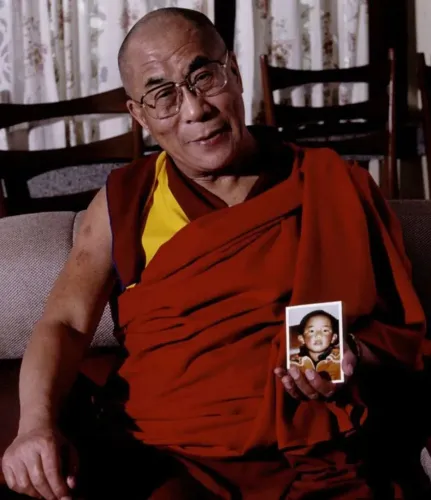
The US State Department called on China to immediately release Gedhun Choekyi Nyima , the Panchen Lama recognised by the Dalai Lama , marking 31 years since his disappearance.
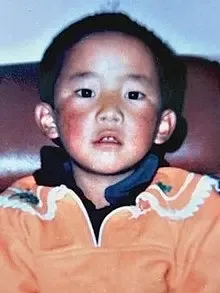
Spokesperson Tommy Pigott confirmed Chinese authorities took the boy and his family just days after the Dalai Lama's recognition in 1995 — when he was six years old .
China rejected the recognition and installed Gyaincain Norbu as its own state-backed Panchen Lama.
The US reaffirmed support for Tibetan religious freedom and the right of Tibetan Buddhists to select leaders without Chinese Communist Party interference.
Gedhun Choekyi Nyima would be 37 years old today; China has provided no verifiable proof of his wellbeing.
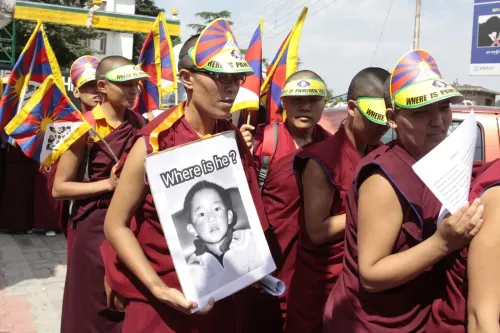
The United States has formally called on China to immediately release Gedhun Choekyi Nyima — recognised by the Dalai Lama as the Panchen Lama, Tibetan Buddhism's second-highest spiritual authority — as the world marks 31 years since Chinese authorities made the then-six-year-old boy and his family disappear in 1995. The demand, issued by the US State Department, renews longstanding American pressure on Beijing over its control of Tibetan religious institutions.
What the State Department Said
State Department spokesperson Tommy Pigott confirmed the statement, marking the anniversary of the disappearance. 'Yesterday was the 31st anniversary of the disappearance of the Tibetan religious leader known as the Panchen Lama, Gedhun Choekyi Nyima,' Pigott said.
'Days after the Dalai Lama recognized this child as an important future Tibetan Buddhist leader, Chinese authorities disappeared him and his family. He was six years old,' he added. Pigott further demanded: 'Chinese authorities should immediately release Gedhun Choekyi Nyima and his family and stop persecuting Tibetans or others in China for their religious beliefs.'
The Dispute Over Religious Authority
China rejected the Dalai Lama's recognition of Gedhun Choekyi Nyima in 1995 and installed a separate boy, Gyaincain Norbu, as its state-backed Panchen Lama — a move widely condemned by Tibetan Buddhists and human rights groups as political interference in sacred religious succession. The Panchen Lama holds particular significance because, by tradition, he plays a central role in identifying the next reincarnation of the Dalai Lama.
Beijing has maintained tight control over Tibet and Tibetan Buddhist institutions for decades, asserting the right to approve or reject religious appointments — a position that puts it in direct conflict with the Tibetan exile community and its international supporters.
US Position on Tibetan Religious Freedom
The State Department reiterated Washington's commitment to religious and cultural rights for Tibetans. 'The United States supports religious freedom for Tibetans, and the freedom to preserve their unique cultural and linguistic identity,' the statement said.
The US also stressed that Tibetan Buddhists must be free to select their own spiritual leaders without interference from the Chinese Communist Party. 'Tibetan Buddhists, like members of all religious communities, should have the ability to freely select their own leaders — like the Dalai Lama and the Panchen Lama — according to their beliefs and without party-state interference,' Pigott said.
Broader Context and What's Next
This statement comes amid persistent tensions between Washington and Beijing over human rights in Tibet and Xinjiang. The fate of Gedhun Choekyi Nyima has remained one of the longest-running unresolved cases of enforced disappearance cited by international human rights bodies. He would be 37 years old today if alive, though China has provided no verifiable proof of his wellbeing.
With the Dalai Lama, now in his late eighties, facing questions about succession, the question of who holds legitimate authority to identify the next Dalai Lama makes the Panchen Lama's status more consequential than ever. The international community is expected to continue pressing Beijing for answers.
Point of View
And the international community has little leverage beyond moral pressure. What makes 2025 different is the Dalai Lama's age: the Panchen Lama's traditional role in identifying the next Dalai Lama means Beijing's control over Gedhun Choekyi Nyima is not merely a human rights issue — it is a calculated move to determine who leads Tibetan Buddhism for the next generation. Washington's statement names the stakes but stops short of specifying consequences, which is precisely the gap Beijing has exploited for 31 years.
NationPress
24 Sept 2026
Frequently Asked Questions
Who is Gedhun Choekyi Nyima, the Panchen Lama?
Gedhun Choekyi Nyima is the boy recognised by the Dalai Lama in 1995 as the reincarnation of the Panchen Lama, Tibetan Buddhism's second-highest spiritual authority. He was six years old when Chinese authorities took him and his family into custody days after the recognition, and his whereabouts have not been independently verified since.
Why did China disappear the Panchen Lama?
China rejected the Dalai Lama's authority to recognise religious reincarnations and instead installed its own state-approved Panchen Lama, Gyaincain Norbu, in 1995. Beijing asserts the right to approve all senior Tibetan Buddhist appointments, viewing the Dalai Lama's recognition as a political challenge to its control over Tibet.
Why does the Panchen Lama's status matter now?
The Panchen Lama traditionally plays a key role in identifying the reincarnation of the Dalai Lama. With the current Dalai Lama in his late eighties, the question of succession makes the Panchen Lama's legitimacy a critical geopolitical issue, not just a religious one.
What is the US demanding from China?
The US State Department has demanded that China immediately release Gedhun Choekyi Nyima and his family, end the persecution of Tibetans for their religious beliefs, and allow Tibetan Buddhists to freely choose their own spiritual leaders without Chinese Communist Party interference.
How long has Gedhun Choekyi Nyima been missing?
Gedhun Choekyi Nyima has been missing for 31 years, since May 1995. He would be 37 years old today. China has provided no independent or verifiable evidence of his current condition or location.