Iran designates Argentine Navy, Air Force as terrorist organisations
Synopsis
Tehran has invoked a domestic reciprocity law to label the Argentine Navy and Air Force as terrorist organisations — a direct counter to Buenos Aires designating the IRGC in March 2026 under US pressure. With a similar move already made against British military and intelligence bodies earlier this month, Iran is systematically deploying mirror designations as a foreign-policy tool, even as Qatar reports cautious progress on US-Iran talks.
Key Takeaways
Iran's Foreign Ministry designated the Argentine Navy and Air Force as terrorist organisations on 11 November 2026 .
The move was a direct response to Argentina designating Iran's IRGC as a terrorist entity on 31 March 2026 , following pressure from the Trump administration .
Argentina's original decision was partly driven by the 1994 AMIA bombing in Buenos Aires, which killed 85 people and injured more than 300 , and which Buenos Aires attributes to Hezbollah with alleged IRGC backing.
Earlier in November 2026 , Iran similarly designated Britain's Royal Navy , Royal Air Force , and MI6 as 'terrorist and hostile' entities.
Qatar reported on 10 November 2026 that US-Iran diplomatic talks had made progress, though no timeline for an agreement was given.
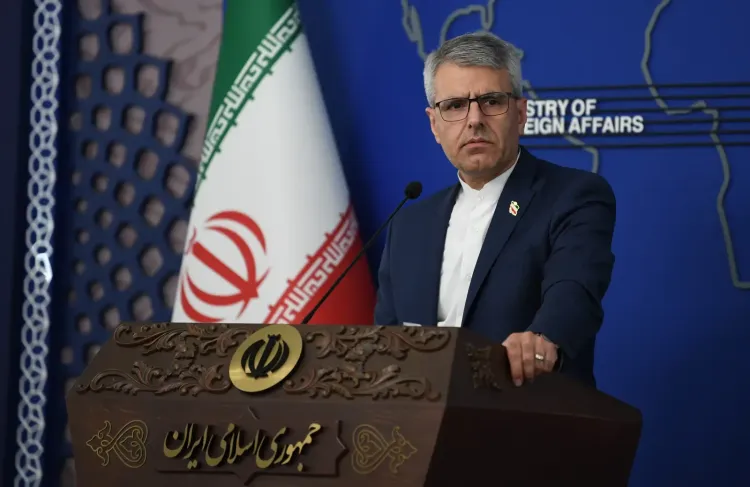
Iran's Foreign Ministry on Wednesday, 11 November 2026, formally designated the Argentine Navy and Air Force as terrorist organisations, escalating a deepening diplomatic rift between Tehran and Buenos Aires. The move is a direct counter to Argentina's decision in late March 2026 to label Iran's Islamic Revolutionary Guard Corps (IRGC) a terrorist entity.
Iran's Stated Rationale
Tehran described Argentina's earlier designation as 'hostile and being in contradiction with the fundamental principles of international law.' The Foreign Ministry said the counter-designation was grounded in both the principle of reciprocity and a domestic Iranian law mandating equivalent countermeasures against countries that comply with or support Washington's actions against Tehran.
Under that law, Iran is required to take mirror action against nations that fall in line with the United States' own designation of the IRGC — a move made years earlier under American pressure. The ministry also held the Argentine government directly responsible for all consequences arising from the decision, stressing that the IRGC is an integral part of Iran's regular armed forces.
Argentina's Original Decision and Its Roots
The office of Argentine President Javier Milei announced on 31 March 2026 that Buenos Aires had formally designated the IRGC as a terrorist organisation. The decision followed calls from the administration of US President Donald Trump for allied governments to designate both the IRGC and Hezbollah as terrorist groups.
Crucially, Argentina's move also carried deep domestic resonance. The Argentine government cited the IRGC's alleged support for Hezbollah — the Lebanese armed group that Buenos Aires holds responsible for the 1994 AMIA bombing, a devastating attack on a Jewish community centre in the Argentine capital that killed 85 people and injured more than 300 others. The AMIA attack remains one of the deadliest terrorist strikes ever carried out in Latin America, and successive Argentine governments have pursued accountability for over three decades.
A Pattern of Iranian Counter-Designations
This is not an isolated move by Tehran. Earlier in November 2026, Iran's Foreign Ministry announced the designation of Britain's Royal Navy, Royal Air Force, and Secret Intelligence Service (MI6) as 'terrorist and hostile' entities, citing what it called anti-Iran actions by the British government. The twin designations — against the United Kingdom and now Argentina — suggest Tehran is systematically deploying its reciprocal-action law as a diplomatic lever in response to growing international alignment with US sanctions policy.
Notably, Iran is deploying a legal rather than purely political mechanism: the domestic reciprocity statute provides a formal, repeatable framework for mirror designations, lowering the threshold for future counter-moves against other allied nations.
US-Iran Talks: A Parallel Diplomatic Track
Even as the confrontation with Argentina intensifies, a separate diplomatic channel remains active. Qatar said on Tuesday, 10 November 2026, that progress had been made in negotiations between the United States and Iran, describing recent White House talks involving Qatari Prime Minister and Foreign Minister Sheikh Mohammed bin Abdulrahman bin Jassim Al Thani as positive. Doha cautioned, however, that it was too early to predict when any formal agreement could be reached.
The dual dynamic — adversarial designations on one front and tentative nuclear or diplomatic talks on another — reflects the fractured, multi-track nature of Iran's current foreign policy posture.
What Comes Next
The practical consequences of Iran's counter-designation remain to be seen, as Argentina and Iran maintain limited bilateral trade and diplomatic ties. However, analysts argue that the symbolic and legal escalation complicates any future normalisation. With Iran's reciprocity law now activated against at least two US allies, other governments that have designated the IRGC may be watching closely for similar moves from Tehran.
Point of View
Signalling that any nation aligning with US IRGC-designation policy risks a mirror response. What is underreported is how this dynamic could complicate the quiet US-Iran talks Qatar is mediating: each counter-designation hardens domestic constituencies on both sides and narrows the political space for a deal, even as back-channel diplomacy continues.
NationPress
11 Nov 2026
Frequently Asked Questions
Why did Iran designate Argentina's Navy and Air Force as terrorist organisations?
Iran designated the Argentine Navy and Air Force as terrorist organisations on 11 November 2026 as a reciprocal response to Argentina's March 2026 decision to label the IRGC a terrorist entity. Tehran cited a domestic Iranian law requiring equivalent countermeasures against countries that comply with US-led designations of the IRGC.
Why did Argentina designate Iran's IRGC as a terrorist organisation?
Argentina designated the IRGC on 31 March 2026, responding both to calls from the Trump administration and to the IRGC's alleged support for Hezbollah, which Buenos Aires holds responsible for the 1994 AMIA bombing in its capital. That attack killed 85 people and injured more than 300 others.
Has Iran made similar designations against other countries?
Yes. Earlier in November 2026, Iran designated Britain's Royal Navy, Royal Air Force, and Secret Intelligence Service as 'terrorist and hostile' entities over London's anti-Iran actions. The two designations suggest Tehran is systematically applying its reciprocity law against US allies.
What is Iran's domestic reciprocity law?
It is an Iranian statute that mandates equivalent countermeasures against countries that comply with or support Washington's designation of the IRGC as a terrorist organisation. The law provides Iran a formal, repeatable legal basis for mirror designations.
Are there any active diplomatic talks between Iran and the United States?
Qatar reported on 10 November 2026 that US-Iran negotiations had made progress, describing White House talks involving Qatari Prime Minister Sheikh Mohammed bin Abdulrahman bin Jassim Al Thani as positive. However, Doha cautioned it was too early to predict when any agreement could be reached.