CM Samrat Choudhary on Chhath Puja as Bihar's cultural crown
Synopsis
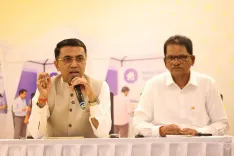
Bihar Chief Minister Samrat Choudhary amplified BJP Bihar president Nitin Nabin's heartfelt tribute to Chhath Puja on 11 November 2026, calling the four-day sun-worship festival Bihar's greatest cultural glory and describing it as a personal source of strength and energy throughout the year.
Key Takeaways
Samrat Choudhary , Bihar Chief Minister and senior BJP leader, shared the post on 11 November 2026 .
The statement is attributed to BJP Bihar president Nitin Nabin , who describes Chhath Puja as 'Bihar ka vaibhav' — Bihar's splendour.
Chhath Puja is a four-day festival dedicated to the Sun God and Chhathi Maiya, observed across Bihar and by the Bihari diaspora worldwide.
Nabin noted a personal bond with the festival, saying Chhathi Maiya's blessings and family support fuel his work through the entire year.
BJP leaders in Bihar regularly issue Chhath statements to affirm regional cultural identity during the annual observance.
When Bihar Chief Minister Samrat Choudhary calls Chhath Puja the glory of Bihar, he is voicing something millions of Biharis — at home and across the world — feel as a lived reality. On Wednesday, 11 November 2026, Choudhary shared a statement on X attributing words of deep personal reverence for the festival to BJP Bihar president Nitin Nabin, framing the four-day sun-worship observance as the most auspicious thread in the state's cultural fabric.
What Nitin Nabin said — and why Choudhary amplified it
The statement, shared in Hindi, reads: 'Chhath Puja Bihar ka vaibhav hai' — 'Chhath Puja is Bihar's splendour.' It goes on to describe the festival as one of the most auspicious and sacred traditions of Bihar's cultural heritage, one whose essence travels across the country and the world. Nabin adds a personal note — that he draws the strength and energy to work through the entire year from Chhathi Maiya, the presiding deity of the festival, alongside the bond of family.
By amplifying Nabin's words, Choudhary — himself a prominent BJP face in Bihar — reinforces a message that the party has consistently used during this season: that Bihar's cultural identity is inseparable from Chhath, and that the BJP's leadership shares in that identity authentically, not merely ceremonially.
Chhath Puja: four days that stop Bihar in its tracks
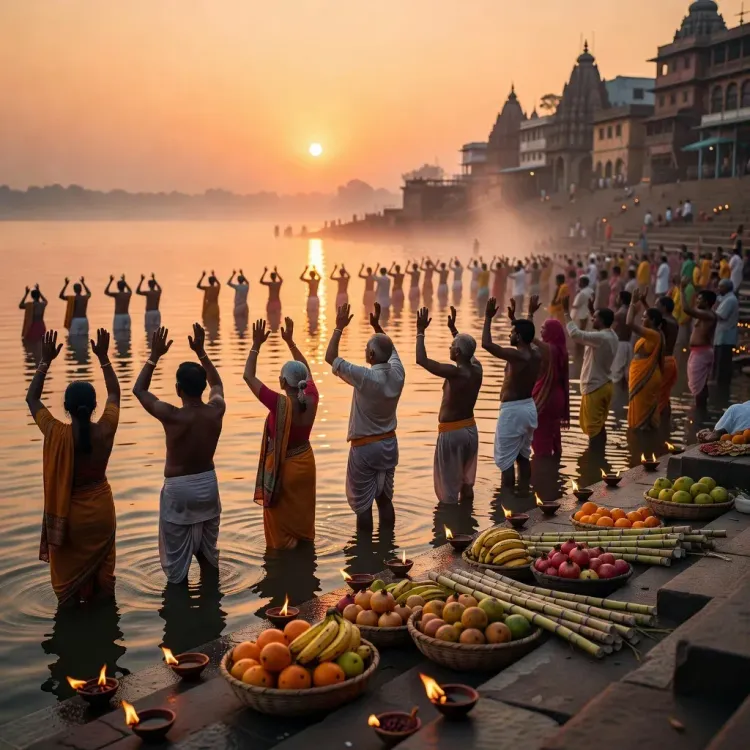
Chhath Puja is a four-day festival dedicated to the Sun God and Chhathi Maiya, observed with extraordinary rigour — fasting without water, standing waist-deep in rivers at dawn and dusk, and offering arghya (water offerings) to the rising and setting sun. It is among the rare major Hindu festivals that require no temple and no priest; the river ghat, the bamboo basket of offerings, and the open sky are the only stage it needs. That simplicity is also its universality — Bihari diaspora communities from Mauritius to New York observe it with equal fervour.
In Bihar itself, state governments of all political stripes have invested heavily in ghat infrastructure, lighting, and crowd management during the festival — a recognition that Chhath is as much a civic event as a religious one.
BJP's annual Chhath moment in Bihar's political calendar
BJP leaders in Bihar have made public Chhath messaging a fixture of their annual calendar. The festival functions as a natural touchpoint between political leadership and the electorate in a state where cultural pride runs deep and where identity politics around heritage carries real electoral weight. Posts like this one — warm, personal, rooted in family and faith — are calibrated to speak directly to that sentiment without being strident.
The kicker, though, is not political calculation. It is the image of a festival so powerful that it needs no stage manager — just a river at sunrise, a bamboo soop, and an unbroken line of devotees that stretches from the banks of the Ganga to the far corners of the Bihari diaspora.
Point of View
Chief Minister Samrat Choudhary signals the BJP's intent to remain the dominant voice on Bihari cultural pride, an identity pillar that has proven electorally significant in the state. The personal framing — drawing strength from Chhathi Maiya through the year — softens what is ultimately a calculated piece of cultural positioning, making it feel like testimony rather than campaign messaging. For the BJP, Chhath is not merely a festival to celebrate; it is a recurring opportunity to cement the party's roots in the soil of Bihar's oldest traditions.
NationPress
11 Nov 2026
Frequently Asked Questions
What is Chhath Puja and why is it important in Bihar?
Chhath Puja is a four-day Hindu festival dedicated to the Sun God and Chhathi Maiya, involving rigorous fasting, water offerings at dawn and dusk, and riverside rituals. It is considered the most significant cultural and religious festival in Bihar, observed by millions across the state and by the Bihari diaspora worldwide.
Who is Nitin Nabin and what did he say about Chhath Puja?
Nitin Nabin is a BJP leader from Bihar referenced in the post as the party's Bihar president. He described Chhath Puja as 'Bihar's splendour' and the most auspicious tradition of Bihar's cultural heritage, adding that he personally draws strength and energy from Chhathi Maiya's blessings throughout the year.
Why did Bihar CM Samrat Choudhary share this Chhath Puja post?
Chief Minister Samrat Choudhary shared the post to affirm the BJP's connection to Bihar's cultural identity during the Chhath festival season. BJP leaders in Bihar regularly issue such statements to engage with the deep public reverence for Chhath and to underscore their roots in the state's heritage.
What is Chhathi Maiya?
Chhathi Maiya, also known as Shashthi Devi, is the presiding deity of Chhath Puja. Devotees worship her alongside the Sun God, seeking blessings for the well-being, prosperity, and longevity of family members.
Is Chhath Puja celebrated outside Bihar?
Yes. Chhath Puja is observed by Bihari diaspora communities across India — in Delhi, Mumbai, and beyond — as well as internationally in countries such as Mauritius, the United States, the United Kingdom, and other nations with significant Bihari migrant populations.