Iran's IRGC strikes US military bases in Bahrain and Jordan
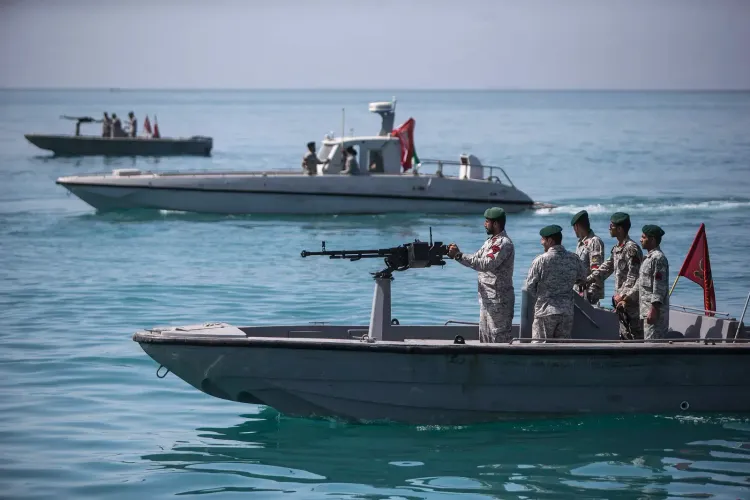
Synopsis
Iran's IRGC claims it struck US military bases in both Bahrain and Jordan on 15 July — hitting aircraft shelters housing F-15s, F-16s, and F-35s, along with the US Fifth Fleet's facilities. Bahrain says its air defences intercepted the attacks. With the IRGC threatening to close oil export routes, the Strait of Hormuz is now at the centre of a direct US-Iran military confrontation.
Key Takeaways
Iran's IRGC claimed retaliatory strikes on US military facilities in Bahrain and Jordan on 15 July .
The IRGC's Aerospace Force said it targeted the Al-Azraq base in Jordan, claiming destruction of shelters for F-15 , F-16 , and F-35 jets and MQ-9 drones.
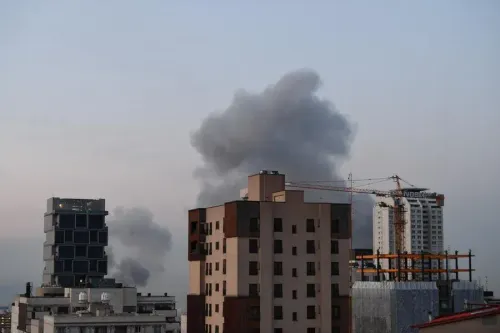
The IRGC's navy separately claimed strikes on US Fifth Fleet facilities in Bahrain, including command, fuel, and warehouse infrastructure.
The IRGC threatened to close oil and gas export routes used by the US and its allies if the Strait of Hormuz blockade continues.
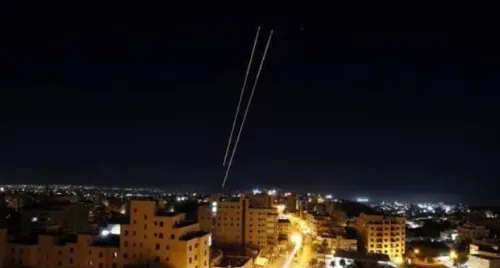
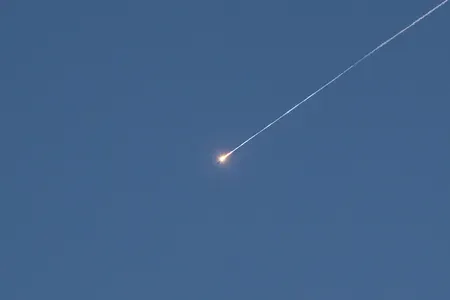
The Bahrain Defence Force confirmed its air defences intercepted and destroyed Iranian aerial attacks, calling them a 'flagrant violation of international humanitarian law.'
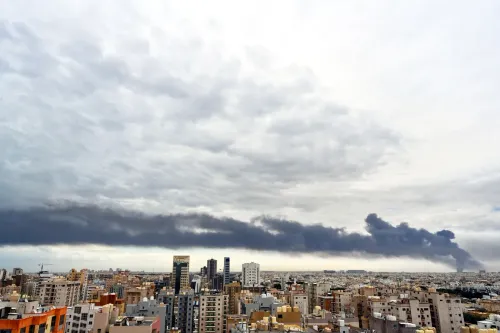
Iran's Islamic Revolutionary Guards Corps (IRGC) announced on Wednesday, 15 July that it carried out retaliatory strikes against US military facilities in Bahrain and Jordan, targeting aircraft shelters, command centres, strategic drones, and fuel storage infrastructure. The IRGC described the attacks as a direct response to what it called renewed US aggression against Iran.
Strikes on Jordan's Al-Azraq Base
The IRGC's Aerospace Force said it targeted the US military base at Al-Azraq in Jordan, claiming to have destroyed shelters housing F-15, F-16, and F-35 fighter jets, along with several MQ-9 strategic drones stationed at the facility, according to Iran's official Islamic Republic News Agency (IRNA). The IRGC alleged that a significant share of US military operations against Iran had been launched from bases in Jordan.
In an accompanying statement, the IRGC urged Jordanian citizens to demand the removal of US forces from their soil and to prevent Jordanian territory from being used as 'a launchpad for attacks against Islamic nations and the Palestinian people.' It further called on Jordanians to 'destroy American institutions and expel the occupying US army from Jordan.'
Naval Attack on US Fifth Fleet in Bahrain
In a separate statement, the IRGC said its naval forces struck US Fifth Fleet facilities in Bahrain, hitting the NSI management centre, large warehouses storing military parts and equipment, the command and control centre, and fuel storage facilities. The IRGC linked the Bahrain strikes to what it described as the US Navy blocking maritime routes under the pretext of controlling the Strait of Hormuz.
'The enemy should know that now that its pirates have blocked the Indian Ocean route for the export of the region's oil and gas to the world — a move that endangers the interests of America's economic rivals — it must expect other oil and gas export routes that serve the interests of the United States and its allies to be closed as well,' the IRGC said, according to IRNA. The Corps added that the region's oil and gas exports 'will either be available to everyone or to none.'
The Strait of Hormuz connects the Persian Gulf with the Gulf of Oman and the Arabian Sea, and is one of the world's most critical energy corridors, channelling oil and liquefied natural gas from major Gulf producers to global markets.
Bahrain's Response
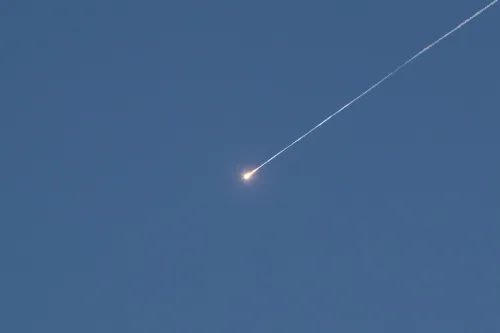
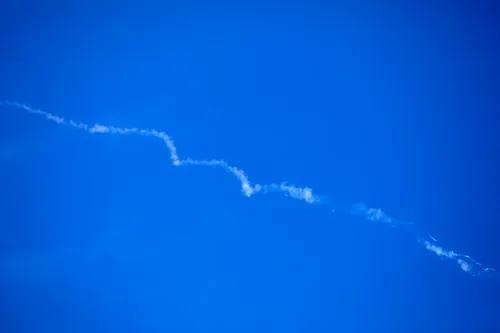
The Bahrain Defence Force confirmed on Wednesday that its air defence systems 'confronted, intercepted, and destroyed' a number of Iranian aerial attacks during the morning. In a post on X, the Bahrain Defence Force stated: 'The General Command of the Bahrain Defence Force announces that Iran is persisting in its systematic hostile approach through its heinous attacks targeting civilians in the Kingdom of Bahrain.'
The General Command said all branches and units were operating at the 'highest levels of readiness' and urged civilians to avoid approaching any foreign or suspicious objects left from the attacks, directing them to report such objects immediately. It added that personnel from the Royal Field Engineering Unit were fully prepared to handle remnants safely.
'The deliberate use of missiles and drones to target civilians and private property constitutes a flagrant violation of international humanitarian law,' the Bahrain Defence Force said.
Strategic Context
The strikes mark a significant escalation in direct military confrontation between Iran and the United States across the Gulf region. This comes amid already heightened tensions over Iran's nuclear programme, US sanctions, and the broader conflict dynamics involving Iranian-aligned groups across the Middle East. The targeting of the US Fifth Fleet's home base in Bahrain — a cornerstone of American naval presence in the Gulf — represents one of the most direct Iranian military actions against US infrastructure in the region in recent memory.
How the United States and its Gulf allies respond in the coming hours and days will be closely watched by energy markets and regional governments alike.
Point of View
If verified, suggests Iranian strike accuracy may have been limited — but the political signal is unmistakable. The Strait of Hormuz threat is the most consequential element: any credible move to disrupt that corridor would spike global oil prices and draw in a far wider coalition of responses than Washington alone.
NationPress
14 Oct 2026
Frequently Asked Questions
What did Iran's IRGC claim to have struck on 15 July?
The IRGC claimed it struck US military facilities in both Jordan and Bahrain on 15 July, targeting aircraft shelters, command centres, strategic drones, and fuel storage. In Jordan, it said it hit the Al-Azraq base housing F-15, F-16, and F-35 jets; in Bahrain, it targeted US Fifth Fleet infrastructure including the NSI management centre and fuel facilities.
Why did the IRGC say it carried out the strikes?
The IRGC described the attacks as retaliation for what it called renewed US aggression against Iran. The Bahrain strikes were specifically linked to the US Navy's alleged blockade of maritime routes and control of the Strait of Hormuz, which the IRGC said was disrupting regional oil and gas exports.
How did Bahrain respond to the Iranian attacks?
The Bahrain Defence Force said its air defence systems confronted, intercepted, and destroyed a number of Iranian aerial attacks on Wednesday morning. It described the strikes as targeting civilians and called them a flagrant violation of international humanitarian law, urging residents to avoid any suspicious objects on the ground.
What is the significance of the Strait of Hormuz in this conflict?
The Strait of Hormuz is one of the world's most critical energy corridors, linking the Persian Gulf to the Gulf of Oman and the Arabian Sea. The IRGC threatened to close oil and gas export routes used by the US and its allies if the US continues what it described as a blockade of the Indian Ocean route — a move that could severely disrupt global energy supplies.
What is the US Fifth Fleet and why is it significant?
The US Fifth Fleet is the American naval force responsible for the Middle East region, headquartered in Manama, Bahrain. It oversees US naval operations across the Persian Gulf, Red Sea, Arabian Sea, and parts of the Indian Ocean. An IRGC strike on its facilities — if confirmed — would represent one of the most direct Iranian military actions against US infrastructure in the Gulf in recent history.