IRGC strikes US bases in Jordan, Qatar, Oman after Iran attack
Synopsis
Iran's IRGC claims it struck US military bases across five countries — Jordan, Qatar, Oman, Kuwait, and Bahrain — in a sweeping retaliatory operation on 12 July, and has declared the Strait of Hormuz closed to all vessels. If the closure holds, it threatens to choke roughly a fifth of the world's oil supply and push the US-Iran standoff into uncharted territory.
Key Takeaways
Iran's IRGC claimed retaliatory strikes on US bases in Jordan, Qatar, and Oman on 12 July following US airstrikes on Iran's southern coasts.
The Prince Hassan Air Base (Jordan) command centre and MQ-9 Reaper drone hangar were reportedly destroyed in the first phase.
The Al Udeid Air Base in Qatar and logistical platforms at Duqm, Oman were targeted in phases two and three.
The Iranian Army separately claimed kamikaze drone strikes on US facilities in Kuwait and Bahrain .
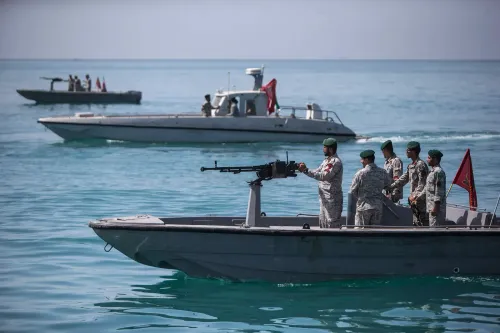
The IRGC Navy declared the Strait of Hormuz closed until further notice , threatening global energy supply routes.
The IRGC warned of 'more severe responses' if the US repeats strikes on Iranian territory; independent verification of all claims is pending.
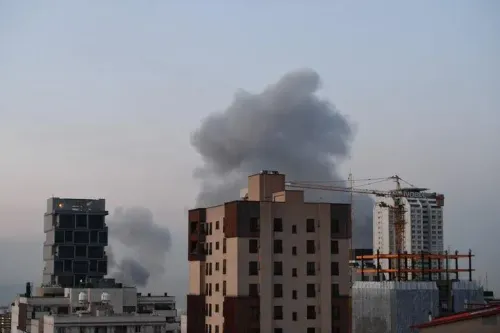
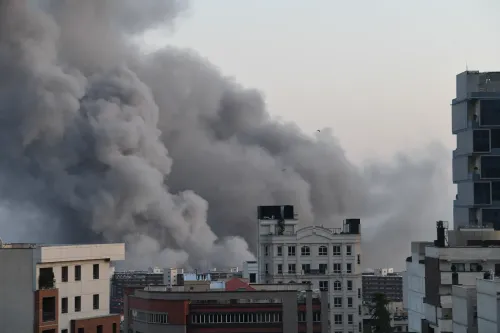
Iran's Islamic Revolutionary Guard Corps (IRGC) announced on Sunday, 12 July that it launched retaliatory strikes against US military bases in Jordan, Qatar, and Oman, following what it described as American airstrikes on several coastal military installations and communications towers along Iran's southern coasts earlier the same day. The IRGC published the claims through its official outlet Sepah News, marking one of the most significant direct escalations between Iran and the United States in recent memory.
Three Phases of Retaliatory Strikes
In the first phase, IRGC forces reportedly struck the Prince Hassan Air Base in Jordan, claiming to have destroyed the base's command and control centre along with the hangar housing MQ-9 Reaper drones. The second phase targeted the Al Udeid Air Base in Qatar, with the IRGC asserting it devastated the command structure as well as fighter aircraft overhaul and maintenance centres. In the third phase, logistical support centres and refuelling platforms for US aircraft carriers at the Omani port city of Duqm were reportedly struck in what the IRGC described as a 'heavy and surprise' attack.
Iranian Army Drone Strikes on Kuwait and Bahrain
Beyond the IRGC's three-phase operation, the Iranian Army separately claimed to have deployed kamikaze drone strikes against what it labelled 'terrorist' US bases in Kuwait and Bahrain. According to the Iranian military's account, a Patriot air defence system, an ammunition depot, and a radar site were hit in Kuwait, while the US Army's communications system and a radar site were targeted in Bahrain. These strikes were described as a direct response to US 'aggressions' earlier on Sunday.
Strait of Hormuz Declared Closed
In a significant escalation with global economic implications, the IRGC Navy announced that the Strait of Hormuz — a critical chokepoint through which roughly 20% of the world's oil supply transits — would remain closed 'until further notice.' The IRGC cited what it called 'foreigners' illegal interference' as justification, and stated that no vessel would be permitted passage for as long as the United States continues its regional interventions. This closure, if enforced, would have severe consequences for global energy markets and shipping lanes.
IRGC Warns of Escalation
The IRGC issued a stark warning that any repetition of US strikes against Iranian territory would trigger 'more severe responses.' This comes amid an already volatile regional backdrop, with tensions between Washington and Tehran having escalated sharply in recent months. Notably, the scale of operations claimed — spanning five countries simultaneously — represents a qualitative shift in Iran's stated retaliatory posture. Independent verification of the IRGC's claims was not immediately available, and the US government had not publicly confirmed the strikes at the time of reporting.
What Happens Next
The international community is closely watching for a US military or diplomatic response, which could determine whether this exchange spirals into a broader regional conflict. Energy markets are expected to react sharply when trading resumes, given the Strait of Hormuz closure claim. Gulf states hosting US bases — Jordan, Qatar, Oman, Kuwait, and Bahrain — have not yet issued official statements confirming or denying the IRGC's claims.
Point of View
If even partially verified, represent a threshold-crossing moment — not a skirmish but a coordinated, multi-country operation against US military infrastructure across the Gulf. What is strategically significant is the Strait of Hormuz closure declaration: Iran has long held this as its ultimate leverage card, and invoking it signals Tehran believes the stakes have crossed a point of no return. The mainstream framing of this as 'retaliation' obscures the deeper question: whether the US strikes on Iran's southern coast were themselves a response to a prior provocation, and how far back the escalation ladder actually begins. With Gulf states silent and no US confirmation yet, the fog of war is thick — but energy markets will not wait for clarity.
NationPress
11 Oct 2026
Frequently Asked Questions
What did Iran's IRGC claim to have struck on 12 July?
The IRGC claimed it struck US military bases in Jordan, Qatar, and Oman in three phases, including the Prince Hassan Air Base in Jordan, the Al Udeid Air Base in Qatar, and logistical platforms at the Omani port of Duqm. The Iranian Army separately claimed drone strikes on US facilities in Kuwait and Bahrain.
Why did Iran say it launched these strikes?
Iran described the strikes as retaliation for US airstrikes against several coastal military bases and communications towers along Iran's southern coasts earlier on Sunday, 12 July. The IRGC characterised the US actions as 'aggressions' against Iranian territory.
Is the Strait of Hormuz actually closed?
The IRGC Navy declared the Strait of Hormuz closed 'until further notice,' citing what it called illegal foreign interference. The closure has not been independently verified, but if enforced, it would disrupt roughly 20% of global oil supply passing through the strait.
Have the US or Gulf states confirmed the Iranian strikes?
At the time of reporting, the United States had not publicly confirmed or responded to the IRGC's claims. Gulf nations hosting the targeted bases — Jordan, Qatar, Oman, Kuwait, and Bahrain — had also not issued official statements confirming or denying the attacks.
What could happen next in the US-Iran standoff?
The IRGC has warned of more severe responses if the US repeats strikes on Iran. Analysts expect a significant US military or diplomatic reaction, while energy markets face volatility due to the Strait of Hormuz closure claim. The risk of broader regional conflict involving Gulf states has risen sharply.