Explosions rock Iran's Bandar Abbas as US strikes, Gulf states intercept missiles
Synopsis
Even as Iran and the US were negotiating under a signed MoU, American forces struck roughly 90 Iranian military targets for a second straight day — and Iran fired back at US bases in Bahrain, Kuwait, and Qatar. With Gulf states intercepting missiles and drones, and three IRGC soldiers confirmed dead, the Strait of Hormuz is at the centre of a rapidly escalating confrontation.
Key Takeaways
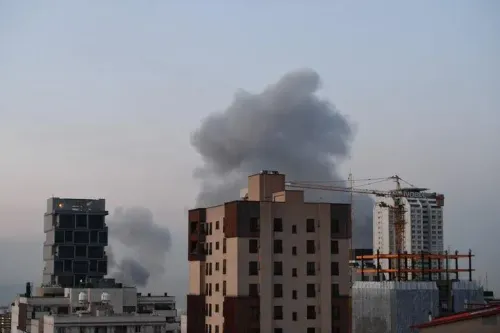
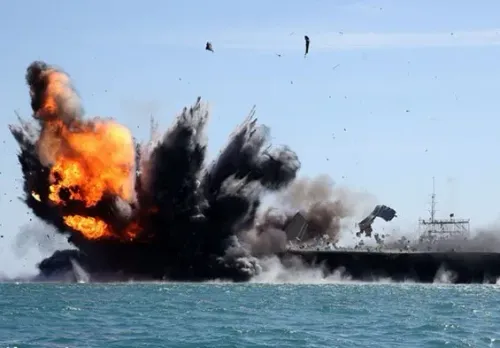
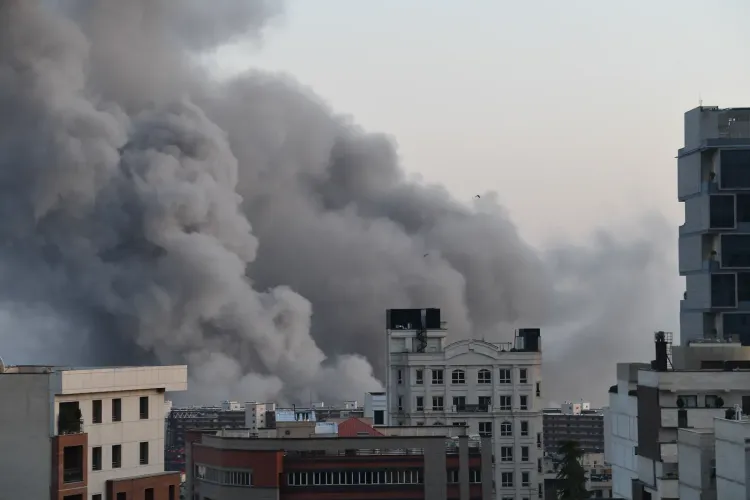
Explosions were heard in Bandar Abbas , Iran, on 9 July at around 1400 hrs local time , likely linked to exchanges of fire in the Gulf and Strait of Hormuz .
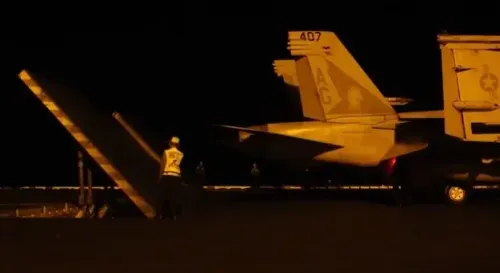
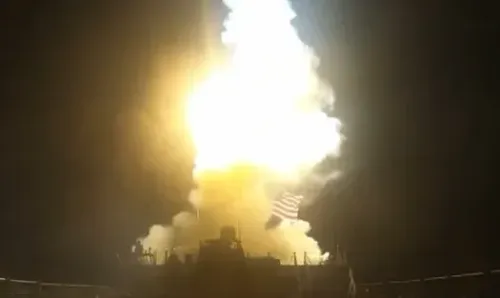
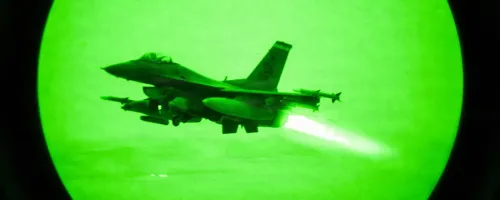
US Central Command struck approximately 90 Iranian military targets — the second consecutive day of such strikes — targeting air defence, naval, and logistics infrastructure.
Three IRGC soldiers from Khuzestan province were killed in a US strike on Thursday morning, according to the IRGC.
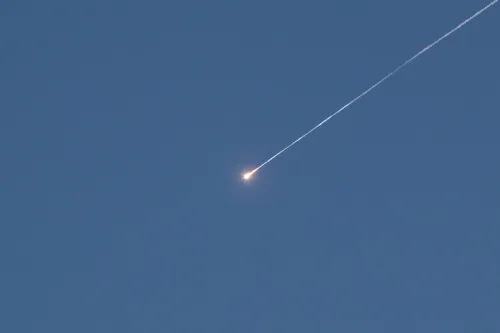
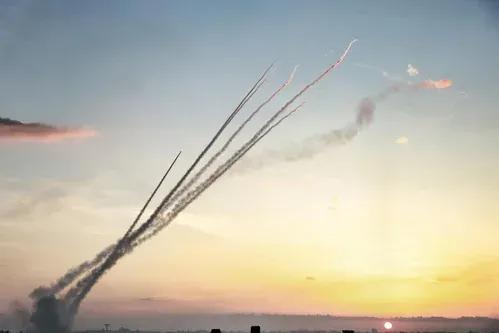
Bahrain and Kuwait intercepted Iranian missile and drone attacks; Kuwait's military shot down 3 ballistic missiles , 1 cruise missile , and 10 drones , with debris injuring one person .
Kuwait's Ministry of Foreign Affairs condemned the attacks as a 'flagrant violation' of sovereignty and a breach of international law.
The clashes occurred even as Iran and the US were engaged in negotiations toward a final deal within 60 days under a signed MoU .
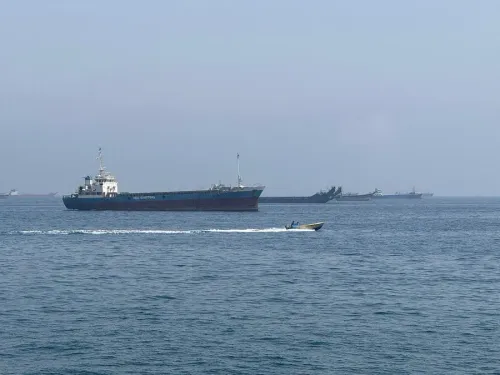
Explosions were heard across the coastal areas of Bandar Abbas, Iran's strategic port city on the Strait of Hormuz, on Thursday, 9 July, with blasts reported at around 1400 hrs local time (1030 GMT) along the city's southern coast. According to Iran's Mehr news agency, the sounds were likely the result of an exchange of fire in parts of the Gulf and the Strait of Hormuz — one of the world's most critical maritime chokepoints.
US Strikes and IRGC Casualties
US Central Command confirmed that its forces completed an additional round of strikes targeting Iran's ability to attack commercial shipping in the Strait of Hormuz, marking the second consecutive day of such action. US forces reportedly struck approximately 90 Iranian military targets, including air defence systems, coastal surveillance assets, missile and drone storage sites, naval capabilities, and military logistics infrastructure along Iran's coastline.
Iran's Islamic Revolutionary Guard Corps (IRGC) confirmed that three IRGC soldiers from Khuzestan province were killed as a result of a US strike on Thursday morning. The IRGC and the Iranian army, in turn, claimed they struck US military bases and facilities in Bahrain, Kuwait, and Qatar.
Bahrain and Kuwait Intercept Iranian Attacks
Both Bahrain and Kuwait reported on Thursday that their air defence systems had intercepted and destroyed Iranian aerial attacks. The Bahrain Defence Force (BDF) said in a statement that Iran had continued what it described as a 'systematic hostile approach' through missile and drone attacks targeting civilians in the kingdom. The BDF stated that all its units are at the highest levels of readiness, urging the public to avoid approaching or handling any unfamiliar or suspicious objects resulting from the attacks. It stressed that the deliberate targeting of civilians and private property with missiles and drones constitutes a violation of international humanitarian law.
In a post on social media platform X, the General Staff of the Kuwaiti Armed Forces said the military intercepted three ballistic missiles, one cruise missile, and 10 drones before dawn. Debris from the interceptions caused material damage in several locations and injured one person, who is reported to be in stable condition. Air raid sirens sounded across Kuwait early Thursday, and explosive ordnance disposal teams were deployed to clear remnants.
Kuwait Condemns Attacks as Sovereignty Violation
Kuwait's Ministry of Foreign Affairs separately condemned the Iranian attacks as 'a flagrant violation' of Kuwait's sovereignty, 'a direct threat' to its security and stability, and 'a serious breach' of international law and the Charter of the United Nations.
Backdrop: Ongoing US-Iran Negotiations
The escalation is particularly notable given that Iran and the United States were, as of Thursday, engaged in active negotiations aimed at reaching a final agreement within 60 days, in line with a recently signed Memorandum of Understanding (MoU). The simultaneous military exchanges and diplomatic talks represent a deeply contradictory moment — one that analysts may view as either a pressure tactic or a breakdown in back-channel coordination. This is the second straight day of US strikes on Iranian military infrastructure, signalling a significant hardening of Washington's posture even as talks continue.
Point of View
Or the MoU framework is already under severe strain. The IRGC's strikes on US bases in Bahrain, Kuwait, and Qatar raise the stakes for Gulf Cooperation Council states that have long tried to stay out of the Iran-US confrontation. For India, with significant energy and diaspora exposure in the Gulf, a sustained escalation in the Strait of Hormuz — through which a large share of India's crude imports transit — is not a distant geopolitical event but a direct economic risk.
NationPress
8 Oct 2026
Frequently Asked Questions
What caused the explosions in Bandar Abbas on 9 July?
The explosions in Bandar Abbas on 9 July were likely caused by an exchange of fire in the Gulf and the Strait of Hormuz, according to Iran's Mehr news agency. US Central Command confirmed it conducted strikes on approximately 90 Iranian military targets along Iran's coastline that day, marking the second consecutive day of such action.
How many IRGC soldiers were killed in the US strike?
Three IRGC soldiers from Khuzestan province were killed as a result of a US strike on Thursday morning, according to the IRGC itself. No further details on the specific location of the strike were immediately available.
Which Gulf countries intercepted Iranian attacks?
Both Bahrain and Kuwait reported intercepting Iranian aerial attacks on Thursday. Kuwait's military shot down three ballistic missiles, one cruise missile, and 10 drones before dawn, with debris causing material damage and injuring one person. Bahrain's defence forces also confirmed interceptions and condemned Iran's 'systematic hostile approach.'
What were the US military targets struck in Iran?
US Central Command said it struck approximately 90 Iranian military targets, including air defence systems, coastal surveillance assets, missile and drone storage sites, naval capabilities, and military logistics infrastructure along Iran's coastline. The strikes were aimed at degrading Iran's ability to attack commercial shipping in the Strait of Hormuz.
Are Iran and the US still in negotiations despite the military clashes?
Yes, Iran and the United States were reportedly engaged in active negotiations aimed at reaching a final agreement within 60 days, under a recently signed Memorandum of Understanding. The simultaneous military escalation and diplomatic engagement represent a sharp and contradictory development in the bilateral standoff.