Iran strikes US Fifth Fleet, shuts Strait of Hormuz in major escalation
Synopsis
Iran has done what it long threatened — formally closing the Strait of Hormuz while launching drones at the US Fifth Fleet in Bahrain. With the IRGC simultaneously firing ballistic missiles at a US base in Jordan and Washington responding with its own strikes, this is the most direct US-Iran military confrontation in decades, with global energy markets and regional stability hanging in the balance.
Key Takeaways
Iran launched drone attacks against the US Fifth Fleet in Bahrain on 11 June , targeting communications and radar facilities tied to the Patriot air-defence system .
Iran's Khatam al-Anbiya Central Headquarters announced the closure of the Strait of Hormuz to all vessels, including oil tankers and commercial ships.
The US Central Command confirmed additional strikes on multiple Iranian targets, calling them a response to Iran's 'unwarranted and continued aggression.' Jordan intercepted 20 Iranian missiles over the Azraq region ; no casualties or material damage reported.
The IRGC claimed it struck the US al-Azraq base in Jordan with ballistic missiles in retaliation for US attacks on Iran.
Iran rejected President Trump's claim of a phone call with Iranian officials, calling it a 'cover' to escape war; earlier Pakistani mediation efforts appear to have stalled.
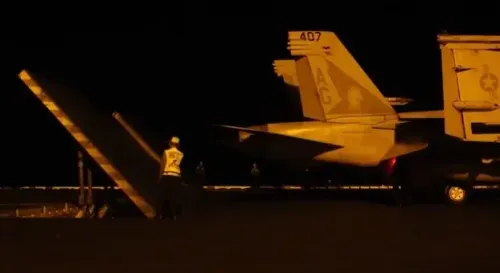
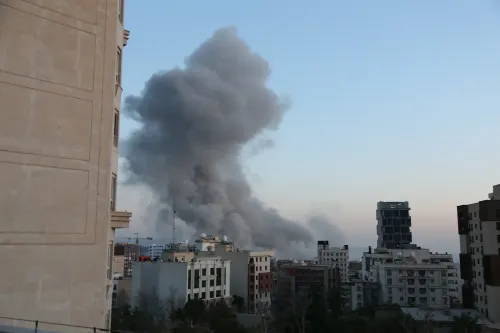
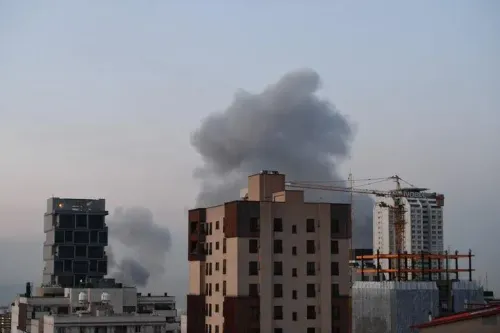
The Iranian army on Thursday, 11 June launched drone attacks targeting the US Fifth Fleet at its base in Bahrain, with communications and radar facilities linked to the fleet's Patriot air-defence system among the confirmed targets. The strike marks a sharp escalation in direct military confrontation between Iran and United States forces in the Gulf region.
Strait of Hormuz Closure Announced
In a move with sweeping global implications, Iran's Khatam al-Anbiya Central Headquarters announced the closure of the Strait of Hormuz to all vessels, including oil tankers and commercial ships. Iranian authorities cited security risks stemming from ongoing military tensions as justification for the measure. Iranian military officials warned that any vessel attempting to transit the strategic waterway could be targeted — a threat that, if enforced, would choke off roughly 20% of the world's seaborne oil supply.
US Central Command Responds
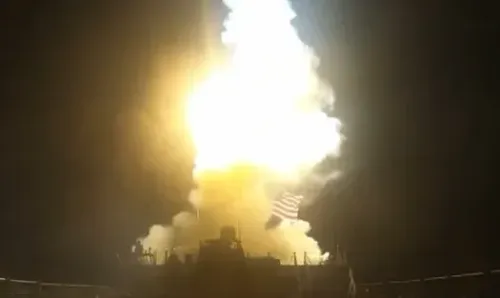
The US Central Command confirmed it conducted additional strikes against multiple Iranian targets earlier on Thursday, characterising the action as a response to Iran's 'unwarranted and continued aggression.' The exchange underscores a rapidly deteriorating security environment in the Gulf, with both sides now trading direct blows rather than proxy engagements.
Jordan Intercepts 20 Iranian Missiles
Separately, Jordanian air defence systems and Royal Air Force fighter jets intercepted and shot down 20 missiles fired from Iran in the early hours of Thursday morning, according to a statement from the Jordan Armed Forces. The missiles were intercepted over the Azraq region in eastern Zarqa Governorate. Debris fell as a result of the interception, though no casualties or material damage were reported. Specialised military engineering teams have been deployed to handle unexploded ordnance in the area.
Iran's Islamic Revolutionary Guard Corps (IRGC) claimed responsibility for striking the US al-Azraq base in Jordan with ballistic missiles, describing it as retaliation for US strikes on Iranian territory.
Mediation Efforts and Diplomatic Tensions
The intensifying conflict comes despite reports that Tehran and Washington had recently explored possible peace proposals through Pakistani mediation. Iran also flatly rejected US President Donald Trump's claim of having held a phone conversation with Iranian officials, calling it a 'cover' to escape war — a denial that further narrows the diplomatic space. Notably, this is the first time Iran has formally announced a closure of the Strait of Hormuz since threatening to do so during earlier periods of US-Iran tension, signalling an unprecedented threshold has been crossed.
Regional Readiness on High Alert
The Jordan Armed Forces stated it is maintaining the highest levels of combat readiness and remains committed to protecting the Kingdom's airspace. It vowed it will not permit any violation of Jordanian airspace by any party. With multiple state militaries now directly engaged, the risk of broader regional conflagration is rising sharply. All eyes are now on whether Gulf Cooperation Council members and other regional powers will be drawn into the conflict.
Point of View
One that transforms a bilateral military confrontation into a global economic crisis. Roughly a fifth of the world's seaborne oil passes through that chokepoint, and markets have not yet priced in a sustained closure. What is being missed in the blow-by-blow coverage is the collapse of the Pakistani mediation track: Tehran's rejection of even a face-saving phone-call narrative signals that the political will for de-escalation has evaporated on the Iranian side. With the IRGC now firing ballistic missiles at US installations in a third country — Jordan — the conflict has structurally widened beyond the original Iran-Israel axis. Washington's response calculus has just become significantly harder.
NationPress
22 Sept 2026
Frequently Asked Questions
What did Iran target in its drone attack on 11 June?
Iran's army launched drone attacks against the US Fifth Fleet at its base in Bahrain on 11 June, with communications and radar facilities linked to the fleet's Patriot air-defence system among the confirmed targets. The US Central Command confirmed it carried out additional retaliatory strikes against multiple Iranian targets on the same day.
Has Iran actually closed the Strait of Hormuz?
Iran's Khatam al-Anbiya Central Headquarters formally announced the closure of the Strait of Hormuz to all vessels, including oil tankers and commercial ships, citing security risks from ongoing military tensions. Iranian military officials warned that vessels attempting to transit the waterway could be targeted, though the practical enforcement of the closure remains to be seen.
What happened with the missiles intercepted by Jordan?
Jordanian air defence systems and Royal Air Force fighter jets intercepted and shot down 20 missiles fired from Iran early Thursday morning over the Azraq region in eastern Zarqa Governorate. No casualties or material damage were reported, though specialised military engineering teams were deployed to handle unexploded ordnance from the debris.
Why did Iran fire missiles at a US base in Jordan?
Iran's Islamic Revolutionary Guard Corps claimed it struck the US al-Azraq base in Jordan with ballistic missiles as retaliation for US strikes on Iranian territory. The IRGC framed the attack as a direct response to what it described as American aggression against Iran.
What is the status of US-Iran diplomatic efforts?
Diplomatic efforts appear to have collapsed. Reports indicated that Tehran and Washington had recently explored peace proposals through Pakistani mediation, but Iran rejected President Trump's claim of a phone conversation with Iranian officials, calling it a 'cover' to escape war — a signal that back-channel communication has effectively broken down.