US Military Strikes Intensify Against Iran's Threat in Strait of Hormuz
Synopsis
The US continues its military operations in the Strait of Hormuz to neutralize Iran's threat to global shipping. Brad Cooper, head of US Central Command, emphasized ongoing efforts while Israel conducts strikes on Iranian leadership assets. The situation escalates with global ramifications.
Key Takeaways
US military operations aim to weaken Iran's threat in the Strait of Hormuz.
Recent strikes destroyed over 90 Iranian military targets.
Israel targets Iranian leadership to disrupt coordination.
The situation could impact global shipping and oil prices.
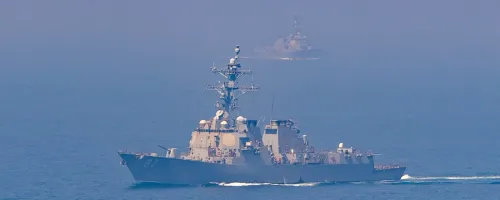
Washington, March 16 (NationPress) US military operations are ongoing to diminish Iran's capacity to pose threats to commercial shipping in the Strait of Hormuz, declared Brad Cooper, the leader of US Central Command, on Monday.
In a video statement shared on X, Cooper emphasized, "We will persist in swiftly eroding Iran's capability to threaten the freedom of navigation in and around the Strait of Hormuz."
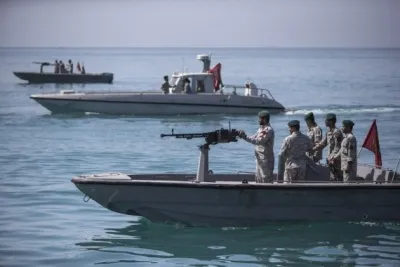
Nevertheless, the Commander provided no specifics regarding how the United States plans to reopen this vital global energy passage, which Iran has effectively rendered inaccessible.
According to reports from Xinhua news agency, Cooper noted that the US strikes on Kharg Island, which serves as Iran's oil export center, resulted in the destruction of over 90 military installations, including storage facilities for naval mines and missiles.
In the last 16 days, US forces have executed more than 6,000 combat missions, annihilating upwards of 100 Iranian naval vessels, while Iran has launched hundreds of missiles and drones towards targets in approximately 12 countries in the region, Cooper reported.
On February 28, the United States and Israel initiated extensive assaults on Iran, disrupting global shipping operations, which led to skyrocketing oil prices and a tumultuous global economy.
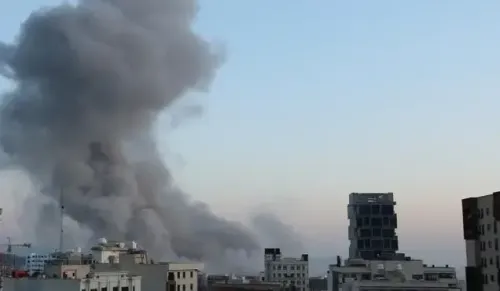
Additionally, the Israeli military disclosed on Monday that it successfully targeted an aircraft utilized by Iran's senior leadership at Tehran's Mehrabad Airport, asserting that the strike would hinder coordination between Tehran and its regional partners. The IDF also reported carrying out strikes on infrastructure across multiple Iranian cities.
According to the IDF's statement, the aircraft was previously employed for the transit of high-ranking political and military officials for both domestic and international travel. The military added that the aircraft's destruction would disrupt communication channels between Iran's leadership and allied factions throughout the region, slow down Tehran's military advancement, and restrict its ability to restore damaged capabilities.
The aircraft was identified as an Airbus A340, which had been used to transport senior leaders, including President Masoud Pezeshkian and, in earlier instances, Supreme Leader Ali Khamenei, during diplomatic missions abroad. Iranian officials have yet to confirm the strike, as reported by Xinhua news agency.
Located in western Tehran, Mehrabad Airport is one of the city's oldest aviation facilities. While most long-haul international flights are managed through Tehran's Imam Khomeini International Airport, Mehrabad remains the country's busiest domestic airport, also hosting military installations, including units of the Iranian Air Force.
In a separate announcement on Monday, the IDF stated it had targeted locations in the Iranian cities of Tehran, Shiraz, and Tabriz, marking the 17th day of the US-Israeli campaign against Iran.
Point of View
The ongoing military actions by the US and Israel against Iran reflect a significant escalation in geopolitical tensions. The focus remains on maintaining the freedom of navigation in critical waterways, while the ramifications of these actions could have far-reaching impacts on international relations and economic stability.
NationPress
20 Sept 2026
Frequently Asked Questions
What are the US military's objectives in the Strait of Hormuz?
The US military aims to diminish Iran's capability to threaten commercial shipping in the Strait of Hormuz, ensuring the safety of global navigation.
What recent actions has the US taken against Iran?
The US has conducted strikes on Iranian military targets, including significant operations on Kharg Island, destroying numerous military facilities.
How is Israel involved in the conflict with Iran?
Israel has conducted airstrikes targeting Iranian leadership assets and infrastructure, asserting that these actions will disrupt Iran's regional coordination.
What is the significance of the Strait of Hormuz?
The Strait of Hormuz is a critical global energy waterway, through which a substantial portion of the world's oil supply is transported.
What are the potential consequences of these military operations?
The military operations could lead to increased geopolitical tensions, disruptions in global shipping, and significant fluctuations in oil prices.