Jordan intercepts 8 missiles as Iran strikes US base, command centre
Synopsis
Jordan's air defences downed 8 Iranian ballistic missiles on 9 July as Tehran's IRGC simultaneously claimed direct hits on the US command centre in the Middle East and al-Azraq Air Base. With Iran warning of heavier fire if the US strikes again — and calling American attacks 'war crimes' — the fragile MoU between Washington and Tehran is under acute stress.
Key Takeaways
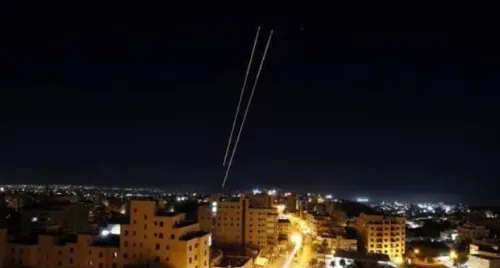
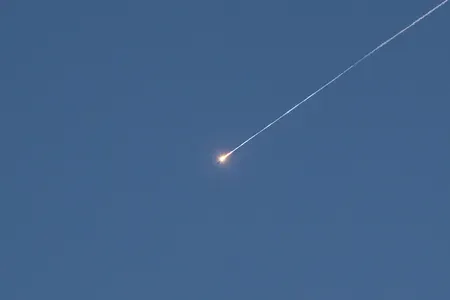
Jordan intercepted 8 ballistic missiles launched from Iran on 9 July ; no casualties or property damage reported.
Iran's IRGC claimed it struck the US command centre in the Middle East and al-Azraq Air Base in Jordan with 10 ballistic missiles .
The IRGC warned that other US bases in the region 'will not be safe' if American strikes continue.
Iran's Foreign Ministry condemned US strikes on its southern coastal provinces and two bridges in northeastern Iran as 'flagrant war crimes.' Tehran accused Washington of violating the United Nations Charter and a recently signed MoU on ending the war.
Jordan's military stated it is at the highest level of readiness and will not permit any party to violate its airspace.
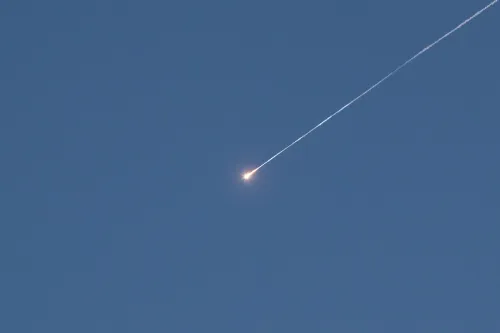
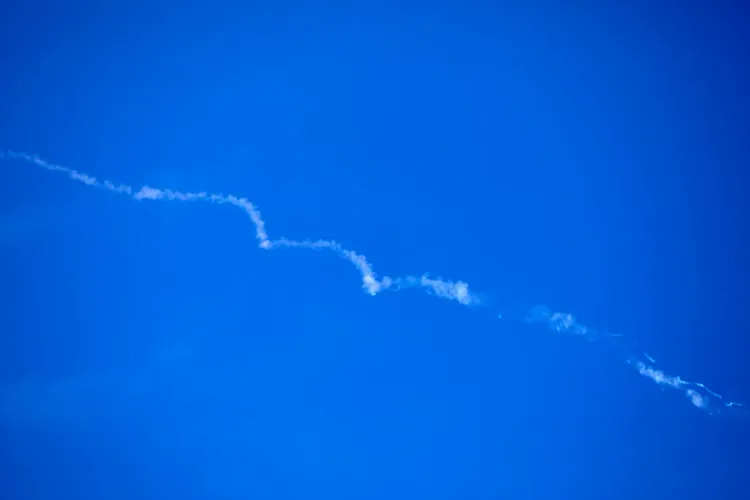
Jordan's air defence systems shot down eight ballistic missiles launched from Iran toward Jordanian territory on Thursday, 9 July, a military source at the General Command of the Jordan Armed Forces-Arab Army confirmed. Simultaneously, Iran's Islamic Revolutionary Guard Corps (IRGC) claimed it struck the US command centre in the Middle East and the al-Azraq Air Base in Jordan using 10 ballistic missiles, marking one of the most direct Iranian military actions against US-linked targets in the region in recent memory.
Jordan's Interception and Military Response
The anonymous military source confirmed that the interception operations caused missile debris to fall on Jordanian soil, but stressed that no casualties or property damage were reported. The source added that Jordan's armed forces are operating at the highest level of readiness to protect the kingdom's airspace and defend its sovereignty.
'The military will not allow any party to violate Jordan's airspace,' the source stated, signalling a firm posture regardless of the origin of any future incursions. This is a notable assertion, given that Jordan has previously faced domestic political pressure over its willingness to intercept projectiles originating from Iran — including during the April 2024 drone-and-missile barrage that it helped neutralise alongside US and Israeli air defences.
IRGC's Claims and Threat to US Bases
The IRGC said in a statement cited by Iranian state media that 'the enemy's command and control centre in the Middle East and the al-Azraq Air Base in Jordan were struck by 10 ballistic missiles.' The corps issued a stark warning, stating that if the United States 'repeats its aggression, other American bases in the region will not be safe from our heavy fire.'
The al-Azraq Air Base, located in northeastern Jordan, hosts US military personnel and has served as a logistical hub for American operations in the region. An attack on this facility, if confirmed at the scale claimed by the IRGC, would represent a significant escalation in direct Iran-US military confrontation.
Iran Condemns US Strikes, Calls Them 'War Crimes'
Iran's Foreign Ministry on Thursday separately condemned what it described as the latest US strikes against several regions in Iran's southern coastal provinces and two bridges in the country's northeastern provinces. In a formal statement, the ministry labelled attacks on two bridges along rail routes — from Gorgan to Incheh Borun and from Mashhad to Tehran — as 'flagrant war crimes.'
Tehran argued that the US strikes within the past 48 hours were carried out under what it called the 'false pretext' of responding to earlier incidents involving ships crossing the Strait of Hormuz. The ministry characterised the strikes as a blatant violation of the United Nations Charter and a recently signed memorandum of understanding (MoU) between the two countries on ending the war.
MoU Under Strain
Iran also accused the United States of using the strikes to justify its 'continued non-compliance' with the MoU — a diplomatic instrument whose existence underscores how fragile the ceasefire framework between the two sides reportedly remains. The accusation points to a pattern where both parties claim the other is the aggressor, complicating any path toward de-escalation.
This comes amid an already volatile regional security environment, with US forces on heightened alert across multiple bases in Iraq, Syria, and the Gulf. With both sides trading strikes and issuing warnings, the risk of a broader miscalculation — rather than a deliberate war — is the scenario most analysts reportedly fear.
Point of View
However tenuously, to a framework for de-escalation. Iran invoking it as a US violation is a legal and diplomatic move as much as a military one, designed to shape the narrative in multilateral forums. Jordan's insistence on intercepting Iranian missiles — and publicly attributing them — is also significant; Amman is walking a narrow path between its US security partnerships and Arab world optics. The real danger here is not a planned war but an escalatory spiral where each side's 'response' becomes the other's 'aggression.'
NationPress
8 Oct 2026
Frequently Asked Questions
How many missiles did Jordan intercept from Iran on 9 July?
Jordan's air defence systems intercepted eight ballistic missiles launched from Iran toward Jordanian territory on 9 July . A military source confirmed that missile debris fell but no casualties or property damage were reported.
What did Iran's IRGC claim to have struck in Jordan?
The IRGC claimed it struck the US command and control centre in the Middle East and the al-Azraq Air Base in Jordan using 10 ballistic missiles . The corps also warned that other American bases in the region would face 'heavy fire' if the US repeated its strikes.
What is the MoU between the US and Iran, and why does it matter here?
Iran and the United States reportedly signed a memorandum of understanding (MoU) on ending the war between them. Iran's Foreign Ministry has accused the US of violating this agreement through its recent strikes, arguing the attacks undermine the ceasefire framework both sides had agreed to.
What US strikes is Iran condemning?
Iran's Foreign Ministry condemned US strikes carried out within the past 48 hours against its southern coastal provinces and two bridges along rail routes in its northeastern provinces — from Gorgan to Incheh Borun and from Mashhad to Tehran. Tehran called these attacks 'flagrant war crimes' and a violation of the UN Charter.
Why is al-Azraq Air Base significant?
Al-Azraq Air Base in northeastern Jordan hosts US military personnel and functions as a logistical hub for American operations across the Middle East. An Iranian strike on this facility, if confirmed at the scale claimed, would mark one of the most direct military actions against a US-linked base in the region.