Houthis back Iran missile strikes on Israel, warn of escalation

Synopsis
Iran launched ballistic missiles at Israel's Ramat David Airbase on 8 June, and Yemen's Houthis immediately declared solidarity — signalling that the 'axis of resistance' is moving in lockstep. With the IDF vowing to strike back and Iran warning of 'crushing blows' if Israel escalates in Lebanon, the region is at one miscalculation away from a broader war.
Key Takeaways
Yemen's Houthi group declared support for Iran's missile strikes on Israel on 8 June , citing 'axis of resistance' coordination.
Iran's IRGC confirmed it targeted Ramat David Airbase with ballistic missiles in response to Israeli strikes on Beirut's southern suburbs.
The IDF said it intercepted the missile attacks; no immediate casualties or damage were reported.
IDF Chief of Staff Eyal Zamir vowed to 'strike the enemy with determination as soon as the order is given.' Iran's Foreign Ministry framed the strikes as legitimate self-defence, citing violations of an April ceasefire .
Israel's Home Front Command banned gatherings of more than 200 people in open areas following the attack.
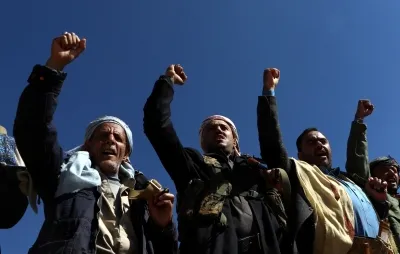
Yemen's Houthi group on Sunday, 8 June declared full support for Iran's missile strikes on Israel, stating that the 'axis of resistance' remains in continuous coordination to confront any regional developments. The announcement came hours after Iran launched multiple waves of ballistic missiles toward Israeli territory in what Tehran described as retaliation for Israeli airstrikes on Beirut's southern suburbs earlier the same day.
Houthi Statement and Regional Coordination
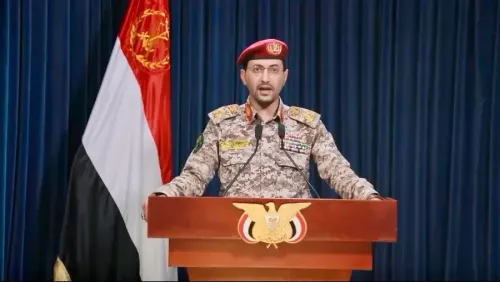
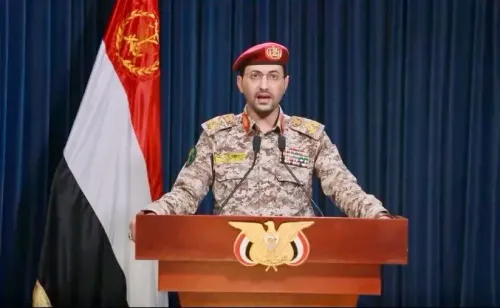
In a statement broadcast on Al-Masirah TV, the Houthi-run channel based in Yemen, the group said the Iranian operation reinforced what it called the 'equation of unified fronts' and defied Israel's alleged 'impunity.' The Houthis warned Israel against any further escalation, signalling that the broader resistance network would respond collectively to any Israeli counter-moves. This is consistent with a pattern of coordinated messaging among Iran-aligned groups that has intensified since the outbreak of the Gaza conflict in late 2023.
Iran's Missile Strikes: What Happened
Iran's Islamic Revolutionary Guard Corps (IRGC) confirmed in an official statement that it targeted Israel's Ramat David Airbase with ballistic missiles, citing Israel's 'widespread crimes' in Lebanon as the trigger. Air raid sirens sounded across wide areas of northern Israel, and the Israel Defense Forces (IDF) said it intercepted the incoming missiles. There were no immediate reports of casualties or structural damage.
IDF Chief of Staff Eyal Zamir stated that the military 'will strike the enemy with determination as soon as the order is given,' while IDF spokesperson Effie Defrin said Iran had made 'a grave mistake' by firing missiles at Israel and that the military remained prepared for additional launches.
Iran's Justification and Warning
In a statement issued in the early hours of Monday, 9 June, Iran's Foreign Ministry said its armed forces struck 'a number of targets inside Israel' as an exercise of the country's 'legitimate right to self-defence,' citing Israel's repeated 'aggressive actions' against Lebanon and Iran and what it described as frequent violations of an April ceasefire.
According to Iran's semi-official Fars News Agency, Ali Abdollahi, Chief Commander of Iran's Khatam al-Anbiya Central Headquarters, warned that if Israel expands its attacks on southern Lebanon or the Dahieh district south of Beirut, or retaliates against Iran, it would face 'more crushing and regret-inducing blows.'
Israel's Civil Defence Response
Following the Iranian missile barrage, Israel's Home Front Command tightened civil defence restrictions nationwide, banning gatherings of more than 200 people in open areas. The restrictions reflect the heightened security posture Israel has maintained since the conflict broadened to include Iranian-linked fronts in Lebanon, Yemen, and Iraq. Notably, this marks one of the most direct Iranian missile salvos targeting Israeli military infrastructure in recent months.
What Comes Next
The exchange signals a dangerous new threshold in the Iran-Israel confrontation, with multiple armed groups — including the Houthis — now publicly aligning their posture with Tehran's military actions. Analysts warn that any Israeli counter-strike on Iranian territory or assets could trigger a wider regional escalation involving Hezbollah, the Houthis, and Iran-backed factions in Iraq. The international community, including the United Nations, is expected to call for immediate de-escalation.
Point of View
And the choice of target suggests Iran is calibrating its strikes for military messaging rather than mass casualties. The IDF's immediate vow to retaliate, combined with Iran's warning of 'crushing blows,' creates a classic escalation ladder with no visible off-ramp. The Houthis' public alignment also complicates any US-mediated de-escalation, since Washington has limited leverage over Sanaa.
NationPress
22 Oct 2026
Frequently Asked Questions
Why did Iran launch missile strikes on Israel on 8 June?
Iran said the strikes were retaliation for Israeli airstrikes on Beirut's southern suburbs earlier that day, framing the action as legitimate self-defence. Iran's Foreign Ministry also cited what it described as Israel's repeated violations of an April ceasefire and 'aggressive actions' against Lebanon and Iran.
What is the 'axis of resistance' mentioned by the Houthis?
The 'axis of resistance' is the term used by Iran and its allied armed groups — including the Houthis in Yemen, Hezbollah in Lebanon, and Iran-backed factions in Iraq — to describe their coordinated opposition to Israel and US influence in the Middle East. The Houthis invoked it to signal collective readiness to respond to any Israeli escalation.
Did the Iranian missiles cause casualties in Israel?
No immediate casualties or structural damage were reported following the Iranian missile strikes on 8 June. The IDF said it intercepted the incoming ballistic missiles, and air raid sirens sounded across northern Israel as a precaution.
How did Israel respond to the Iranian missile attack?
IDF Chief of Staff Eyal Zamir vowed to 'strike the enemy with determination as soon as the order is given,' and IDF spokesperson Effie Defrin called the Iranian launch 'a grave mistake.' Israel's Home Front Command also tightened civil defence rules, banning open-area gatherings of more than 200 people.
What did Iran's commander warn about further Israeli action?
Ali Abdollahi, Chief Commander of Iran's Khatam al-Anbiya Central Headquarters, warned that if Israel expands its attacks on southern Lebanon or the Dahieh district south of Beirut, or retaliates against Iran, it will face 'more crushing and regret-inducing blows,' according to Iran's semi-official Fars News Agency.