Tibet a 'Showpiece' Under China: Dalai Lama's Envoy Exposes Hollow Reforms
Synopsis
China's claims of freedom and democracy in Tibet are exposed as hollow by the Dalai Lama's envoy, who reveals that no Tibetan has ever led the region's Communist Party, one million children face forced indoctrination, and all Tibetan schools have been replaced by Chinese boarding schools — reducing Tibet to a cultural showpiece with no real roots.
Key Takeaways
After 76 years of Chinese rule, no Tibetan has ever served as Party Secretary of the Tibet Autonomous Region , the region's most powerful political post.
Tsewang Gylapo Arya , the Dalai Lama's envoy to Japan and East Asia , described Tibet as a "showpiece" — like a beautiful cut flower stripped of its roots.
Approximately one million Tibetan children , some as young as four years old , are enrolled in Chinese colonial boarding schools following the closure of all traditional Tibetan schools.
The Tibetan language is actively suppressed — those who promote it face arrest and torture under fabricated charges, according to Arya's report.
China's Global Times attacked the CTA's February 2025 elections as an "institutional illusion" , reflecting Beijing's unease with the exile government's growing international recognition.
In 1959 , the Dalai Lama and approximately 80,000 Tibetans fled to India, Nepal, and Bhutan , building a democratic exile community now admired worldwide.
Tokyo/Beijing, April 25: Tibet has been reduced to a mere showpiece by Chinese authorities, with Beijing's repeated claims of democratic reforms and development in the region exposed as hollow — this is the stark conclusion drawn by Tsewang Gylapo Arya, the Dalai Lama's Representative at the Liaison Office for Japan and East Asia, in a sharply worded analysis published in Japan Forward. The report arrives as the international community grows increasingly vocal about human rights conditions inside Tibet, and as the Central Tibetan Administration (CTA) gains wider democratic recognition globally.
China's Democratic Claims Contradicted by Ground Reality
Arya's analysis cuts to the core of a fundamental contradiction: the Chinese Communist Party (CCP) claims to have liberated Tibetans through "democratic reforms" — portraying former serfs as having become masters — yet after 76 years of these so-called reforms, not a single Tibetan has ever served as Party Secretary of the Tibet Autonomous Region. Arya calls this "a cruel reminder" of continued "foreign subjugation".
This is not a minor administrative oversight. The Party Secretary position is the most powerful political role in any Chinese province or autonomous region — consistently held by Han Chinese officials in Tibet, effectively confirming that Tibetans remain excluded from meaningful political power in their own homeland.
The CCP's official mouthpiece, Global Times, recently attacked the February 2025 elections of the Central Tibetan Administration, dismissing them as "elections without a land" — branding the democratic exercise an "institutional illusion" manufactured by separatist exile groups. Arya fired back, noting that the commentary, attributed to "Chinese experts", only reveals Beijing's deep discomfort with a thriving Tibetan democracy in exile that is winning international admiration.
Tibet in Exile: A Democratic Community Built Against the Odds
In 1959, the Dalai Lama, accompanied by approximately 80,000 Tibetans, fled to India, Nepal, and Bhutan following China's military crackdown. What began as a refugee crisis has, over more than 75 years, evolved into one of the most remarkable experiments in democratic governance in exile anywhere in the world.
Under the leadership of the Dalai Lama and the CTA, the Tibetan diaspora has preserved its language, culture, religious institutions, and democratic traditions — precisely the elements that Beijing has systematically dismantled inside Tibet. Arya describes the exiled community as "a vibrant democratic community admired around the world", in sharp contrast to what remains inside Tibet's borders.
Cultural Erasure and Forced Assimilation Inside Tibet
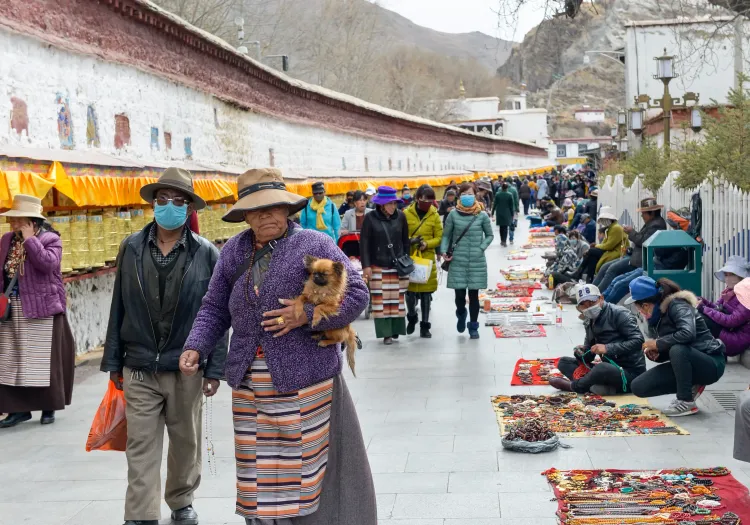
The situation on the ground in Tibet, as documented by Arya and corroborated by multiple international human rights bodies, paints a deeply troubling picture. Arya describes Tibet as having been reduced to "a beautiful cut flower, without any substance or real roots" — a showpiece stripped of cultural and spiritual depth.
Monasteries and nunneries — the bedrock of Tibetan Buddhist identity — remain under the direct control of CCP cadres. Children and young people are prohibited from visiting or joining religious institutions, severing the generational transmission of faith and culture.
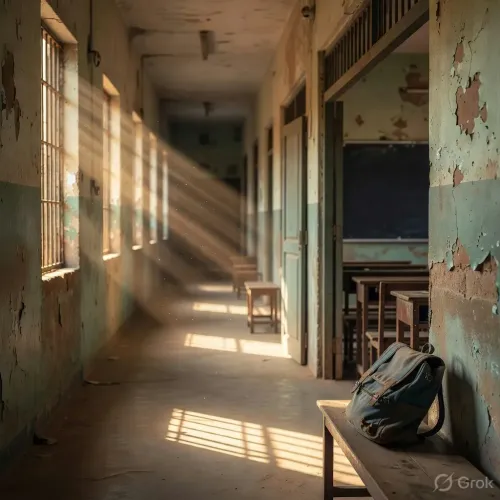
Perhaps most alarming is the scale of educational transformation: all Tibetan schools have been shut down and replaced with Chinese colonial-style boarding schools, where an estimated one million children — some as young as four years old — are reportedly subjected to forced political indoctrination under Beijing's assimilative policy. This figure, if accurate, represents one of the largest state-run assimilation programs targeting a minority population anywhere in the world today.
The Tibetan language itself is under siege. Arya notes that individuals who promote or teach the native tongue face arrest and torture on fabricated charges. Laws have been deliberately enacted to provide legal cover for repression and the forced assimilation of minority nationalities — a legislative framework critics describe as institutionalised cultural genocide.
International Implications and the Broader Struggle
Arya's message transcends the Tibet issue alone. He emphasises that Tibetans — both inside the region and in the diaspora — along with their global supporters, seek freedom and well-being not only for Tibetan people but also for Chinese citizens and other ethnic minorities facing similar repression under CCP rule. This framing positions the Tibetan struggle as part of a wider global conversation about authoritarianism, minority rights, and the limits of state power.
This comes amid growing international scrutiny of China's treatment of minorities, including the Uyghur community in Xinjiang, where similar patterns of mass detention, forced assimilation, and cultural erasure have been extensively documented and condemned by Western governments and the United Nations. The parallels are increasingly difficult for Beijing to dismiss.
Notably, the CTA's February 2025 elections drew participation from Tibetan diaspora communities across multiple continents, with growing diplomatic acknowledgment from democratic nations — a trend that directly undermines Beijing's narrative of the exile government as an irrelevant fringe group.
What to Watch Next
As global pressure on China's Tibet policy intensifies and the Dalai Lama — now in his late eighties — faces questions of succession, Beijing's handling of the region is set to become an even sharper flashpoint in international diplomacy. The CCP's insistence on controlling the next Dalai Lama's reincarnation remains a deeply contentious issue that could trigger a major geopolitical confrontation between China and Tibetan Buddhist communities worldwide in the coming years.
Point of View
Zero Tibetans have led their own region. The forced enrollment of one million children in assimilation schools mirrors documented patterns in Xinjiang, suggesting a systematic CCP blueprint for erasing minority identities under the legal cover of 'national unity.' What the mainstream narrative misses is this: the Tibetan diaspora's thriving democracy in exile is not just a symbol — it is a direct, living rebuke to every claim Beijing makes about freedom in Tibet, and its growing international recognition is precisely why China's state media is now on the defensive.
NationPress
9 Oct 2026
Frequently Asked Questions
Why does China's claim of democratic reforms in Tibet ring hollow?
Despite 76 years of so-called democratic reforms, no Tibetan has ever served as Party Secretary of the Tibet Autonomous Region — the most powerful political position in the region. This exclusion of Tibetans from top leadership directly contradicts Beijing's claims of self-governance and democratic progress.
What is the Central Tibetan Administration and why did China criticise its elections?
The Central Tibetan Administration (CTA) is the Tibetan government-in-exile, based in Dharamsala, India, which held elections in February 2025. China's state media outlet Global Times dismissed the polls as 'elections without a land,' but critics say this reaction reflects Beijing's discomfort with the diaspora's growing democratic legitimacy worldwide.
How many Tibetan children are affected by China's boarding school policy?
According to Tsewang Gylapo Arya, approximately one million Tibetan children — some as young as four years old — have been placed in Chinese colonial-style boarding schools. All traditional Tibetan schools have been closed and replaced with these institutions, where children are reportedly subjected to political indoctrination and cut off from Tibetan language and culture.
Who is Tsewang Gylapo Arya and what authority does he represent?
Tsewang Gylapo Arya is the official Representative of the Dalai Lama's Liaison Office for Japan and East Asia, making him one of the most senior diplomatic voices of the Tibetan exile community in the Asia-Pacific region. His analysis was published in Japan Forward, a prominent English-language Japanese media platform.
How does Tibet's situation compare to China's treatment of Uyghurs in Xinjiang?
Both Tibet and Xinjiang share documented patterns of forced cultural assimilation, mass boarding school programs for children, restrictions on religious practice, and suppression of native languages under CCP governance. International human rights organisations and Western governments have drawn direct comparisons between the two cases, describing both as systematic efforts to erase minority identities.