Tibet as China's ethnic control blueprint: What a new report reveals
Synopsis
A new report by Dalai Lama's nephew Khedroob Thondup warns that China's Tibet playbook — surveillance, legal coercion, and cultural assimilation — is not just a regional policy but a globally exportable model of ethnic control. Combined with HRW's findings on Mandarin-only preschool mandates, the evidence points to a systematic, multi-generational campaign to erase Tibetan identity under Xi Jinping.
Key Takeaways
A report in Impact International for Human Rights Policies describes Tibet as a 'laboratory of authoritarian consolidation' under President Xi Jinping .
Author Khedroob Thondup , nephew of the Dalai Lama , warns the Tibet model of surveillance and assimilation could be replicated in other contested regions worldwide.
Human Rights Watch released a 72-page report in May 2025 documenting China's use of preschools to forcibly assimilate Tibetan children into Han-centric identity.
A 2021 Ministry of Education directive mandates Mandarin Chinese as the sole medium of preschool instruction in ethnic minority areas, removing independent minority-language rights.
HRW's Maya Wang called the policy 'not about education quality but about forcibly assimilating Tibetans at an early age.' Both reports call on the UN and foreign governments to press Beijing to comply with international human rights obligations and allow independent access to Tibetan schools.
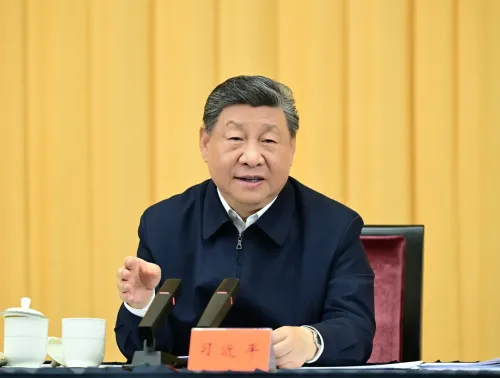
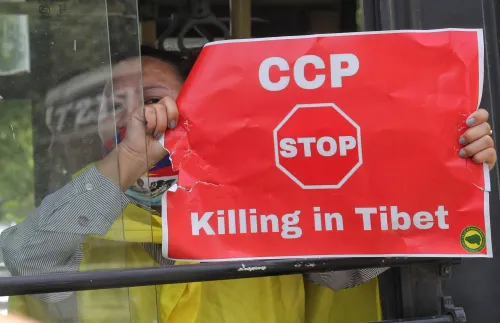
China's authoritarian governance in Tibet has evolved into a replicable model of ethnic control, combining advanced surveillance technology, legal coercion, educational assimilation, and religious restriction — according to a report published in Impact International for Human Rights Policies. The findings, released in June 2025, warn that Tibet's transformation under President Xi Jinping carries significant implications not just for Tibetans, but for human rights and global governance more broadly.
Tibet as an Authoritarian Laboratory
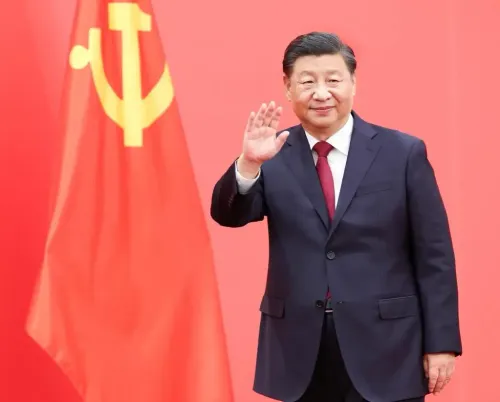
The report, authored by Khedroob Thondup, nephew of the Dalai Lama and published in The European Times, argues that when Xi assumed power as Chinese Communist Party (CCP) General Secretary in 2012 and state president in 2013, he inherited a Tibet already under tight control — but fundamentally restructured its governance.
'What distinguishes his tenure is the transformation of Tibet from a contested periphery into a laboratory of authoritarian consolidation,' Thondup is quoted as stating in the report. He contends that Tibet now reflects Xi's broader governing philosophy and strategic vision, rather than an isolated regional challenge.
According to the report, Xi has deployed a multi-pronged apparatus — surveillance infrastructure, security policies, legal mechanisms, and cultural integration drives — to convert Tibet into what Thondup describes as a 'crucible of authoritarian control.'
A Model That Could Be Exported
The report's most pointed warning concerns the scalability of the Tibet model. 'The convergence of surveillance technology, legal coercion, educational assimilation, and religious restriction creates a model that could be replicated in other contested spaces worldwide,' the Impact International report states.
Thondup characterises Tibet not merely as a regional human rights tragedy but as 'a geopolitical warning about the future of authoritarian governance in the 21st century.' The report calls on the international community to either challenge China's ethnic control model through diplomatic pressure and human rights advocacy, or risk its normalisation.
Preschools and Language Erasure
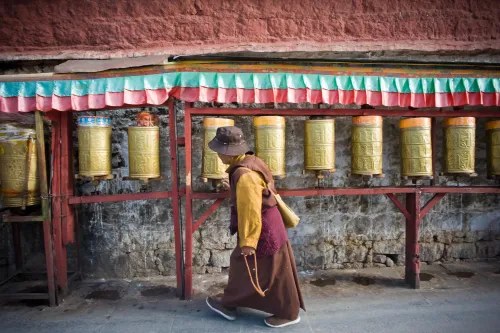
Earlier in May 2025, Human Rights Watch (HRW), the US-based advocacy organisation, released a 72-page report titled 'Start with the Youngest Children: China Uses Preschools to Integrate Tibetans', documenting Beijing's use of early childhood education as an assimilation tool.
The HRW report found that a 2021 Ministry of Education directive — the Children's Speech Harmonisation Plan — mandates the use of standard Mandarin Chinese for all preschool instruction in ethnic minority areas. While kindergartens may theoretically offer supplementary minority-language sessions, ethnic minorities no longer hold independent legal authority to organise them.
Maya Wang, Deputy Asia Director at HRW, said: 'The Chinese government, by targeting kindergarteners, is accelerating its campaign to deprive Tibetan children of their mother tongue and their culture and identity. This policy is not about education quality but about forcibly assimilating Tibetans at an early age into a Han-centric national identity.'
Indoctrination in the Classroom
According to HRW, China's language policy is reinforced by intensified political and cultural indoctrination. Preschool curricula in Tibetan areas increasingly emphasise 'patriotic education', loyalty to the CCP, and identification as members of the 'Chinese nation.' Children are reportedly taught to celebrate Han Chinese festivals, recite Chinese classics, and participate in activities glorifying the military and revolutionary history.
'Tibetan Buddhism and Tibetan cultural practices — core elements of cultural and ethnic identities — are absent from the curriculum,' the HRW report noted. The rights body argued that these policies contravene China's obligations under the United Nations Convention on the Rights of the Child, which guarantees minority children the right to use their own language.
International Calls for Action
HRW has urged Beijing to reverse mandatory Chinese-medium preschool policies, restore genuine bilingual education, and end political indoctrination in early childhood settings. It has also called on foreign governments and the UN to press China to comply with its international obligations and permit independent access to Tibetan areas and schools.
'Language loss on the scale taking place in Tibet is not accidental — it is Chinese government policy. Unless China's practices change, an entire generation of Tibetan children will grow up cut off from their own language, culture, and heritage,' Wang warned. As scrutiny of Beijing's Tibet policies intensifies, the coming months are likely to test how the international community responds to mounting documentation of systematic cultural erasure.
Point of View
As the Impact International report argues, then international inaction on Tibet is not merely a moral failure but a strategic one. What is notably absent from mainstream coverage is the institutional dimension: the 2021 Ministry of Education directive is a bureaucratic instrument, not a headline event, yet it may prove more durable than any single crackdown. The HRW report's focus on preschoolers is a deliberate methodological choice — language acquisition in early childhood is irreversible at scale, meaning the policy's effects compound silently across generations before they become visible as cultural loss.
NationPress
23 Oct 2026
Frequently Asked Questions
What does the new report say about China's policies in Tibet?
A report published in Impact International for Human Rights Policies, authored by Khedroob Thondup, argues that China under Xi Jinping has transformed Tibet into an 'authoritarian laboratory' using surveillance, legal coercion, educational assimilation, and religious restriction. The report warns this model could be replicated in other contested regions globally.
Who is Khedroob Thondup and why does his report matter?
Khedroob Thondup is the nephew of the Dalai Lama and the author of the report published in The European Times. His analysis is significant because it frames Tibet not as an isolated human rights case but as a geopolitical warning about the scalability of authoritarian ethnic control under Xi Jinping's governance model.
What did Human Rights Watch find about Tibetan preschools?
In a 72-page report released in May 2025, Human Rights Watch documented that a 2021 Chinese Ministry of Education directive mandates Mandarin Chinese as the sole medium of instruction in preschools in ethnic minority areas. The report found that Tibetan children are subjected to political indoctrination emphasising CCP loyalty, while Tibetan language and Buddhist cultural practices are absent from curricula.
Is China's preschool language policy illegal under international law?
Human Rights Watch argues it is. The organisation contends that China's mandatory Mandarin preschool policy violates the UN Convention on the Rights of the Child, which guarantees minority children the right to use their own language and requires states to ensure education respects children's cultural identity.
What are rights groups calling for in response to China's Tibet policies?
Human Rights Watch has called on Beijing to reverse mandatory Chinese-medium preschool policies, restore genuine bilingual education, and end political indoctrination in early childhood. It has also urged foreign governments and the UN to press China to comply with its international obligations and allow independent access to Tibetan areas and schools.