Sonowal visits Samsung Heavy Industries shipyard in South Korea
Synopsis
Union Minister Sarbananda Sonowal visited Samsung Heavy Industries' world-class shipyard in Geoje, South Korea, meeting EVP Geum Sung Namgoong and calling for India to integrate high-level automation, design capability and R&D partnerships to build a globally competitive maritime ecosystem under Maritime India Vision 2030.
Key Takeaways
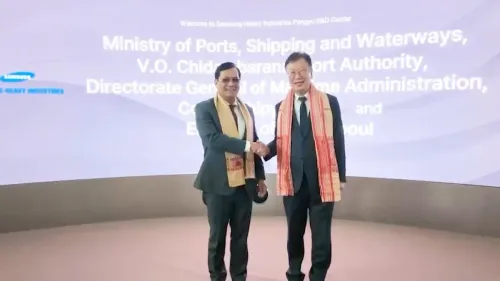
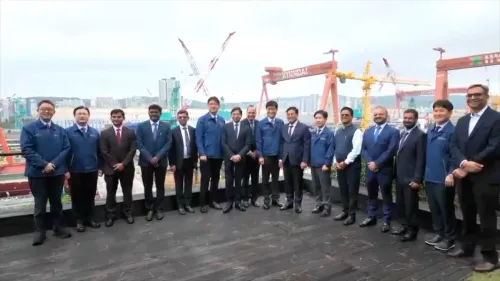
Union Minister Sarbananda Sonowal visited the Samsung Heavy Industries (SHI) shipyard in Geoje, South Korea on October 29, 2026 .
He met Executive Vice President Geum Sung Namgoong and highlighted SHI's global leadership in LNG carriers, offshore platforms and advanced shipbuilding .
Sonowal identified automation, design capabilities and research partnerships as key drivers India must integrate for maritime growth.
Maritime India Vision 2030 targets a fivefold increase in India's shipbuilding capacity from its current roughly 1 percent global market share.
The visit aligns with India's broader strategy of technology transfer from South Korea and Japan under Make in India and Atmanirbhar Bharat frameworks.
Possible follow-up MoUs on R&D collaboration and technology transfer between India and South Korea are a near-term watch-point.
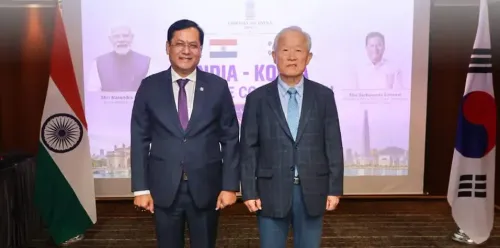
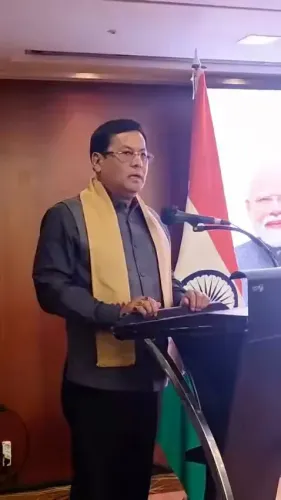
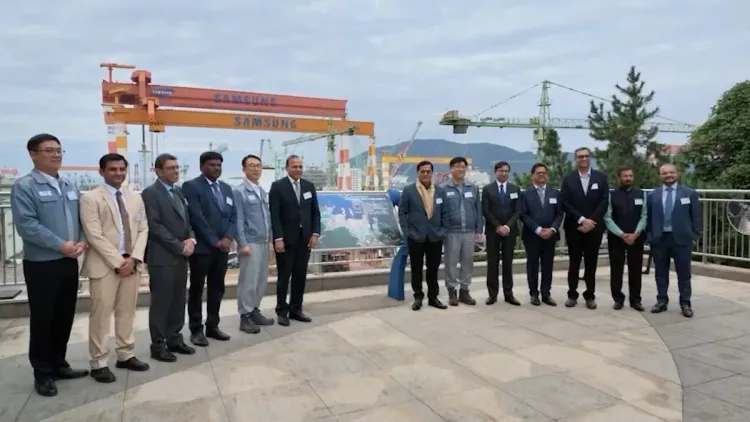
At one of the world's most advanced shipyards, Union Minister of Ports, Shipping and Waterways Sarbananda Sonowal walked the floors of Samsung Heavy Industries (SHI) in Geoje, South Korea on Thursday, October 29, 2026 — and came away with a clear signal of where India's maritime ambitions need to go next.
Sonowal met Executive Vice President Geum Sung Namgoong during the visit, describing it as 'fascinating' and citing SHI's 'global dominance in advanced shipbuilding, LNG carriers and offshore platforms' as a product of 'continuous investment in R&D and engineering excellence.' The minister's takeaway was direct: India must integrate 'high-level automation, design capabilities and research partnerships' if it wants to build a 'globally competitive maritime ecosystem.'
Why Geoje matters to India's shipbuilding gap
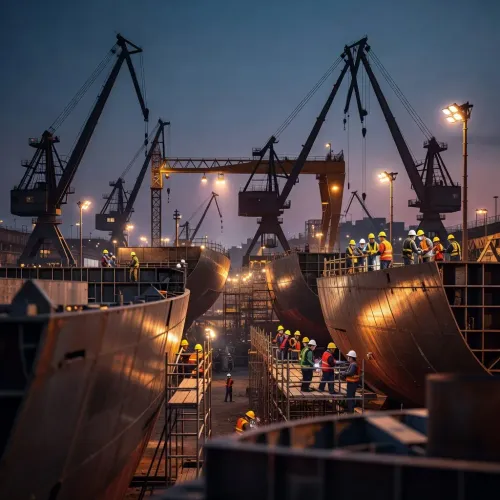
Geoje Island hosts one of the largest and most technologically sophisticated shipbuilding complexes on the planet. SHI's dominance in LNG carriers — the vessels moving the world's liquefied natural gas — and complex offshore platforms represents precisely the high-value segment where Indian yards currently have minimal footprint. India builds roughly 1 percent of global commercial tonnage, a figure that Maritime India Vision 2030 — released in 2021 — aims to multiply fivefold. The gap is not merely capital; it is engineering depth, automation and design capability. That is the gap Sonowal walked through today.
South Korea has long been the benchmark. Alongside Japan, it is the country India's maritime policymakers have identified as a technology-transfer partner under the Atmanirbhar Bharat and Make in India frameworks. Successive governments have extended financial assistance to domestic yards and encouraged joint ventures, but knowledge transfer at the R&D level has remained the missing link.
Sagarmala, Maritime Vision 2030 and the policy runway
The policy architecture for this ambition has been building for over a decade. The Sagarmala Project, launched in 2015, laid the groundwork for port-led development including the modernisation of ship repair and building facilities. Maritime India Vision 2030 sharpened the target, positioning India as a global hub for shipbuilding, repair and recycling by the end of the decade. What has been harder to source domestically is the engineering DNA — the simulation tools, design software, automation systems and materials science that Korean yards deploy as standard. A visit of this kind, at this level, signals that partnerships to close that gap are actively being pursued at the ministerial tier.
What a Korea-India maritime research tie-up could unlock
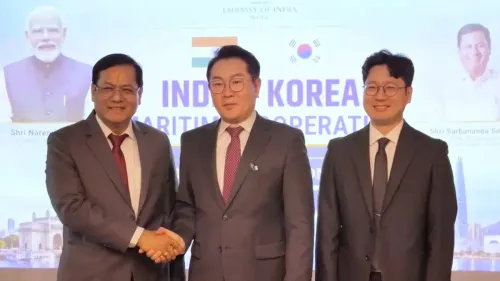
The immediate watch-point is whether this engagement translates into formal agreements — MoUs on R&D collaboration or technology transfer during upcoming India-South Korea bilateral economic dialogues or maritime summits. Indian shipyards, particularly public-sector ones like Cochin Shipyard and Mazagon Dock Shipbuilders, stand to gain the most from structured knowledge-sharing with SHI-class facilities. The LNG carrier segment is especially strategic: as India scales up its gas import and distribution infrastructure, domestically built LNG vessels would reduce dependence on foreign-flagged tonnage and generate high-skill employment.
A minister visiting a shipyard is routine. A minister visiting Samsung Heavy Industries in Geoje and spelling out exactly which capabilities India needs to absorb is a statement of industrial intent — and the clock on Maritime Vision 2030 is ticking.
Point of View
Not just capital subsidies, are now the policy priority. The timing matters: Maritime India Vision 2030's deadline is four years away, and the gap between ambition and capacity remains wide. If this engagement yields structured R&D agreements, it could give public-sector Indian yards the design and automation tools they have lacked, potentially reshaping the competitive calculus for domestic shipbuilding well into the 2030s.
NationPress
29 Oct 2026
Frequently Asked Questions
Why did Sarbananda Sonowal visit Samsung Heavy Industries in South Korea?
Sonowal visited SHI's shipyard in Geoje to explore how India can integrate advanced automation, design capabilities and R&D partnerships into its maritime ecosystem as part of the country's drive to become a globally competitive shipbuilding nation under Maritime India Vision 2030.
What is Samsung Heavy Industries known for?
Samsung Heavy Industries is a South Korean shipbuilder globally dominant in LNG carriers, offshore platforms and advanced commercial vessels, underpinned by heavy investment in R&D and engineering.
What is Maritime India Vision 2030?
Maritime India Vision 2030 is a government policy released in 2021 that targets a fivefold increase in India's shipbuilding capacity and aims to establish India as a global hub for ship construction, repair and recycling by the end of the decade.
What is the Sagarmala Project and how does it relate to shipbuilding?
The Sagarmala Project, launched in 2015, promotes port-led industrial development in India, including the modernisation of ship repair and building facilities, forming part of the policy foundation for India's maritime manufacturing ambitions.
Could India and South Korea sign a shipbuilding technology deal after Sonowal's visit?
Possible MoUs on R&D collaboration and technology transfer are a watch-point following the visit, potentially to be formalised during upcoming India-South Korea bilateral economic dialogues or maritime summits.