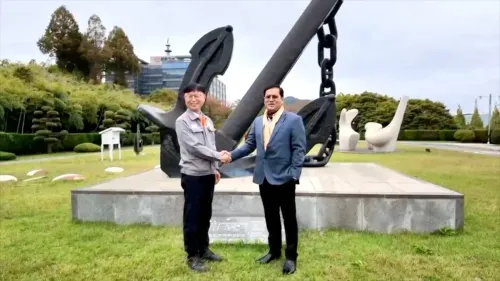
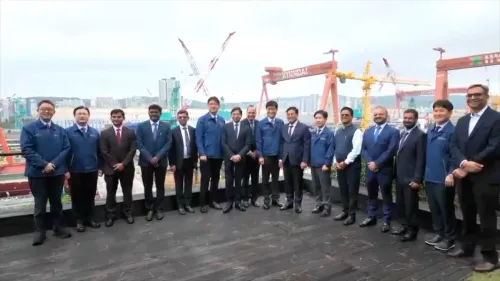
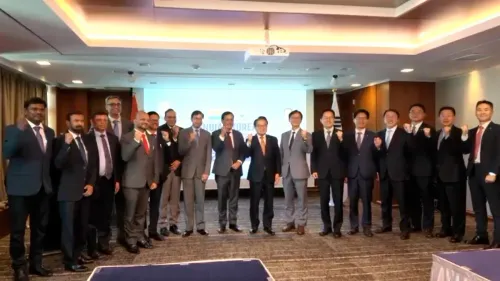
Sonowal meets Samsung Heavy Industries CEO in Seoul
Synopsis
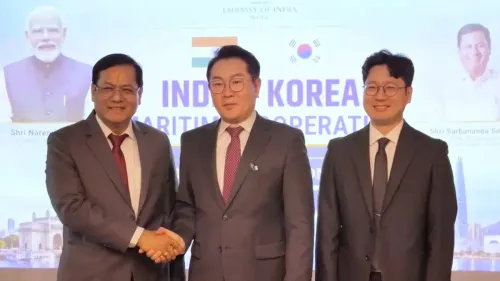
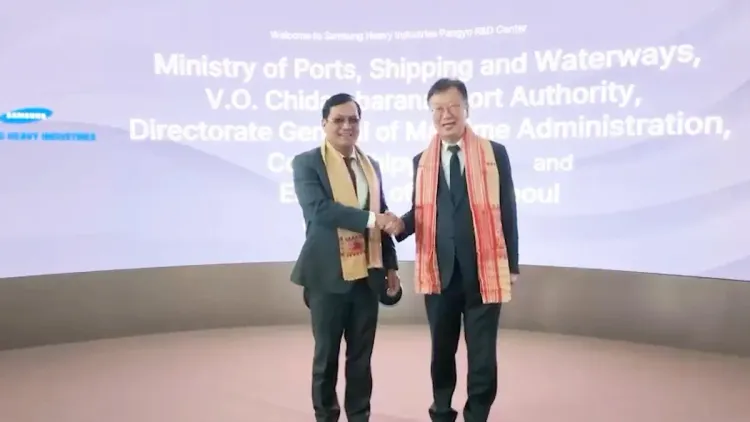
Union Ports Minister Sarbananda Sonowal met Samsung Heavy Industries CEO Choi Sung-an in Seoul on October 29, 2026, inviting the global shipbuilder to anchor India's upcoming greenfield mega shipbuilding clusters under Maritime India Vision 2030.
Key Takeaways
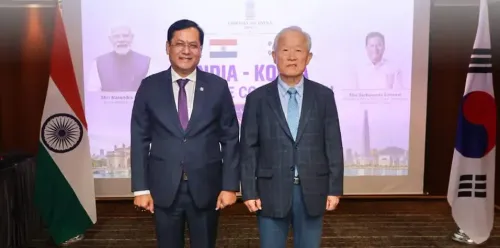
Union Ports and Shipping Minister Sarbananda Sonowal met Samsung Heavy Industries Vice Chairman and CEO Choi Sung-an in Seoul on October 29, 2026 .
Sonowal formally invited Samsung to anchor India's upcoming greenfield mega shipbuilding clusters .
The partnership is framed around aligning India's maritime vision with Samsung's advanced engineering and green-shipbuilding expertise.
Maritime India Vision 2030 (released 2021) and the Sagarmala Project (launched 2015) form the policy backbone underpinning these cluster proposals.
South Korean firms have been a deliberate focus of India's strategy to import advanced shipbuilding technology and self-reliance in vessel construction.
Formal site-selection announcements or joint-venture frameworks between Indian and Korean entities remain the next key milestone to watch.
From Seoul, Union Ports and Shipping Minister Sarbananda Sonowal made a direct pitch to one of the world's most powerful shipbuilders — and the stakes could not be higher for India's maritime ambitions. On Thursday, October 29, 2026, Sonowal held a high-level meeting with Samsung Heavy Industries (SHI) Vice Chairman and CEO Choi Sung-an, formally inviting the South Korean giant to anchor India's upcoming greenfield mega shipbuilding clusters.
The ask: Samsung as a cornerstone of India's shipbuilding clusters
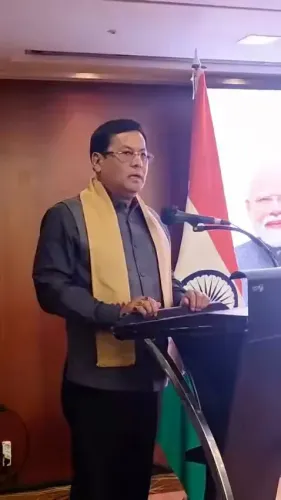
Sonowal did not mince words in his invitation. He called on Samsung to 'expand its footprint in India by anchoring our upcoming greenfield mega shipbuilding clusters' — framing the partnership as a convergence of 'India's robust maritime vision with Samsung's world-class engineering expertise.' The goal, as the minister put it, is to create 'a premier corridor for advanced manufacturing and technological innovation.'
Samsung Heavy Industries is no peripheral player. Headquartered in South Korea, SHI ranks among the world's top commercial and specialised vessel builders, with deep expertise in liquefied natural gas carriers, offshore platforms, and next-generation green-ship technology. Bringing that engineering pedigree to Indian soil would be a significant upgrade for a sector still finding its footing on the global stage.
Maritime India Vision 2030 and the Sagarmala backbone
This meeting does not exist in a vacuum. India's Maritime India Vision 2030, released in 2021, set out an ambitious blueprint to expand port capacity, promote domestic shipbuilding, and develop dedicated maritime clusters. Before that, the Sagarmala Project, launched in 2015, laid the policy foundation for port-led development and shipbuilding infrastructure support — including a financial assistance scheme for Indian shipyards notified the same year and later extended.
The consistent thread across both programmes is the same: India cannot build a world-class merchant fleet by relying on foreign yards indefinitely. It needs to manufacture. The greenfield clusters Sonowal is now actively marketing to SHI represent the most concrete expression yet of that long-held ambition.
Why South Korea, and why now
South Korean shipbuilders — led by the 'big three' of which SHI is a central pillar — collectively command a dominant share of global order books, particularly for high-complexity vessels. India has made engagement with these firms a deliberate strategy to leapfrog incremental capacity-building and import advanced green-shipbuilding practices directly into proposed cluster sites.
The timing matters too. Global shipping is in the middle of a once-in-a-generation transition toward low-carbon and alternative-fuel vessels. A partnership inked now — before that transition peaks — could position Indian clusters at the frontier of the next generation of shipbuilding, rather than catching up on the last one.
The next signpost to watch: whether this Seoul conversation translates into formal site-selection announcements or joint-venture frameworks. If Samsung signs on, it would be the most consequential foreign anchor for India's shipbuilding ambitions since the sector's modernisation push began.
Point of View
Japan, and China.
NationPress
29 Oct 2026
Frequently Asked Questions
What did Sarbananda Sonowal discuss with Samsung Heavy Industries in Seoul?
Sonowal met SHI Vice Chairman and CEO Choi Sung-an to advance a strategic shipbuilding partnership and formally invited Samsung to anchor India's upcoming greenfield mega shipbuilding clusters.
What are India's greenfield mega shipbuilding clusters?
These are large-scale, purpose-built shipbuilding zones planned under India's maritime development strategy to manufacture advanced vessels domestically, reducing dependence on foreign shipyards.
What is Maritime India Vision 2030?
Maritime India Vision 2030 is a government strategic document released in 2021 that aims to expand port capacity, boost domestic shipbuilding, and develop dedicated maritime clusters across India.
Why is India approaching South Korean shipbuilders?
South Korean firms like Samsung Heavy Industries are global leaders in high-complexity and green-ship construction. India is partnering with them to import advanced technology and engineering practices into its proposed shipbuilding clusters.
What is the Sagarmala Project and how does it relate to shipbuilding?
Sagarmala, launched in 2015, is India's port-led development programme that includes support for shipbuilding infrastructure and a financial assistance scheme for Indian shipyards, forming the policy backbone for current cluster proposals.