Pralhad Joshi inaugurates SECI's new Delhi HQ at World Trade Centre
Synopsis
Union Minister Pralhad Joshi inaugurated the Solar Energy Corporation of India's new headquarters at World Trade Centre, New Delhi, praising SECI's 71 GW renewable energy PSA portfolio and its central role in reaching India's 500 GW clean-power target by 2030.
Key Takeaways
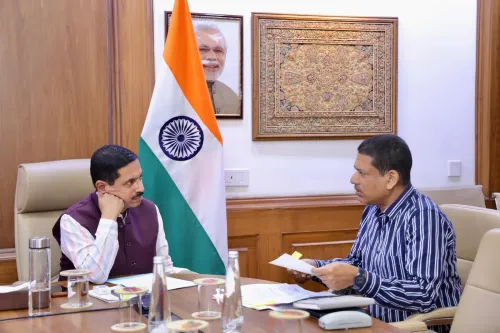
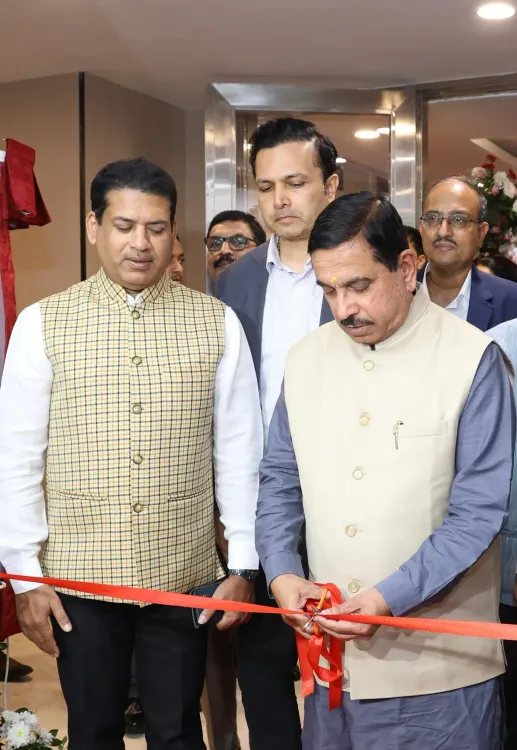
Pralhad Joshi inaugurated SECI's new building at World Trade Centre, New Delhi on 29 October 2026 .
SECI has signed Power Sale Agreements with DISCOMs for over 71 GW of renewable energy.
SECI was incorporated in 2011 under the Ministry of New and Renewable Energy as a not-for-profit solar facilitator.
India has set a target of 500 GW non-fossil fuel electricity capacity by 2030 , announced at COP26 in 2021.
SECI acts as a nodal agency for large-scale solar, wind, and hybrid projects, bridging developers and state DISCOMs through competitive bidding.
The inauguration was framed as advancing Prime Minister Modi's Viksit Bharat vision of clean and sustainable energy.
A public sector undertaking that began as a not-for-profit solar facilitator in 2011 now anchors India's clean-energy ambitions — and on Thursday, 29 October 2026, it got a building to match. Union Minister for New and Renewable Energy Pralhad Joshi inaugurated the new headquarters of the Solar Energy Corporation of India (SECI) at the World Trade Centre, New Delhi, marking a milestone for one of the country's most consequential energy-sector institutions.
Joshi commended SECI's 'remarkable growth and its pivotal role in transforming India's renewable energy ecosystem,' noting that the corporation has signed Power Sale Agreements (PSAs) with DISCOMs for over 71 GW of renewable energy — a figure that underscores how dramatically the agency's mandate has expanded from its early solar-only origins.
From solar facilitator to 71 GW backbone
SECI was incorporated under the Ministry of New and Renewable Energy (MNRE) to bridge developers and buyers through competitive bidding and long-term PSAs, insulating both sides from market volatility. Over fifteen years, it evolved into a nodal agency for large-scale solar, wind, and hybrid projects. The 71 GW PSA pipeline it now holds represents a substantial portion of India's total installed and under-development renewable capacity.
State electricity distribution companies — DISCOMs — are the critical off-takers in this chain. When SECI signs a PSA with a DISCOM, it effectively guarantees long-term revenue for generators while giving states access to competitively priced clean power. Scaling that pipeline is, in practical terms, how India's 500 GW non-fossil fuel capacity target by 2030 — announced at COP26 in 2021 — gets built out project by project.
The 500 GW clock and SECI's expanding role
India's 2030 non-fossil target demands an acceleration that no single ministry can achieve through policy alone. SECI's role as a central intermediary — absorbing tender risk, aggregating demand, and standardising contracts — is precisely why successive governments have expanded its mandate beyond solar into wind, hybrid, green hydrogen, and storage-linked projects.
Joshi framed the new building not merely as infrastructure but as institutional signal, saying SECI 'will remain a key institution in advancing PM Shri Narendra Modi's vision of a Viksit Bharat [Developed India] powered by clean and sustainable energy.' The ministry tagged both @mnreindia and @SECI_Ltd in the post, signalling coordinated outreach across the renewable energy apparatus.
With the 2030 deadline now less than four years away, the pressure on SECI to accelerate fresh tenders, close more state-level PSAs, and finance new capacity will only intensify. A dedicated, purpose-built headquarters in the capital positions the agency to scale up that work — and sends a visible message to developers and state governments alike that the centre is serious about delivery.
Point of View
The ministry is effectively telling the market that the central government's energy intermediary is scaled for the stretch run. SECI's expanding mandate — from solar-only to hybrid, green hydrogen, and storage — mirrors the Modi government's broader strategy of using public sector entities to de-risk private investment in sectors where market failure looms. The event also reinforces Joshi's positioning as the political face of India's energy transition ahead of what will inevitably be a high-profile reckoning with how close the 500 GW target actually gets met.
NationPress
29 Oct 2026
Frequently Asked Questions
What is SECI and what does it do?
The Solar Energy Corporation of India (SECI) is a public sector undertaking under the Ministry of New and Renewable Energy, incorporated in 2011. It acts as a nodal agency for large-scale renewable energy projects, signing Power Sale Agreements with state electricity distribution companies (DISCOMs) on behalf of power generators.
What is the significance of the 71 GW PSA figure mentioned by Pralhad Joshi?
SECI has signed Power Sale Agreements with DISCOMs for over 71 GW of renewable energy, representing a large portion of India's under-development and operational clean-power pipeline and a major contributor toward the country's 500 GW non-fossil target by 2030.
Where is SECI's new building located?
The new SECI headquarters was inaugurated at the World Trade Centre in New Delhi by Union Minister Pralhad Joshi on 29 October 2026.
What is India's renewable energy target by 2030?
India announced a target of 500 GW of non-fossil fuel electricity capacity by 2030 at the COP26 climate summit in 2021. SECI is one of the central institutions responsible for facilitating projects that count toward this goal.
What is the Viksit Bharat vision in the context of renewable energy?
Viksit Bharat , or 'Developed India,' is Prime Minister Narendra Modi's overarching development vision. In the energy context, it encompasses achieving energy security and economic growth through clean and sustainable power, with SECI playing a key institutional role in that transition.