Giriraj Singh meets Libas CEO, backs brand's Make in India push
Synopsis
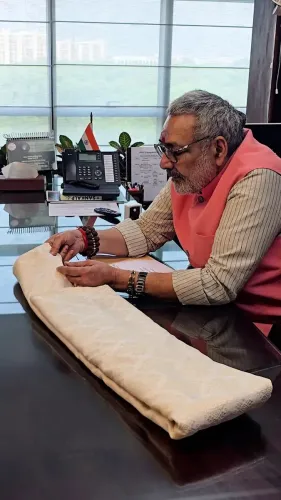
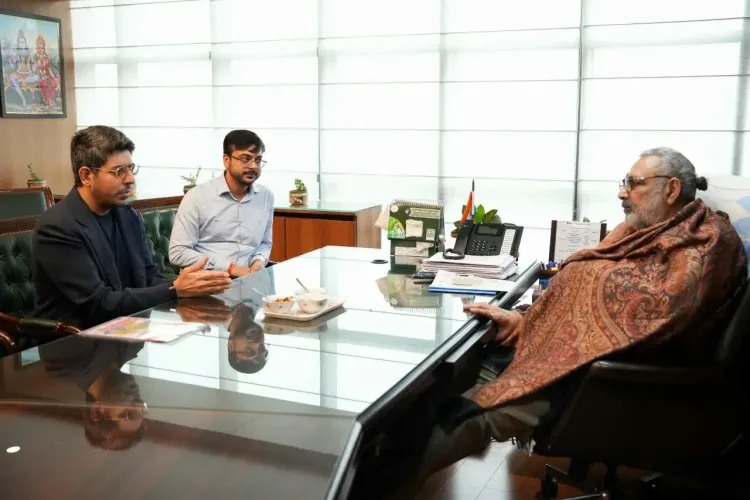
Union Textiles Minister Giriraj Singh met Libas CEO Siddhant Keswani at his New Delhi office on 29 October 2026, praising the ethnic women's wear brand for advancing Make in India and projecting Indian fashion globally.
Key Takeaways
Union Textiles Minister Giriraj Singh met Libas CEO Siddhant Keswani at his ministerial office on 29 October 2026 .
Discussions covered various subjects related to the textile sector, with a focus on traditional women's apparel.
Singh praised Libas for doing 'commendable work' in advancing the Make in India initiative and building a global identity for Indian fashion.
The meeting reflects the ministry's broader strategy of using ethnic, value-added apparel as a high-margin export category.
Make in India was launched in September 2014 and covers textiles and apparel as priority manufacturing sectors.
Potential follow-through includes fresh production-linked incentive disbursements and elevated focus on ethnic-wear exports in ministry reports.
Indian ethnic fashion is quietly going global — and Union Textiles Minister Giriraj Singh is paying close attention. On Thursday, 29 October 2026, the minister met Libas CEO Siddhant Keswani at his ministerial office in New Delhi for a wide-ranging discussion on the textile sector, spotlighting the homegrown women's ethnic-wear brand as a standard-bearer for India's manufacturing ambitions.
In a post on X, Singh wrote: 'Aaj Libas ke CEO Shri Siddhant Keswani ji se apne karyalay mein bhent kar textile kshetra se jude vibhinn vishyon par charcha ki.' ('Today I met Libas CEO Shri Siddhant Keswani at my office and discussed various subjects related to the textile sector.') He praised the brand for doing 'commendable work' in traditional women's apparel, strengthening the 'Make in India' drive and building a 'global identity for Indian fashion.'
Why Libas and why now
Libas has emerged as one of India's fast-growing digital-first ethnic-wear labels, concentrating on salwar suits, kurtas, and traditional women's garments — a high-value, labour-intensive category the Ministry of Textiles has consistently flagged as a priority export segment. The brand's proposition aligns almost exactly with what New Delhi wants: domestic manufacturing, cultural product identity, and an international audience reached through e-commerce.
The meeting fits a pattern of ministerial stakeholder consultations that have intensified under the Make in India framework, launched in September 2014 to accelerate domestic production and exports across sectors, textiles prominently among them. Ethnic apparel, once considered a purely domestic play, is now seen as a vehicle for brand India on global marketplaces.
Textiles as an employment engine
Textiles is one of India's most labour-intensive industries, employing tens of millions of workers — a fact that gives every minister in this portfolio outsized political and economic motivation to push the sector forward. Singh, a senior BJP leader and Lok Sabha MP from Begusarai, Bihar, has consistently used the ministry's platform to project Indian apparel as a globally competitive proposition rather than merely a domestic market play.
The emphasis on traditional women's garments is deliberate. Value-added ethnic wear commands higher margins than commodity textile exports, and a recognisable Indian brand story — 'Made in India, worn worldwide' — is exactly the narrative the ministry has been trying to build for the category.
The next concrete signal to watch: whether fresh production-linked incentive disbursements for apparel brands follow from consultations like this one, or whether the annual Ministry of Textiles report flags ethnic-wear exports as a new priority metric.
Indian fashion has always had a story to tell. The question is whether the policy machinery can give it the runway to go truly global — and meetings like today's suggest the ministry is at least listening closely.
Point of View
Singh is deploying the 'Make in India' label as a quality endorsement rather than just a manufacturing slogan. This is consistent with a broader BJP government strategy of elevating Indian cultural products — especially those tied to women's traditional wear — as ambassadors of a resurgent national identity in global markets. The real test will be whether endorsement translates into measurable policy support such as PLI disbursements or dedicated export promotion budgets.
NationPress
29 Oct 2026
Frequently Asked Questions
Why did Giriraj Singh meet the Libas CEO?
Union Textiles Minister Giriraj Singh met Libas CEO Siddhant Keswani on 29 October 2026 to discuss various textile sector issues and to acknowledge the brand's role in promoting Make in India and projecting Indian fashion globally.
What is Libas and what does it sell?
Libas is an Indian apparel brand focused on traditional women's garments such as salwar suits and kurtas. It operates largely through digital channels and targets both domestic and international customers.
What is the Make in India initiative in textiles?
Make in India was launched in September 2014 to boost domestic manufacturing and exports across sectors, with textiles and apparel identified as priority labour-intensive industries offering significant employment and export potential.
What does the Ministry of Textiles want from ethnic-wear brands?
The ministry has consistently pushed value-added ethnic wear as a high-margin export category that can build a recognisable 'Brand India' identity in global fashion markets, going beyond commodity textile exports.
What policy support could follow this meeting?
Analysts are watching for fresh production-linked incentive disbursements for apparel manufacturers and any mention of ethnic-wear export targets in the Ministry of Textiles annual report as concrete follow-through.