Kishan Reddy: Tandur Red Gram Makes Global Debut in Australia
Synopsis
Union Minister G. Kishan Reddy announced that GI-tagged Tandur red gram from Vikarabad district, Telangana, has been exported for the first time — a 2.5-metric-tonne shipment to Australia facilitated by APEDA, opening new income avenues for local farmers.
Key Takeaways
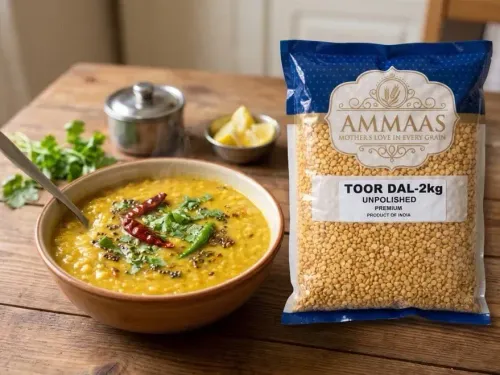
First-ever international export of GI-tagged Tandur red gram (pigeon pea) has been achieved, with the inaugural shipment headed to Australia .
The shipment comprises approximately 2.5 metric tonnes of the produce in a single container.
The export was facilitated by APEDA (Agricultural and Processed Food Products Export Development Authority), set up in 1986 under the Ministry of Commerce.
The product originates from the Tandur region of Vikarabad district, Telangana , where farmers stand to benefit from improved remunerative prices.
The GI tag gives Tandur red gram a legally protected identity in international markets, distinguishing it from generic pigeon pea exports.
Kishan Reddy flagged the milestone as opening a 'new era' for the region's farming community.
A small farming belt in Vikarabad district, Telangana just put itself on the world map. Union Coal and Mines Minister G. Kishan Reddy announced on Thursday, 29 October 2026 that the GI-tagged 'Tandur Red Gram' (kandi pappu) has been exported internationally for the first time — with a container headed to Australia, marking what he called a historic milestone for the region's farmers.
First Container, 2.5 Metric Tonnes, One Big Moment
The inaugural shipment carries approximately 2.5 metric tonnes of Tandur red gram — pigeon pea prized across Telangana for its distinct flavour and quality. The export was facilitated with the support of the Agricultural and Processed Food Products Export Development Authority (APEDA), the nodal body under the Ministry of Commerce established in 1986 to develop global markets for Indian agri and food products.
Kishan Reddy described the development as spreading 'మన తెలంగాణ కీర్తిని విశ్వవ్యాప్తం' — 'spreading the glory of our Telangana across the world'. The minister highlighted that this milestone opens fresh market opportunities and the prospect of better remunerative prices for farmers in the Tandur region of Vikarabad district.
What the GI Tag Means for Tandur Farmers
A Geographical Indication tag is more than a label — it is a legally protected identity. For Tandur's farming community, GI recognition positions their produce alongside celebrated exports like Darjeeling tea and Alphonso mangoes, giving buyers abroad a quality assurance that no generic pigeon pea can replicate. That premium identity is now being tested in one of the world's most demanding food markets.
Australia has a significant South Asian diaspora and an established appetite for Indian pulses, making it a strategically sensible first destination. Agricultural trade between India and Australia has been expanding as both countries look to diversify their trade baskets beyond traditional commodities.
A Bigger Push Behind the Shipment
India has for several years linked GI registration to export promotion — the logic being that a tagged, traceable product commands better shelf space and higher prices overseas than a commodity shipment. APEDA has been central to this playbook, connecting regional producer clusters to international buyer-seller meets and trade fairs. Tandur red gram's first voyage to Australia is a data point in that larger story.
The real test will come in the follow-up. Volume, frequency of subsequent shipments, and — most concretely — whether mandi prices in the Tandur belt actually rise for farmers are the numbers that will determine whether this inaugural container is a turning point or a photo-opportunity.
For now, though, a unique pulse from a district most of the world had never heard of has arrived in an Australian port. The next question is how many containers follow it.
Point of View
The announcement serves a dual purpose — reinforcing the BJP's outreach to Telangana's farming communities ahead of any electoral cycle, and demonstrating Central-government export machinery working for the state. The credibility of the milestone will ultimately rest on whether follow-up shipments scale up and whether Tandur mandi prices reflect the new global demand.
NationPress
29 Oct 2026
Frequently Asked Questions
What is Tandur red gram and why is it famous?
Tandur red gram, locally called 'kandi pappu', is a variety of pigeon pea grown in the Tandur region of Vikarabad district, Telangana, prized for its distinct flavour and quality. It has received a Geographical Indication (GI) tag, certifying its unique regional origin.
Where has Tandur red gram been exported for the first time?
The first international shipment of GI-tagged Tandur red gram has been sent to Australia, with approximately 2.5 metric tonnes dispatched in an inaugural container.
What role did APEDA play in the Tandur red gram export?
APEDA — the Agricultural and Processed Food Products Export Development Authority, set up in 1986 under the Ministry of Commerce — facilitated the export by connecting the Tandur produce to the international market and supporting the logistics of the first shipment to Australia.
What is a GI tag and how does it help farmers?
A Geographical Indication (GI) tag is a legal certification that a product originates from a specific region and possesses qualities attributable to that origin. For farmers, it enables premium pricing, protects against imitation, and improves access to export markets.
Who announced the export of Tandur red gram to Australia?
Union Coal and Mines Minister and BJP Telangana state president G. Kishan Reddy announced the milestone on 29 October 2026, calling it a historic moment that opens new opportunities and better prices for Tandur-area farmers.