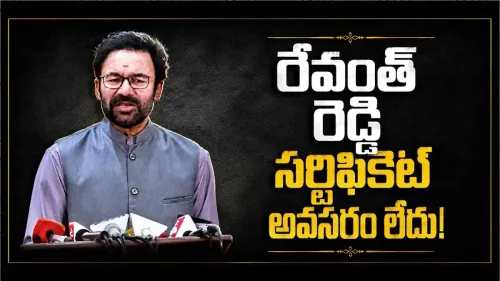
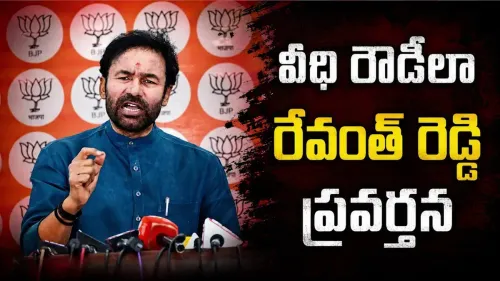
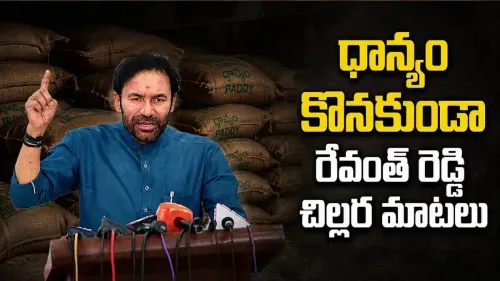
Kishan Reddy Slams Revanth Govt Over Paddy Procurement Failure
Synopsis
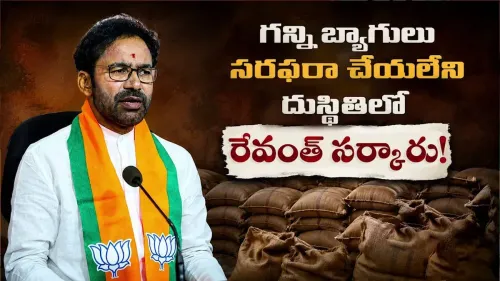
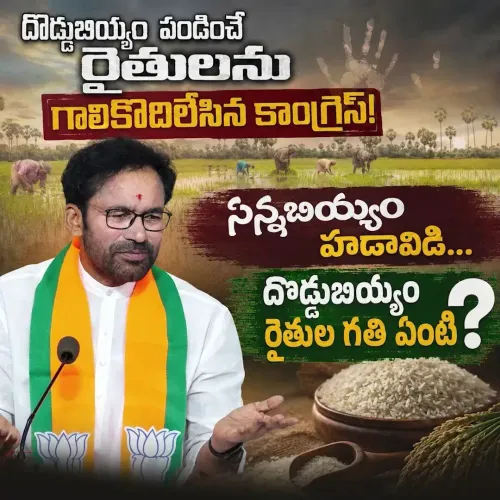
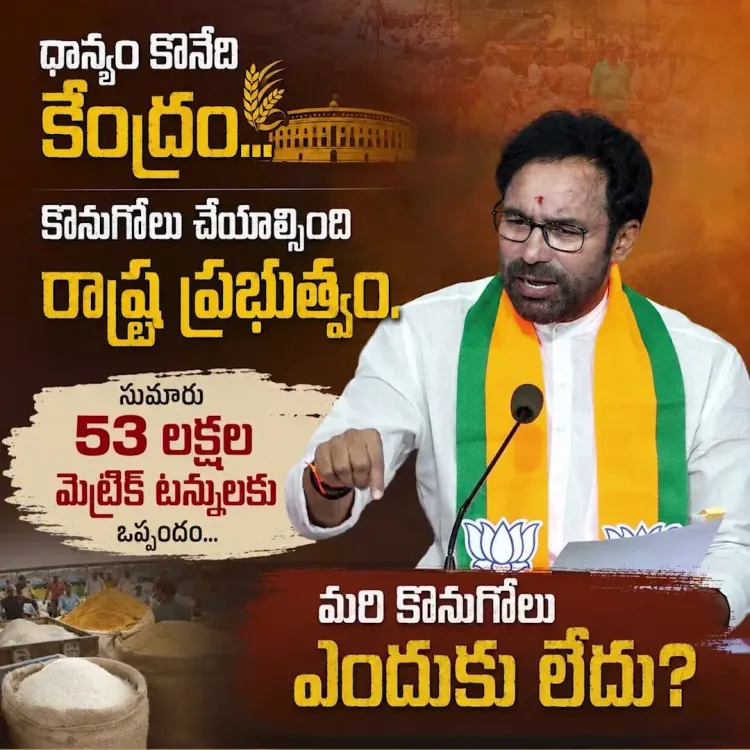
Union Minister and BJP Telangana president G. Kishan Reddy has accused Chief Minister Revanth Reddy's government of failing farmers by not fully utilising the Centre's approved procurement quota of roughly 53 lakh metric tonnes of paddy for the Kharif and Rabi seasons of 2026.
Key Takeaways
Kishan Reddy posted on 30 May 2026 accusing the Telangana Congress government of incompetence in paddy procurement.
The Central government had approved procurement of approximately 53 lakh metric tonnes of paddy combined for Kharif and Rabi 2026 seasons.
The minister alleged the Telangana state government failed to conduct full-scale purchases despite the Centre's approval.
He accused the state of attempting to blame the Centre for its own administrative failures.
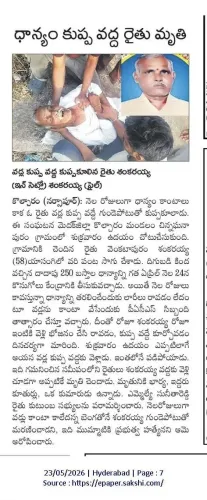
Paddy farmers in Telangana risk income losses if procurement shortfalls force distress sales below the MSP .
Official procurement data from the Food Corporation of India will be key to independently assessing the scale of any shortfall.
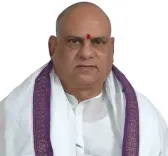
Union Coal and Mines Minister G. Kishan Reddy, who also serves as BJP Telangana state president, on Saturday, 30 May 2026, sharply attacked the Telangana state government led by Chief Minister Revanth Reddy, accusing it of failing farmers by not fully utilising the Centre's approved paddy procurement quota for the current agricultural year.
Posting in Telugu on X, Kishan Reddy stated: 'ఇవాళ రేవంత్ రెడ్డి చేతగానితనం వల్ల రైతులు తీవ్రంగా నష్టపోతున్నారు' ('Today, farmers are suffering severe losses due to Revanth Reddy's incompetence'). He alleged that while the Central government had agreed to procure approximately 53 lakh metric tonnes of paddy combined across the Kharif and Rabi seasons this year, the state government had failed to conduct purchases at full scale — and must answer for that failure.
Context
Telangana is one of India's most productive paddy-growing states, and paddy procurement under the Minimum Support Price (MSP) mechanism is politically and economically vital for its farming communities. The state's farmers depend heavily on timely government procurement to avoid distress sales in open markets at prices below the MSP. Any shortfall in procurement directly translates into income losses for cultivators.
The minister's post comes amid an ongoing political contest between the BJP and the ruling Congress government in Hyderabad over the state's agricultural governance record since Chief Minister Revanth Reddy assumed office in December 2023.
Policy Backdrop
Under India's Decentralised Procurement Scheme, introduced in 1997-98, state governments procure paddy and wheat on behalf of the Centre for the central pool, with the Centre reimbursing costs. The Food Corporation of India (FCI) sets seasonal targets in consultation with states, and states are responsible for deploying procurement machinery — including purchase centres, logistics, and payments to farmers.
Kishan Reddy argued that since the Centre had already sanctioned a quota of roughly 53 lakh metric tonnes for the combined Kharif and Rabi 2026 seasons, the responsibility for the procurement shortfall rests squarely with the Telangana state government. He added that attempts were being made to 'shift the state government's failures onto the Centre.'
Stakeholders and Impact
The primary stakeholders are Telangana's paddy farmers, who risk being forced to sell their produce below the MSP if state procurement centres are not operational or adequately staffed. A gap between the Centre-approved quota and actual procurement on the ground leaves surplus paddy without a guaranteed buyer, depressing farm-gate prices.
The Congress-led state government has not yet issued a public response to the minister's specific claims. Centre-state disputes over procurement implementation are a recurring pattern across multiple states during both Kharif and Rabi seasons, with the Centre typically pointing to state-level administrative lapses and state governments citing logistical constraints or insufficient central support.
What's Next
Official procurement progress data for Telangana's Kharif and Rabi 2026 seasons from the Food Corporation of India and the state's civil supplies department will be closely watched to determine the actual extent of any shortfall against the sanctioned quota. Parliamentary and assembly questions on the procurement gap are likely to follow, with the issue expected to remain a flashpoint between the BJP and Congress ahead of any future electoral cycle in the state.
Point of View
Placing the burden of proof squarely on the Revanth Reddy government. The broader pattern here is significant: in states where Congress governs, the BJP has increasingly used farmer welfare metrics as a proxy battleground for governance legitimacy. If the state government cannot produce counter-data quickly, the narrative of incompetence risks gaining traction among the farming communities that both parties are courting.
NationPress
14 Oct 2026
Frequently Asked Questions
Why are Telangana farmers losing money on paddy procurement in 2026?
According to Union Minister G. Kishan Reddy, farmers are suffering losses because the Telangana state government failed to conduct full-scale paddy procurement despite the Centre approving a quota of roughly 53 lakh metric tonnes for the combined Kharif and Rabi 2026 seasons, leaving farmers without a guaranteed buyer at the MSP.
What is the Centre's approved paddy procurement quota for Telangana in 2026?
The Central government approved procurement of approximately 53 lakh metric tonnes of paddy for Telangana covering both the Kharif and Rabi seasons of 2026, according to the post by Union Minister G. Kishan Reddy.
What is the Decentralised Procurement Scheme and how does it affect Telangana farmers?
The Decentralised Procurement Scheme, introduced in 1997-98, allows state governments to procure paddy and wheat for the central pool with costs reimbursed by the Centre. Under this system, Telangana is responsible for deploying procurement centres and logistics; a failure to do so means farmers cannot sell at the guaranteed MSP.
What is G. Kishan Reddy's role in Telangana politics?
G. Kishan Reddy is the Union Minister of Coal and Mines at the Centre and simultaneously serves as the BJP's Telangana state president, making him the principal BJP voice on Telangana governance issues.
Has the Telangana government responded to Kishan Reddy's paddy procurement allegations?
As of the time of this report, the Congress-led Telangana government had not issued a public response to the minister's specific claims about the procurement shortfall.