Kishan Reddy Hails DRDO Pinaka LRGR Test Success
Synopsis
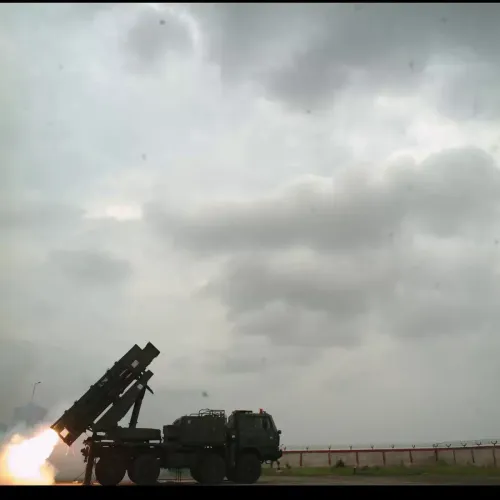
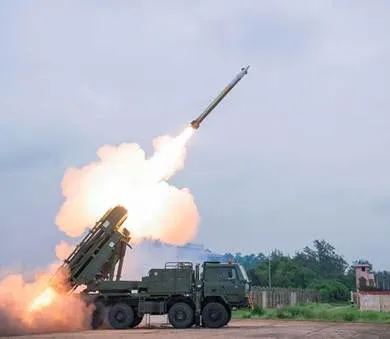
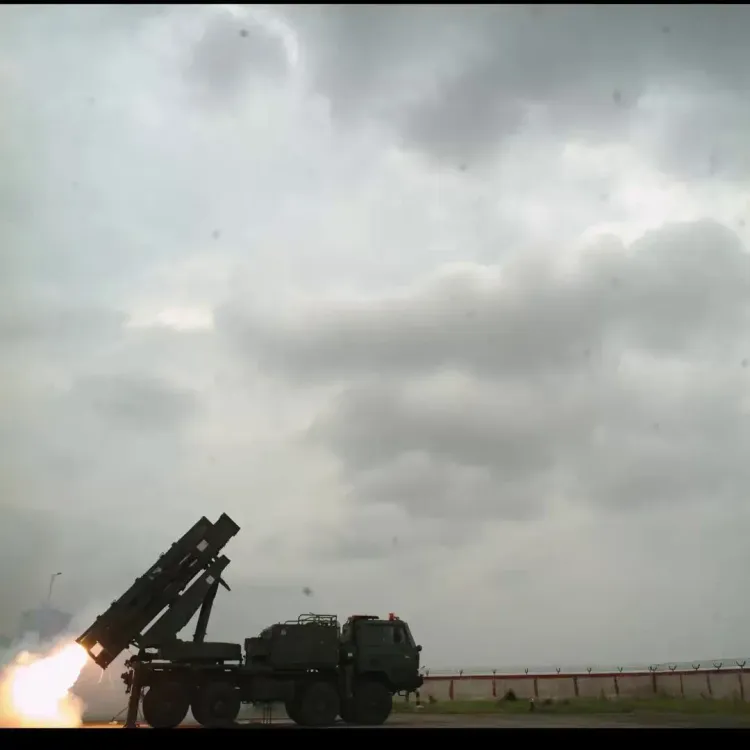
Union Minister G. Kishan Reddy praised DRDO after the Pinaka Long Range Guided Rocket successfully validated a user-defined minimum range of 60 km at the Integrated Test Range, Chandipur, marking a key step in India's indigenous precision-strike artillery programme.
Key Takeaways
Union Coal and Mines Minister G.
Kishan Reddy congratulated DRDO on 8 July 2026 after a successful Pinaka LRGR test.
The rocket validated a user-defined minimum range of 60 km and struck its target with 'textbook precision.' The test was conducted at the Integrated Test Range, Chandipur , DRDO's primary surface-to-surface firing facility on the Odisha coast.
The Pinaka programme began in the 1980s; initial unguided regiments were inducted into the Indian Army from 2006 onward.
The LRGR is a core component of the Atmanirbhar Bharat push to replace imported precision-strike systems with indigenous alternatives.
Next steps include Army evaluation of test data and induction timelines for additional Pinaka LRGR regiments .
Union Coal and Mines Minister G. Kishan Reddy on Wednesday, 8 July 2026 congratulated scientists and engineers at the Defence Research and Development Organisation (DRDO) after the successful test of the Pinaka Long Range Guided Rocket (LRGR) at the Integrated Test Range, Chandipur on the Odisha coast.
Context
In his post on X, Kishan Reddy described the test as 'another proud milestone in India's journey towards self-reliance in defence technology.' The trial validated a user-defined minimum range of 60 km, with the rocket striking its target with what the minister called 'textbook precision.' He credited the outcome to the 'unwavering commitment, technological excellence, and innovation' of India's defence research ecosystem.
The Integrated Test Range at Chandipur, located on the Odisha coastline, is DRDO's primary facility for surface-to-surface rocket and missile trials. It has served as the proving ground for multiple generations of the Pinaka family since the programme's early flight tests.
Policy Backdrop
The Pinaka programme dates to the 1980s, with first successful flight trials conducted in 1994 and initial induction of unguided Pinaka regiments into the Indian Army from 2006 onward. Guided variants with GPS and inertial navigation systems were developed subsequently, with developmental and user-assisted trials demonstrating ranges between 60 km and 90 km.
The programme sits at the heart of the Atmanirbhar Bharat framework, which accelerated indigenous defence design and production — particularly after 2020 — to reduce dependence on imported artillery and rocket systems. The 1999 Kargil conflict had exposed critical gaps in India's precision rocket capability, providing the strategic impetus for sustained investment in systems like Pinaka.
DRDO, operating under the Ministry of Defence, has shepherded the Pinaka from an unguided area-saturation weapon into a precision-strike platform capable of engaging targets at extended ranges — a transformation that defence planners regard as central to modernising the Indian Army's artillery arm.
Stakeholders and Impact
The primary beneficiary of the Pinaka LRGR is the Indian Army, which has been inducting successive Pinaka variants into its rocket regiment structure. A validated minimum range of 60 km expands the weapon's operational envelope, enabling fires against targets well beyond the reach of conventional artillery while maintaining precision.
Cross-ministerial endorsements — in this case from the Coal and Mines portfolio rather than Defence — reflect the broader whole-of-government approach the ruling Bharatiya Janata Party (BJP) has adopted to publicise defence technology milestones as evidence of the Atmanirbhar push bearing results. As BJP Telangana state president, Kishan Reddy also amplifies such achievements to regional audiences.
What's Next
Attention will now shift to induction timelines for additional Pinaka LRGR regiments and any follow-on trials targeting further range extension or salvo-firing capability. DRDO is expected to share formal test data with the Army for operational evaluation. A successful minimum-range validation typically precedes full user trials across the weapon's complete range envelope before series production orders are placed.
The test reinforces India's trajectory toward an indigenously produced, precision long-range rocket arsenal — a capability that carries both operational and strategic signalling value in the current regional security environment.
Point of View
Whose portfolio has no direct link to defence, underlines the BJP government's strategy of treating every DRDO success as a whole-of-government Atmanirbhar dividend. For the Indian Army, a credible indigenous long-range guided rocket reduces the strategic vulnerability of depending on imported munitions during high-tempo conflicts. The real test of programme momentum, however, will be the speed at which production contracts and regiment-raising orders follow the trial success.
NationPress
7 Oct 2026
Frequently Asked Questions
What is the Pinaka Long Range Guided Rocket?
The Pinaka LRGR is a GPS and inertial-navigation-guided variant of India's Pinaka multi-barrel rocket launcher, developed by DRDO to deliver precision strikes at ranges between 60 km and 90 km, well beyond conventional artillery.
Where was the Pinaka LRGR test conducted?
The test was conducted at the Integrated Test Range in Chandipur, located on the Odisha coast, which is DRDO's primary facility for surface-to-surface missile and rocket trials.
What range did the Pinaka LRGR validate in the July 2026 test?
The rocket validated a user-defined minimum range of 60 km and struck its designated target with high precision during the trial.
Why did Coal Minister Kishan Reddy comment on a defence test?
As a Union Cabinet minister and senior BJP leader, Kishan Reddy joined the broader whole-of-government effort to publicise defence technology milestones that demonstrate progress under the Atmanirbhar Bharat self-reliance framework.
When did India first induct the Pinaka rocket system?
Initial unguided Pinaka regiments were inducted into the Indian Army from 2006 onward, following first successful flight trials in 1994 and years of development that began in the 1980s.