Kishan Reddy Hails Agni-1 Missile Test from Chandipur

Synopsis
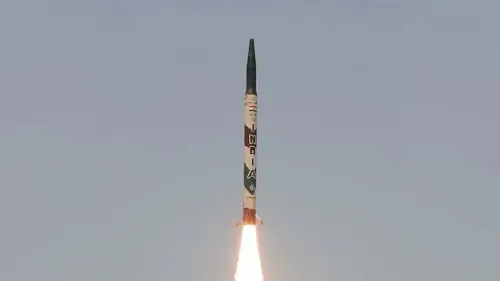
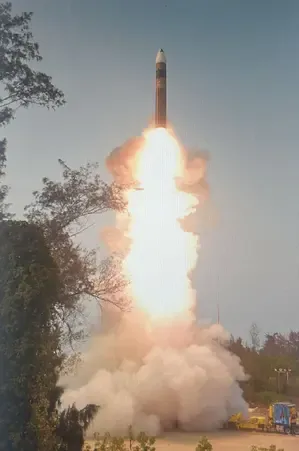
Union Minister G. Kishan Reddy praised DRDO scientists and the Strategic Forces Command after the successful test-launch of the Agni-1 Short Range Ballistic Missile from Chandipur, Odisha, saying it validated all operational parameters and reaffirmed India's strategic capabilities.
Key Takeaways
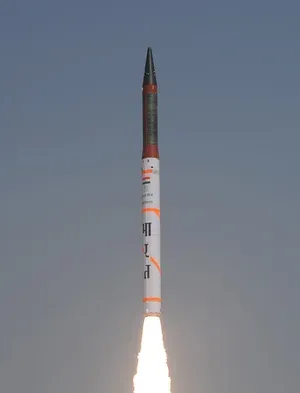
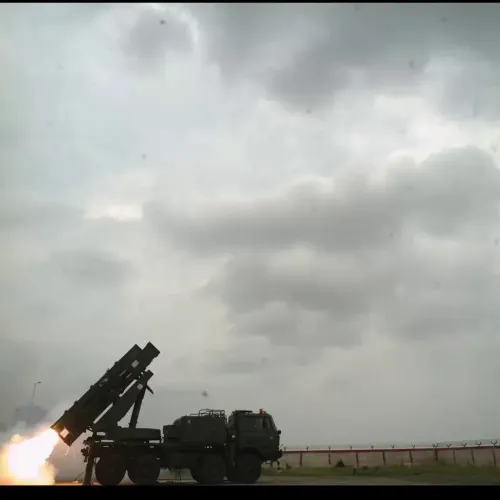
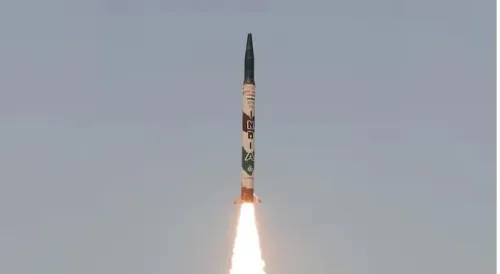
The Agni-1 Short Range Ballistic Missile was successfully test-launched from Chandipur, Odisha on 23 May 2026 .
The launch validated all operational and technical parameters, according to Union Minister G.
The Agni-1 has a range of approximately 700 to 900 kilometres and was inducted into the Strategic Forces Command around 2004 .
The missile was developed under the Integrated Guided Missile Development Programme , launched in 1983 .
The test was conducted at the Integrated Test Range in Chandipur, DRDO's primary missile launch facility.
Kishan Reddy linked the test to the Modi government's stated commitment to national security and indigenous defence capability.
Union Coal and Mines Minister G. Kishan Reddy on Saturday, 23 May 2026, congratulated scientists, engineers, and personnel of the Strategic Forces Command and the Defence Research and Development Organisation (DRDO) on the successful test-launch of the Agni-1 Short Range Ballistic Missile from Chandipur, Odisha, calling it 'another significant milestone in India's defence preparedness.'
Context
The test was conducted at the Integrated Test Range in Chandipur, a coastal town in Odisha that has served as DRDO's primary missile launch facility since the 1980s. In his post on X, Kishan Reddy stated that 'the launch successfully validated all operational and technical parameters, reaffirming the strength of India's strategic capabilities.'
The minister also noted that the test reiterated the Narendra Modi government's 'commitment towards national security,' tagging the Ministry of Defence spokesperson in his message.
Policy Backdrop
The Agni-1 is a short-range ballistic missile with an operational range of approximately 700 to 900 kilometres, developed under India's Integrated Guided Missile Development Programme (IGMDP), which was launched in 1983 to build an indigenous missile capability. The missile was first successfully flight-tested in 1989 and was inducted into the Strategic Forces Command around 2004.
The Agni series forms a core component of India's nuclear deterrent. Periodic test-launches of inducted systems are a standard operational practice to validate technical readiness and confirm that all parameters remain within specification. India maintains a declared no-first-use nuclear policy, and such tests are conducted within that strategic framework.
Stakeholders and Impact
The Strategic Forces Command, a tri-service command of the Indian Armed Forces, is responsible for managing and operating the country's nuclear arsenal and strategic missile systems. The command works in close coordination with DRDO, whose scientists and engineers design, develop, and support these systems through their operational lifecycle.
For DRDO personnel and the broader defence-science community, successful validation tests serve as confirmation that indigenously developed systems meet the exacting standards required for strategic deployment. India's sustained push for self-reliance in defence technology — encapsulated in the broader Atmanirbhar Bharat (self-reliant India) framework — has placed indigenous missile development at the centre of national security planning.
What's Next
Periodic user trials of Agni variants are expected to continue as the Strategic Forces Command maintains operational readiness across its missile inventory. Analysts and parliamentary defence committees are likely to reference such tests in the context of India's evolving deterrence posture and ongoing defence-modernisation budget discussions.
The successful validation of the Agni-1's operational parameters reinforces India's commitment to maintaining a credible minimum deterrent — a posture that will continue to shape defence procurement priorities and diplomatic signalling in the region.
Point of View
While routine in operational terms, provides the government an opportunity to reinforce its national-security credentials. Kishan Reddy's post — tagging the Ministry of Defence spokesperson — also reflects a coordinated information strategy around defence milestones. Placed in the broader arc of India's Atmanirbhar Bharat push, such messaging consistently ties indigenous capability to electoral and diplomatic positioning.
NationPress
12 Oct 2026
Frequently Asked Questions
What is the Agni-1 missile and what is its range?
The Agni-1 is an indigenously developed short-range ballistic missile with an operational range of approximately 700 to 900 kilometres. It was developed by DRDO under the Integrated Guided Missile Development Programme and inducted into the Strategic Forces Command around 2004.
Where was the Agni-1 missile test conducted?
The test was conducted at the Integrated Test Range in Chandipur, a coastal town in Odisha that has been DRDO's primary missile launch facility since the 1980s.
Who congratulated DRDO on the Agni-1 test launch?
Union Coal and Mines Minister G. Kishan Reddy congratulated scientists, engineers, and personnel of DRDO and the Strategic Forces Command on the successful test on 23 May 2026.
What is the Strategic Forces Command?
The Strategic Forces Command is a tri-service command of the Indian Armed Forces responsible for managing and operating India's nuclear arsenal and strategic missile systems, working in coordination with DRDO.
What is India's nuclear policy in relation to these missile tests?
India maintains a declared no-first-use nuclear policy. Periodic test-launches of inducted systems like the Agni-1 are standard practice to validate technical and operational readiness within that strategic framework.