Trump urged to confront Xi on China's ethnic unity law at Washington meeting
Synopsis
A senior Uyghur rights advocate is urging President Trump to put China's newly enacted ethnic unity law — which critics say lets Beijing police diaspora communities abroad — squarely on the agenda when Xi Jinping visits Washington. With provisions that could target people outside China for speech deemed contrary to 'ethnic unity,' the law is being framed not just as a human rights issue, but as a direct threat to US sovereignty.
Key Takeaways
Omer Kanat of the Uyghur Human Rights Project has urged President Trump to raise China's ethnic unity law with Xi Jinping at their Washington summit.
China's Law on Promoting Ethnic Unity and Progress was passed in March 2026 and came into effect on 1 July 2026 .
The law contains extraterritorial provisions that critics say could hold individuals and organisations outside China legally accountable for speech deemed to 'undermine ethnic unity.' China's vice justice minister has defended the extraterritorial reach as 'legitimate, lawful, necessary, and feasible.' Kanat argues the law poses a challenge to US sovereignty and threatens Uyghur Americans who fear retaliation against relatives in China for their advocacy.
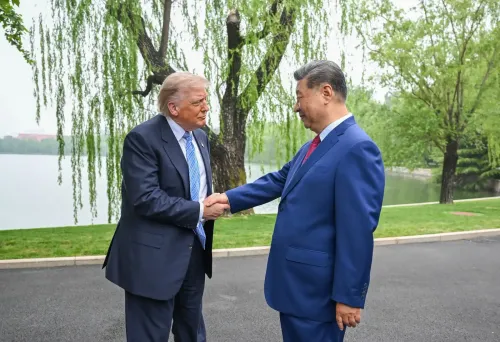
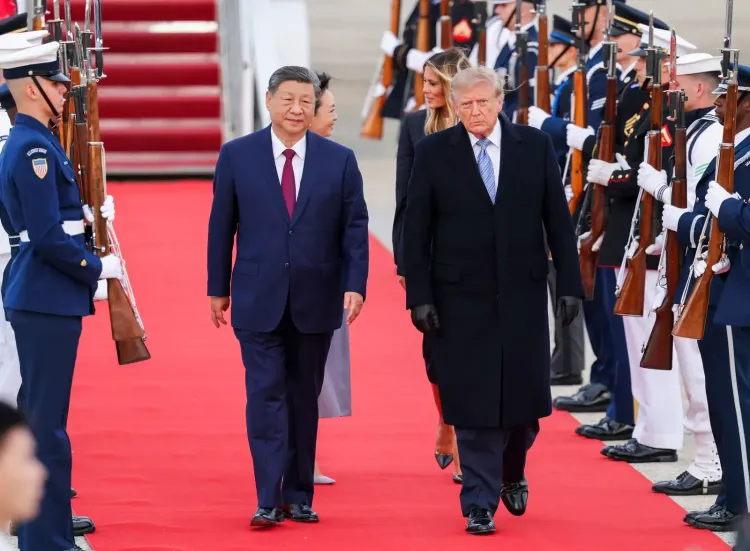
United States President Donald Trump should directly raise Beijing's Law on Promoting Ethnic Unity and Progress with Chinese President Xi Jinping at their upcoming Washington meeting — and make unambiguously clear that any attempt to enforce it against people on American soil will not be tolerated, according to a prominent rights advocate.
The call comes from Omer Kanat, Executive Director of the Uyghur Human Rights Project, writing in The Diplomat on 24 September 2026. Kanat argues that the law's extraterritorial reach represents not merely a human rights concern, but a direct challenge to US sovereignty.
What China's Ethnic Unity Law Says
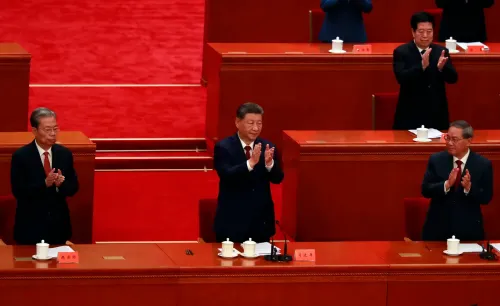
China's National People's Congress passed the Law on Promoting Ethnic Unity and Progress in March 2026, with the legislation entering into force on 1 July 2026. Beijing has described the law as a measure to promote harmony among China's ethnic communities, including Uyghurs, Tibetans, Southern Mongolians, and others.
Critics, however, argue the law does the opposite. Kanat contends it 'codifies and expands' forced assimilation campaigns that, according to rights groups, have targeted Uyghur identity, religion, and cultural life since 2017.
The Extraterritorial Provisions
At the heart of the concern are provisions that appear to extend the law's reach beyond China's borders. According to Kanat, the legislation holds that organisations and individuals outside China can be held legally accountable for actions deemed to 'undermine ethnic unity and progress or create ethnic division.'
China's vice justice minister reportedly defended this extraterritorial dimension as 'legitimate, lawful, necessary, and feasible.' Critics say such language signals Beijing's intent to police diaspora communities — including those residing in the United States — for speech or advocacy it deems contrary to state policy.
Why Kanat Wants It on the Summit Agenda
With the Xi-Trump summit agenda already dense — spanning trade, technology, fentanyl, Taiwan, and global security — Kanat argues the ethnic unity law cannot be left off the table. He frames a specific question for Trump to pose: 'Why are Uyghur Americans being forced to choose between exercising their freedoms here and protecting their relatives from retaliation in China?'
Kanat further warns that the law's threat extends beyond communities with family ties in China. 'Any person who expresses a view China deems as contrary to ethnic unity can be targeted under the new law,' he writes, positioning it as a concern for all Americans, not just diaspora groups.
Sovereignty and Diplomatic Stakes
Kanat's central argument is that no foreign government holds authority to dictate what people in the US or other democratic societies say, believe, teach their children, or advocate for. He calls on Washington to assert unequivocally that China's ethnic unity law carries no legal jurisdiction inside American borders.
This comes amid a broader pattern of US-China friction over Beijing's treatment of Uyghurs and its attempts to influence overseas Chinese communities — an issue that has drawn bipartisan attention in the US Congress in recent years. Whether the Trump administration chooses to elevate this issue at the summit will be closely watched by rights organisations and diaspora communities alike.
Point of View
But laws that purport to regulate the speech of people on American soil represent a qualitatively different kind of challenge — one that sits at the intersection of sovereignty, civil liberties, and geopolitics. The Trump administration's willingness — or reluctance — to raise this at the summit will signal how seriously Washington treats diaspora protection as a diplomatic red line. Given that China's vice minister has already defended the law's reach abroad, the question is no longer hypothetical.
NationPress
24 Sept 2026
Frequently Asked Questions
What is China's Law on Promoting Ethnic Unity and Progress?
It is a Chinese law passed by the National People's Congress in March 2026 and in force since 1 July 2026, which Beijing says promotes harmony among ethnic groups including Uyghurs and Tibetans. Critics, including the Uyghur Human Rights Project, argue it codifies forced assimilation and contains provisions that extend its reach to individuals outside China.
Why are rights groups concerned about the law's extraterritorial provisions?
The law holds organisations and individuals outside China liable for actions deemed to 'undermine ethnic unity,' which critics say gives Beijing a legal basis to target diaspora communities — including those in the United States — for speech or advocacy it opposes. China's vice justice minister has defended this as legitimate and necessary.
Who is calling on Trump to raise this issue, and why now?
Omer Kanat, Executive Director of the Uyghur Human Rights Project, made the call in an article published in The Diplomat on 24 September 2026, timed ahead of a planned Xi-Trump meeting in Washington. He argues the summit agenda — already covering trade, technology, and Taiwan — cannot afford to omit this sovereignty challenge.
How does the law affect Uyghur Americans specifically?
According to Kanat, Uyghur Americans face a coercive choice: exercise their freedoms in the US or protect relatives in China from potential retaliation triggered by their advocacy abroad. The law's extraterritorial provisions make diaspora activism a potential legal liability under Chinese law.
Has Washington taken a formal position on the ethnic unity law?
No formal US government position on the law's extraterritorial provisions has been reported. The call from the Uyghur Human Rights Project is aimed at prompting the Trump administration to address the issue directly during the upcoming Xi-Trump summit in Washington.