Tibet needs visionary leadership to negotiate with Beijing: Report
Synopsis
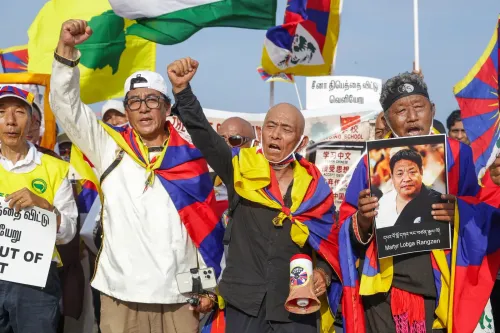
The Dalai Lama's nephew Khedroob Thondup has issued a sharp critique of the Tibetan leadership's four-decade-old strategy, arguing that appealing for sympathy has run its course and that only a pivot toward partnership, digital diplomacy, and coalition-building can bring Beijing back to the table — if it ever comes.
Key Takeaways
Khedroob Thondup , nephew of the Dalai Lama , argues Tibet's 1980s-era negotiation strategy has failed to yield meaningful dialogue with Beijing .
He contends that China has grown more assertive and sees no reason to revisit proposals it rejected decades ago.
Global human rights attention has shifted from Tibet to Xinjiang and Hong Kong , reducing international leverage.
Thondup calls for harnessing the Tibetan diaspora through civil society, academia, and technology coalitions to create new pressure points.
He argues negotiations will only happen when Beijing sees cooperation as enhancing its own global image, stability, and legitimacy.
The Tibetan struggle can no longer be sustained by a framework conceived four decades ago, according to a new report, which argues that fresh leadership willing to take calculated risks and devise adaptive strategies is essential to bring Beijing to the negotiating table. The report underscores that visionary leadership is not about abandoning core principles but about reshaping them to meet the demands of a changed geopolitical era.
A Four-Decade Stalemate
Khedroob Thondup, nephew of the Dalai Lama, writing in The Tibet Express, argued that the Tibetan leadership's reliance on a strategy rooted in the 1980s — centred on appeals for dialogue and autonomy — has failed to produce meaningful negotiations. 'For more than four decades, the Tibetan leadership has held to a strategy that Beijing has consistently rejected... The time has come to recognise that persistence without adaptation is not resilience; it is stagnation,' he wrote.
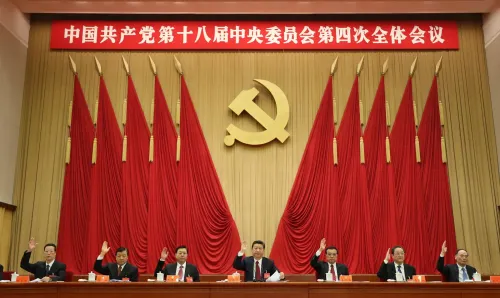
According to Thondup, China has grown increasingly confident and assertive, with little inclination to revisit proposals it dismissed decades ago. He noted that Beijing currently sees no strategic incentive to reopen those discussions.
Shifting Global Attention
Thondup pointed to a significant change in international human rights discourse: Tibet is no longer the focal point it once was, with global attention having shifted toward Xinjiang, Hong Kong, and other crises. This erosion of international spotlight, he argued, further weakens the leverage available under the existing strategy.
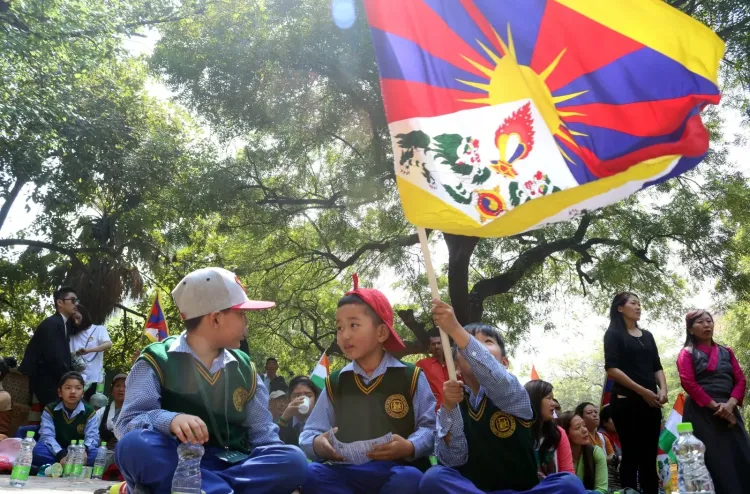
Younger Tibetans — both inside Tibet and in exile — are, according to Thondup, inheriting a struggle that has remained largely static for generations. He contended they deserve a forward-looking strategy that reflects their future rather than one anchored in the past.
A New Strategic Vision
'Tibet must be presented not as a relic of history but as a living civilisation with contributions to make in the modern world. This means shifting from appeals to sympathy toward appeals to partnership,' Thondup wrote. He highlighted the educated, connected, and influential nature of the Tibetan diaspora, arguing that harnessing these networks to build coalitions across civil society, academia, and technology could create new leverage points.
He also stressed the importance of strengthening cultural preservation, expanding digital diplomacy, and building alliances that position Tibet at the centre of discussions on Asia's future — describing patience as essential, but insisting it must be an active rather than passive posture.
What Would Bring Beijing to the Table
Thondup argued that negotiations will only materialise when Beijing perceives a tangible benefit. 'That requires Tibetans to articulate a vision where cooperation enhances China's global image, stability, and legitimacy,' he wrote. The emphasis, he suggested, must shift from petition to partnership — reframing the Tibetan cause as a geopolitical opportunity rather than a historical grievance.
The Leadership Imperative
'Our future lies in the hands of those who can see beyond rejection, who can craft a strategy that transforms Tibet from a dismissed petition into a respected partner. The measure of leadership now is not fidelity to the past but courage to design the future,' Thondup wrote. The report's central argument is that without this generational shift in strategic thinking, the Tibetan cause risks further marginalisation in an era defined by new geopolitical priorities.
Point of View
But the structural problem he identifies runs deeper than strategy: Beijing's calculus on Tibet is tied to domestic legitimacy, not diplomatic optics. Reframing Tibet as a 'partner' rather than a petitioner is a creative pivot, but it assumes China's leadership is responsive to soft-power incentives — a premise that the post-2012 era has not validated. The more uncomfortable question, which the report stops short of asking, is whether the Tibetan movement's continued dependence on a single charismatic figurehead — the Dalai Lama — has itself become a structural vulnerability as succession looms. No amount of digital diplomacy resolves that.
NationPress
16 Sept 2026
Frequently Asked Questions
What is the core argument of the Tibet leadership report?
The report argues that the Tibetan movement's four-decade-old strategy of appealing for dialogue and autonomy has failed to bring Beijing to the negotiating table and must be replaced with a more adaptive, coalition-based approach. It calls for visionary leadership willing to reframe Tibet as a partner rather than a petitioner.
Who is Khedroob Thondup and why does his view matter?
Khedroob Thondup is the nephew of the Dalai Lama and wrote the analysis in The Tibet Express. His familial connection to the Tibetan spiritual leadership gives his critique particular weight, as it comes from within the movement's inner circle rather than from external observers.
Why has Tibet lost its place in global human rights discourse?
According to Thondup, international attention has shifted toward crises in Xinjiang, Hong Kong, and other regions, leaving Tibet with a reduced profile in global human rights discussions. This shift weakens the leverage available to Tibetan advocates under the existing strategy.
What new strategies does the report recommend for Tibet?
The report recommends expanding digital diplomacy, building coalitions across civil society, academia, and technology sectors, strengthening cultural preservation, and repositioning Tibet as a living civilisation with modern contributions — rather than a historical grievance seeking sympathy.
What would it take for Beijing to negotiate with Tibet?
Thondup argues that Beijing will only engage in negotiations when it perceives a clear benefit — specifically, when Tibetan leaders can articulate a vision where cooperation with Tibet enhances China's global image, stability, and international legitimacy.