Tibetan unity against China's repression more vital than ever: Report

Synopsis
Khedroob Thondup, nephew of the Dalai Lama, has issued a stark warning: without unity, the Tibetan struggle risks fracturing under the CCP's deliberate strategy of division through propaganda and infiltration. Writing in The Tibet Express, he frames solidarity not as sentiment but as survival — the one force that has kept Tibet's cause alive across continents since the 1959 exodus.
Key Takeaways
Khedroob Thondup , nephew of the Dalai Lama , argues Tibetan unity is a strategic necessity against CCP repression, writing in The Tibet Express .
The CCP is accused of using propaganda, infiltration, and coercion to fracture Tibetan solidarity — a tactic reportedly mirroring historical manipulation by the Mongolian and Tibetan Affairs Commission .
Thondup traces Tibetan cohesion to the 1959 exodus into India , citing the Dalai Lama's leadership, patriotism, and the desire to return as foundational forces.
Tibetan exiles have built schools, monasteries, and cultural institutions through collective resolve, sustaining identity across generations in foreign lands. 'For Tibetans, unity is not optional — it is survival,' Thondup writes, framing solidarity as both shield and sword for the movement's future.
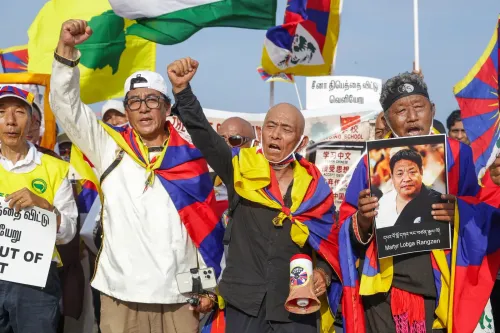
As the Chinese Communist Party (CCP) intensifies its grip over Tibet, solidarity among Tibetans has emerged as an indispensable force for sustaining their political and cultural struggle, according to a detailed report. Amid escalating challenges — including cultural erasure, environmental exploitation, and systematic political repression — unity is being described not as a sentimental aspiration but as a strategic imperative for the Tibetan people worldwide.
The Core Argument for Solidarity
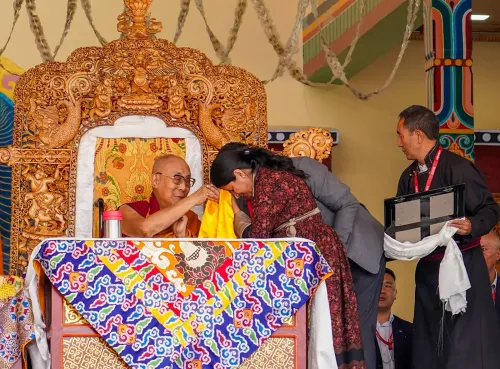
Khedroob Thondup, nephew of His Holiness the Dalai Lama, writing in The Tibet Express, argued that without unity, the Tibetan struggle risks becoming fragmented, diluted, and ultimately ineffective. He traced the roots of Tibetan cohesion to the traumatic exodus of 1959, when exiles crossed into India with almost nothing.
'When Tibetans crossed into India in 1959, carrying little more than the clothes on their backs and the weight of exile, three forces bound us together: the leadership of His Holiness the Dalai Lama, our deep patriotism, and our unwavering desire to return to our homeland,' Thondup wrote. He described these not as abstract ideals but as 'lifelines' that gave meaning to every sacrifice made in exile.
China's Strategy of Division
Thondup drew a direct historical parallel between past manipulation and present-day tactics, warning that external forces have long understood the power of a divided Tibet. 'The Chinese Communist Party continues that same strategy, attempting to fracture our solidarity through propaganda, infiltration, and coercion,' he wrote, adding that 'a divided Tibet is a weakened Tibet' — which is why, he argued, the CCP invests so heavily in fostering disunity.
He noted that earlier attempts at manipulation came from the Mongolian and Tibetan Affairs Commission, which reportedly sought to sow division among the Tibetan people. The pattern, Thondup argued, has continued under successive Chinese administrations.
What Exile Tibetans Have Built
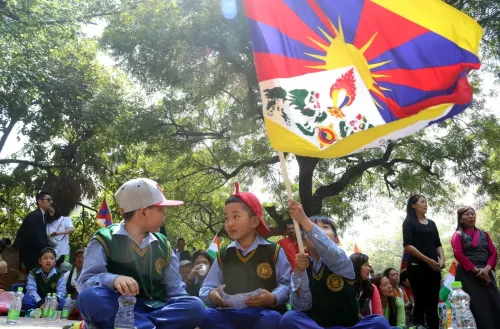
Despite decades of displacement, the report highlights that collective resolve has enabled Tibetans in exile to establish schools, monasteries, and cultural institutions that have kept their identity alive. According to Thondup, unity has allowed Tibetans to 'speak with one voice on the global stage' and has given younger generations a sense of belonging even in foreign lands.
These achievements, the report stresses, would not have been possible without sustained solidarity — coordinated across continents and amplified in international forums.
Lessons from 1959 and Today
'The lesson of 1959 is clear: leadership, patriotism, and the dream of return can overcome exile,' Thondup wrote. 'The lesson of today is equally urgent: unity is the shield against external manipulation and the sword with which we carve our path forward. For Tibetans, unity is not optional — it is survival.'
The report comes at a moment when international scrutiny of China's policies in Tibet has grown, with rights groups and several Western governments raising concerns over cultural suppression and restrictions on religious practice. How the Tibetan diaspora sustains and deepens its internal cohesion in the years ahead may prove decisive for the movement's long-term visibility on the world stage.
Point of View
But the harder question is whether the Tibetan movement's own generational and ideological fault lines are being adequately addressed. Younger diaspora Tibetans, many born outside India, may not share the same emotional architecture of the 1959 generation. Framing unity purely around the Dalai Lama's leadership, while powerful, also raises succession questions that the movement has yet to answer publicly. The struggle's long-term credibility on the international stage will depend not just on solidarity in rhetoric, but on whether its institutions can outlast any single figure.
NationPress
26 Oct 2026
Frequently Asked Questions
Why is Tibetan unity considered crucial right now?
Tibetan unity is considered crucial because the Chinese Communist Party is reportedly intensifying cultural erasure, environmental exploitation, and political repression in Tibet. According to a report in The Tibet Express, solidarity enables Tibetans to resist these pressures, coordinate internationally, and sustain their movement across generations.
Who is Khedroob Thondup and what did he write?
Khedroob Thondup is the nephew of the Dalai Lama and a prominent voice in the Tibetan diaspora. Writing in The Tibet Express, he argued that unity is not a sentimental ideal but a strategic necessity — the primary defence against China's alleged efforts to fracture the Tibetan movement through propaganda and infiltration.
How does China allegedly try to divide Tibetans?
According to Thondup's account, the CCP attempts to fracture Tibetan solidarity through propaganda, infiltration, and coercion, understanding that 'a divided Tibet is a weakened Tibet.' He draws a parallel with historical manipulation by the Mongolian and Tibetan Affairs Commission.
What has the Tibetan exile community achieved through unity?
Tibetan exiles have established schools, monasteries, and cultural institutions in India and across the world, preserving their language, religion, and identity in displacement. Thondup credits collective resolve for enabling Tibetans to 'speak with one voice on the global stage' and giving younger generations a sense of belonging.
What is the significance of the 1959 Tibetan exodus for the current struggle?
The 1959 exodus, when Tibetans fled into India following the failed uprising against Chinese rule, is seen as the foundational moment of the modern Tibetan movement. Thondup argues its core lesson — that leadership, patriotism, and the dream of return can overcome exile — remains directly relevant to the challenges the community faces today.