Tibet referendum demand grows as China's 'liberation' narrative faces scrutiny
Synopsis
The nephew of the 14th Dalai Lama has issued a pointed challenge to Beijing: if China truly believes Tibetans are 'grateful citizens,' let a free referendum prove it. The call lands as Reporters Without Borders documents a near-total media blackout in Tibet following a flood that killed over a thousand people, spotlighting what critics call decades of unchecked suppression.
Key Takeaways
Khedroob Thondup , nephew of the 14th Dalai Lama , has called for a free referendum in Tibet to determine whether residents accept Chinese rule or regard it as occupation.
Thondup cites East Timor and South Sudan as precedents where referendums resolved sovereignty disputes under international law.
On-the-ground conditions reportedly include suppression of the Tibetan language , monitoring of monasteries, and a ban on photos of the Dalai Lama .
A massive flash flood originating in Tibet on 26 August 2026 swept into Nepal's Rasuwa district , killing over a thousand people .
Reporters Without Borders (RSF) says no independent media has been granted access to flood-affected Tibetan areas, with coverage limited to Chinese state outlets.
RSF's Aleksandra Bielakowska described Tibet under Xi Jinping as a 'de facto information black hole.'
Khedroob Thondup, nephew of the 14th Dalai Lama, has renewed calls for a free referendum in Tibet, arguing that China's 1950 invasion has failed to win the consent of the Tibetan people and that only a democratic vote can settle whether Beijing's presence constitutes liberation or occupation. The demand, detailed in a report published in The Tibet Express, comes amid fresh evidence of tightening restrictions on press access following a devastating cross-border flood in August 2026.
The Case for a Referendum
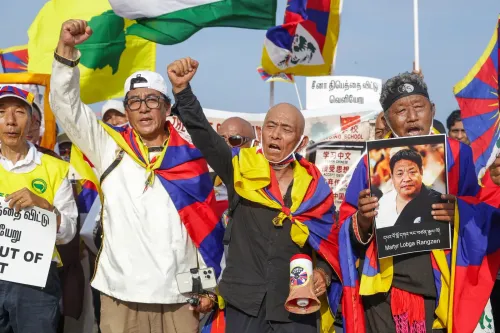
Writing in The Tibet Express, Thondup argued that self-determination is a principle enshrined in international law, pointing to precedents such as East Timor and South Sudan where referendums resolved long-standing sovereignty disputes. 'A referendum would allow Tibetans to express, freely and without coercion, whether they accept the so-called ‘liberation’ or reject it as an occupation. Such a vote would be the ultimate measure of legitimacy. Self-determination is a principle enshrined in international law... If China is confident in its claim that Tibetans are ‘grateful citizens,’ then a ballot box should confirm it,' he wrote.
Thondup further stated: 'China’s 1950 invasion of Tibet has failed to win the hearts of the Tibetan people. Decades of propaganda cannot mask the truth: Tibetans remain unconquered in spirit. If Beijing wishes to prove otherwise, it must allow Tibetans to decide their own future through a referendum. Anything less is an admission that “liberation” was never liberation at all, but occupation.'
Conditions on the Ground in Tibet
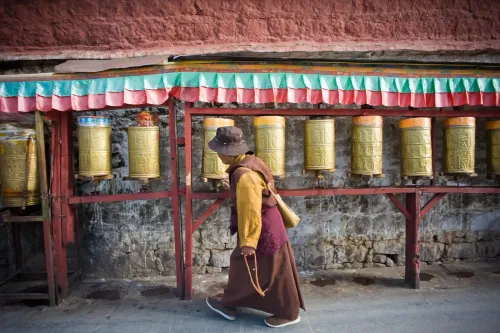
According to the report, the Tibetan language has been progressively sidelined in schools, monasteries are subject to surveillance, and photographs of the Dalai Lama are prohibited. Arbitrary arrests, restrictions on religious practice, and widespread surveillance are said to occur regularly, with critics arguing these realities expose the hollowness of the official ‘liberation’ narrative.
Flood Disaster Exposes Media Blackout
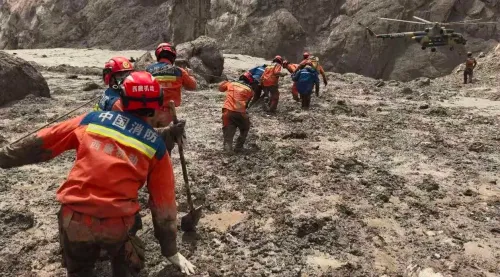
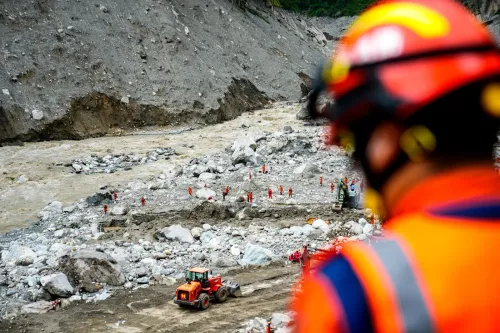
The calls for accountability gained additional urgency after a massive flash flood originating in the Tibetan region of China on 26 August swept through the transboundary Bhote Koshi River into Nepal's Rasuwa district, leaving over a thousand people dead and causing widespread destruction across the Himalayan nation.
International press freedom organisation Reporters Without Borders (RSF) strongly condemned what it described as sweeping restrictions preventing independent media from accessing the disaster zone. According to RSF, no independent Tibetan media outlet or international news organisation has been granted access to flood-affected areas in Tibet, with only state-controlled outlets authorised to report.
RSF: Tibet Is a 'De Facto Information Black Hole'
Aleksandra Bielakowska, Head of Advocacy at RSF Asia-Pacific, said that under Chinese President Xi Jinping's leadership, Tibet had effectively become a 'de facto information black hole.' She added that the only outlets permitted to operate are those 'controlled by the state and its propaganda organs, which report on events according to the guidelines approved by the Chinese Communist Party's Propaganda Department.' RSF said this approach made it 'virtually impossible to gauge the true scale of the tragedy,' accusing the regime of seeking to 'whitewash its international image.'
This pattern, critics argue, is consistent with decades of restricted access to Tibet — a region that has remained largely off-limits to independent journalists since the 2008 Lhasa unrest. The flood crisis has brought those restrictions into renewed international focus.
What Comes Next
There is no indication that Beijing has responded to the referendum demand or eased media access restrictions in flood-affected Tibetan areas. The international community, including human rights organisations and Tibetan advocacy groups, is expected to maintain pressure on China ahead of upcoming sessions at the United Nations Human Rights Council. Whether these calls translate into formal diplomatic action will depend on the willingness of member states to directly challenge Beijing's position on Tibetan sovereignty.
Point of View
But the timing sharpens its force: a deadly flood has provided a live test of Chinese transparency in Tibet, and Beijing has failed it by every independent measure. RSF's 'information black hole' framing is significant because it shifts the argument from historical grievance to present-day accountability — harder for the international community to defer. What is striking is that the same international system that enabled East Timor and South Sudan referendums has never been mobilised on Tibet, largely because major powers prioritise trade relationships with Beijing over Tibetan self-determination. That calculation shows no sign of changing, which means these calls, however principled, will likely remain rhetorical without a coordinated multilateral push.
NationPress
22 Sept 2026
Frequently Asked Questions
Why is a referendum being demanded for Tibet?
Advocates, including Khedroob Thondup , argue that only a free vote can determine whether Tibetans genuinely accept Chinese rule or regard it as foreign occupation. They point to international law on self-determination and cite precedents such as East Timor and South Sudan where referendums resolved sovereignty disputes.
What is China's position on Tibet's status?
China officially describes its 1950 military entry into Tibet as a 'liberation' from feudal rule and considers Tibet an inalienable part of Chinese territory. Beijing has consistently rejected calls for a referendum or any form of independence or meaningful autonomy discussions outside its own framework.
What happened in the Tibet flood of August 2026?
A devastating flash flood originating in the Tibetan region of China on 26 August 2026 swept through the transboundary Bhote Koshi River into Nepal's Rasuwa district , killing over a thousand people and causing widespread destruction. Chinese authorities restricted independent media access to the Tibetan side of the disaster zone.
What did Reporters Without Borders say about media access in Tibet?
RSF condemned China for permitting only state-controlled media to cover the floods in Tibetan areas, with no access granted to independent Tibetan outlets or international journalists. RSF's Aleksandra Bielakowska said Tibet had become a 'de facto information black hole' under President Xi Jinping .
What restrictions on Tibetan culture and religion have been documented?
Reports indicate that the Tibetan language has been sidelined in schools, monasteries are kept under surveillance, and displaying photographs of the Dalai Lama is prohibited. Arbitrary arrests and restrictions on religious practice are also said to occur regularly, according to advocacy groups and Tibetan exile communities.